
Peru: A Country of Layers Where Every Step is a Shift
A Country of Constant Transition
Peru does not spread gently across a map.
It climbs. It fractures. It disappears into clouds, then reemerges in desert light.
This is not a flat country. It is a territory built on tension – between sea and summit, between fire and ice, between stillness and breathlessness. What begins near the ocean can end three vertical kilometres above it.
The journey here is not measured in kilometres, but in altitude gained and oxygen lost.
This is a country of layers – layers of geography, culture, rhythm, and air.
Each level of elevation holds its own landscape and logic. You wake one day on a warm coastline, and sleep the next in a high valley where breath is thin and silence expands.
From the Cordillera Blanca to the jungle lowlands of Tambopata, from the floating islands of Lake Titicaca to the dunes of Huacachina, Peru does not shift gently.
It changes completely.
And within that constant transition, luxury takes on a new meaning. It is no longer defined by stillness or shine.
Here, luxury is a movement that transforms. It is the fire lit at altitude. The meal is served after an effort. The knowledge that nothing has been staged – it simply exists.
Each transfer between regions becomes a shift in body and perspective. Each step demands awareness.
You do not pass through Peru. You participate.
The Andes Spine – From North to South
Cordillera Blanca and Huaraz
There is no gradual entry into the Cordillera Blanca. The mountains do not announce themselves.
They rise in silence – white, sharp, and monumental.
This is the highest tropical mountain range in the world, home to over fifty peaks above 5,700 metres, including Huascarán, the tallest mountain in Peru.
The air here is thin and clean. The light is harder. The scale is absolute.
The town of Huaraz, situated at 3,100 metres, is the natural base for this region – not a polished resort, but a rugged, purposeful city built for altitude. From here, trails stretch in every direction: to the turquoise Laguna 69, to the towering flanks of Alpamayo, to the remote passes of the Santa Cruz trek.
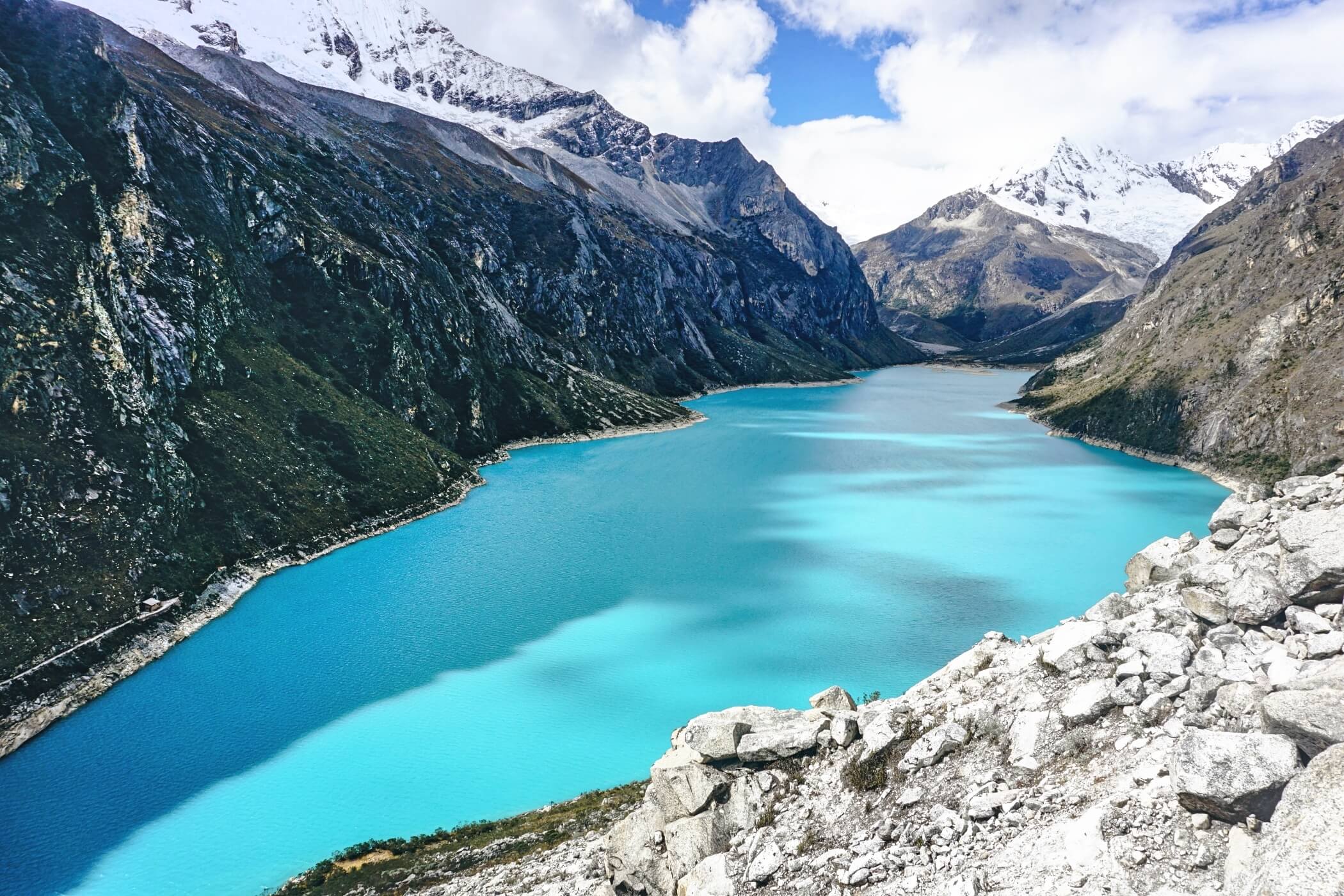
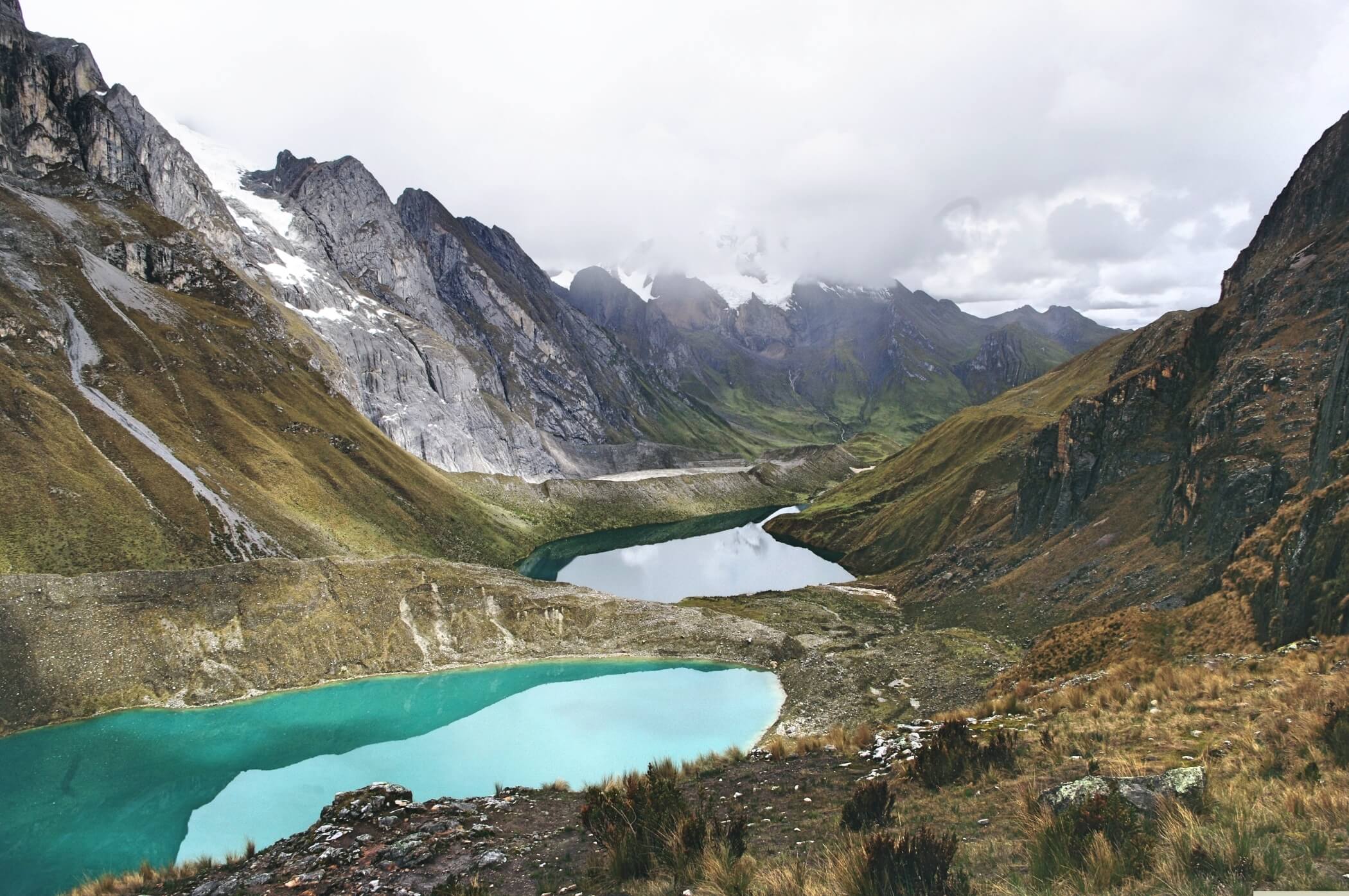
These are not soft hikes. They are deliberate efforts – each step shaped by geology, each ascent measured in breath.
You do not passively see this region. You engage it, physically and wholly.
There is no crowd here. No superficial charm.
What you find instead is immensity, purity, and honest challenge.
Nights are quiet. Lodges are often basic, but warm. A thermos of coca tea becomes a ritual. A clean blanket is comfort. A working shower is a gift.
This is luxury stripped of excess – not decorative, but essential. And it stays with you, long after the clouds roll back in.
Ausangate and Rainbow Mountain
If the Cordillera Blanca is about ice and vertical majesty, Ausangate is about colour, ritual, and distance.
Located in the southern Andes near Cusco, this mountain is not a place people casually visit. At 6,384 metres, it is sacred to the Quechua people – seen not as a peak to conquer, but as a living guardian.
To walk here is not simply to hike. It is to pass through a myth still alive in the landscape.
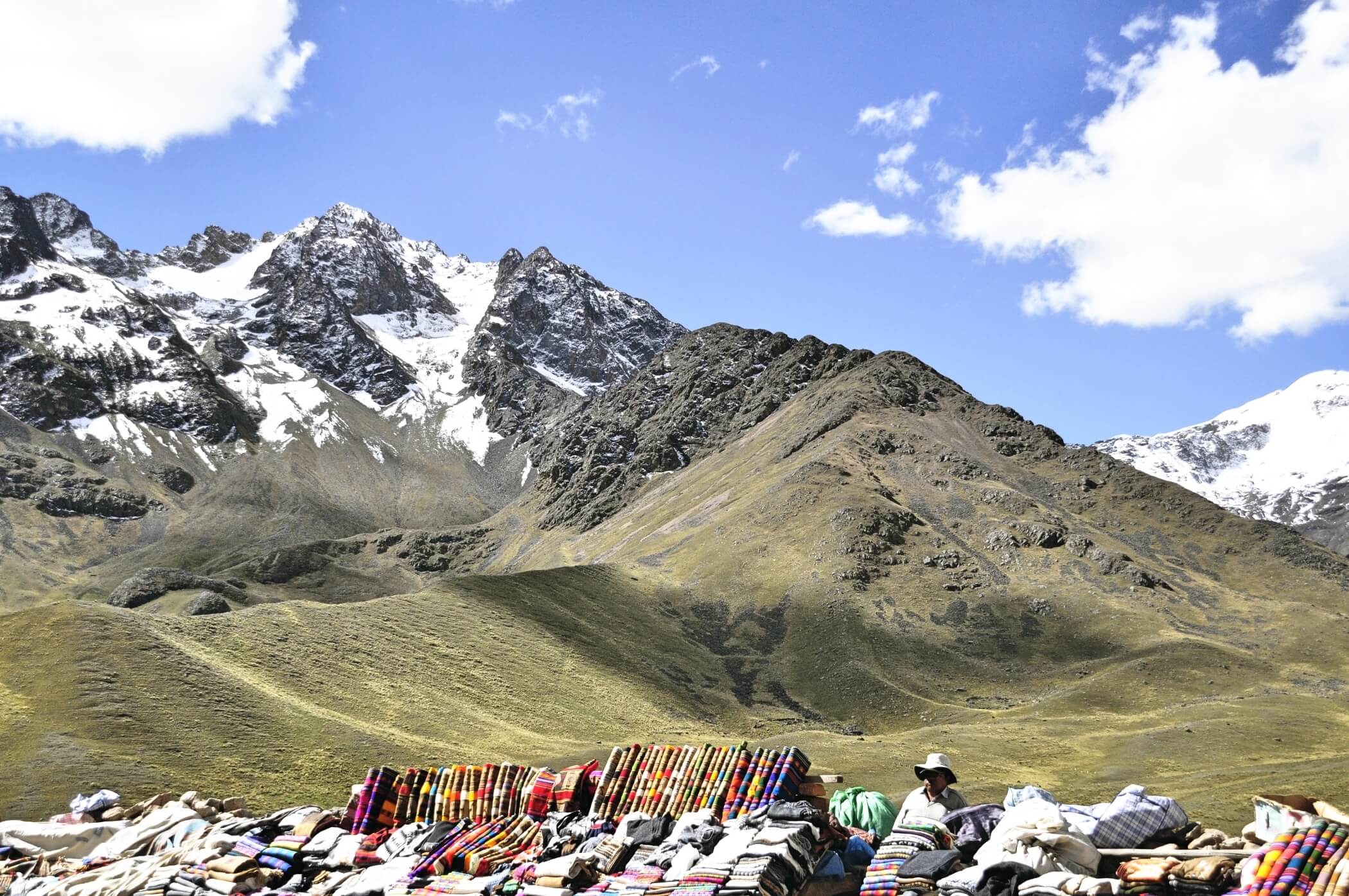
The Ausangate circuit is one of the most beautiful and remote multi-day treks in Peru. It loops around the massif for five or six days, crossing high-altitude passes, sulphuric turquoise lakes, red valleys, and open plains where alpacas graze beneath glacial cliffs.
Each morning begins in silence and cold. Each night ends in a sky so clear it feels like glass.
There are no villages. No crowds. Just mountains, solitude, and the sound of your own boots.
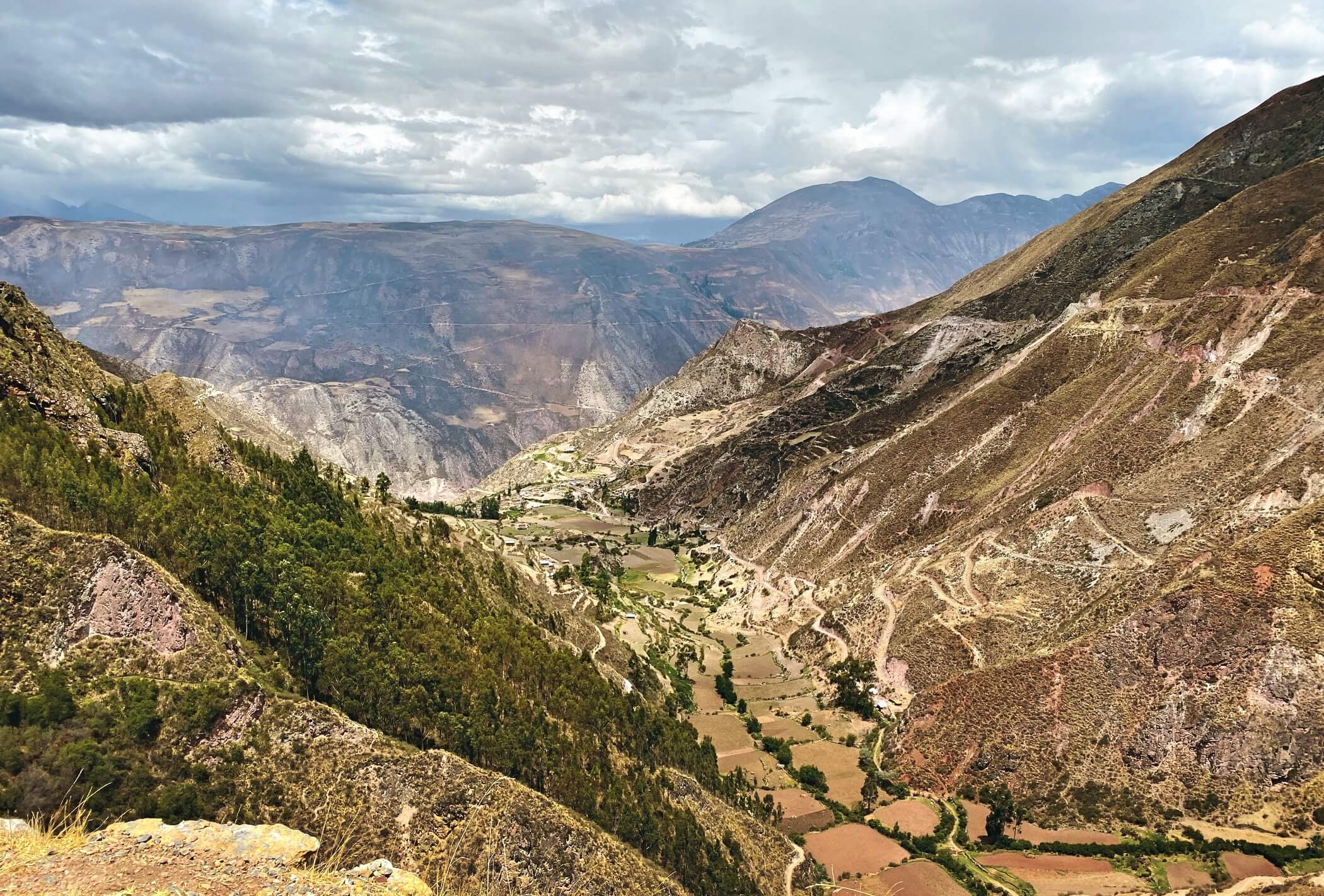
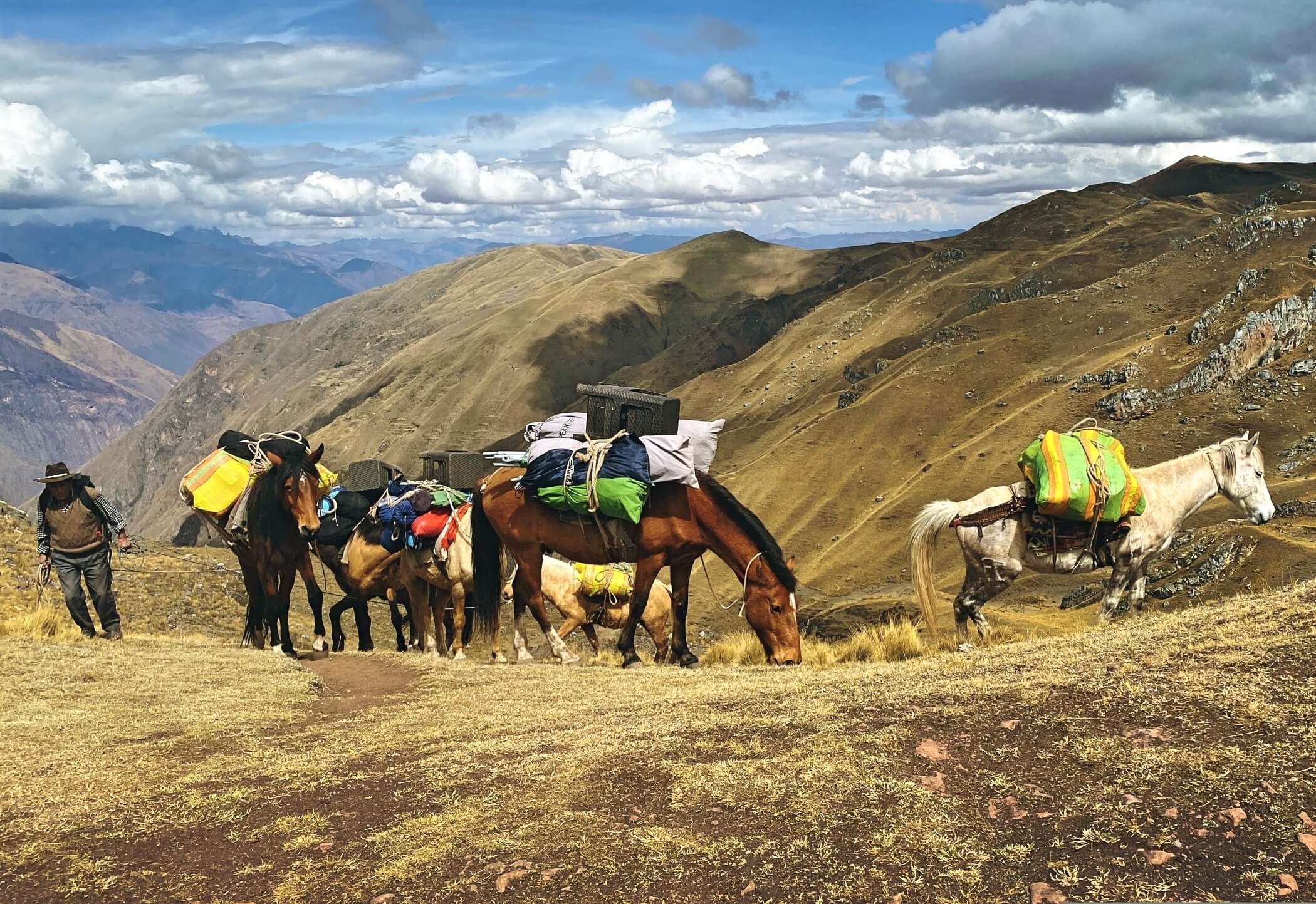
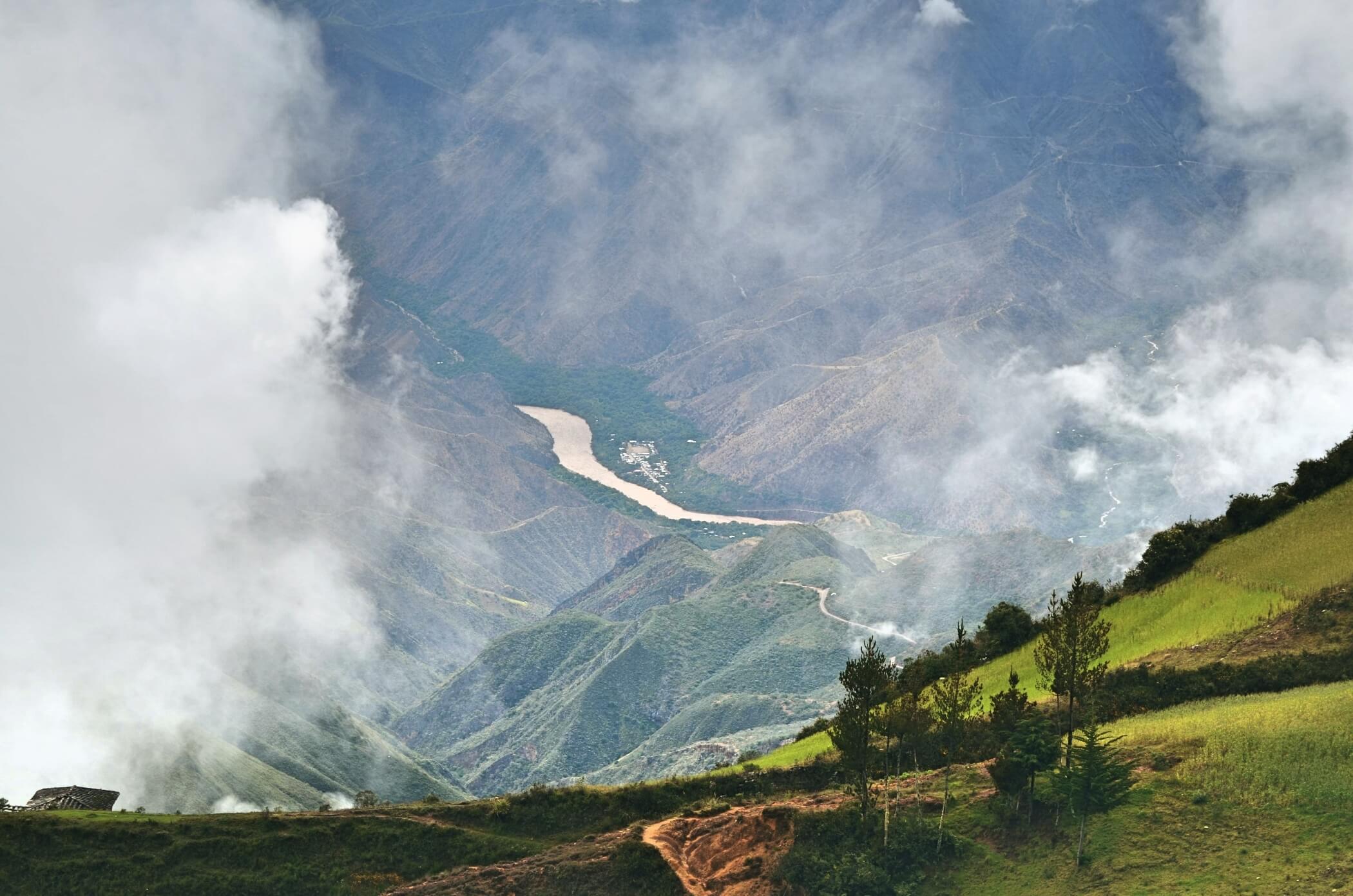
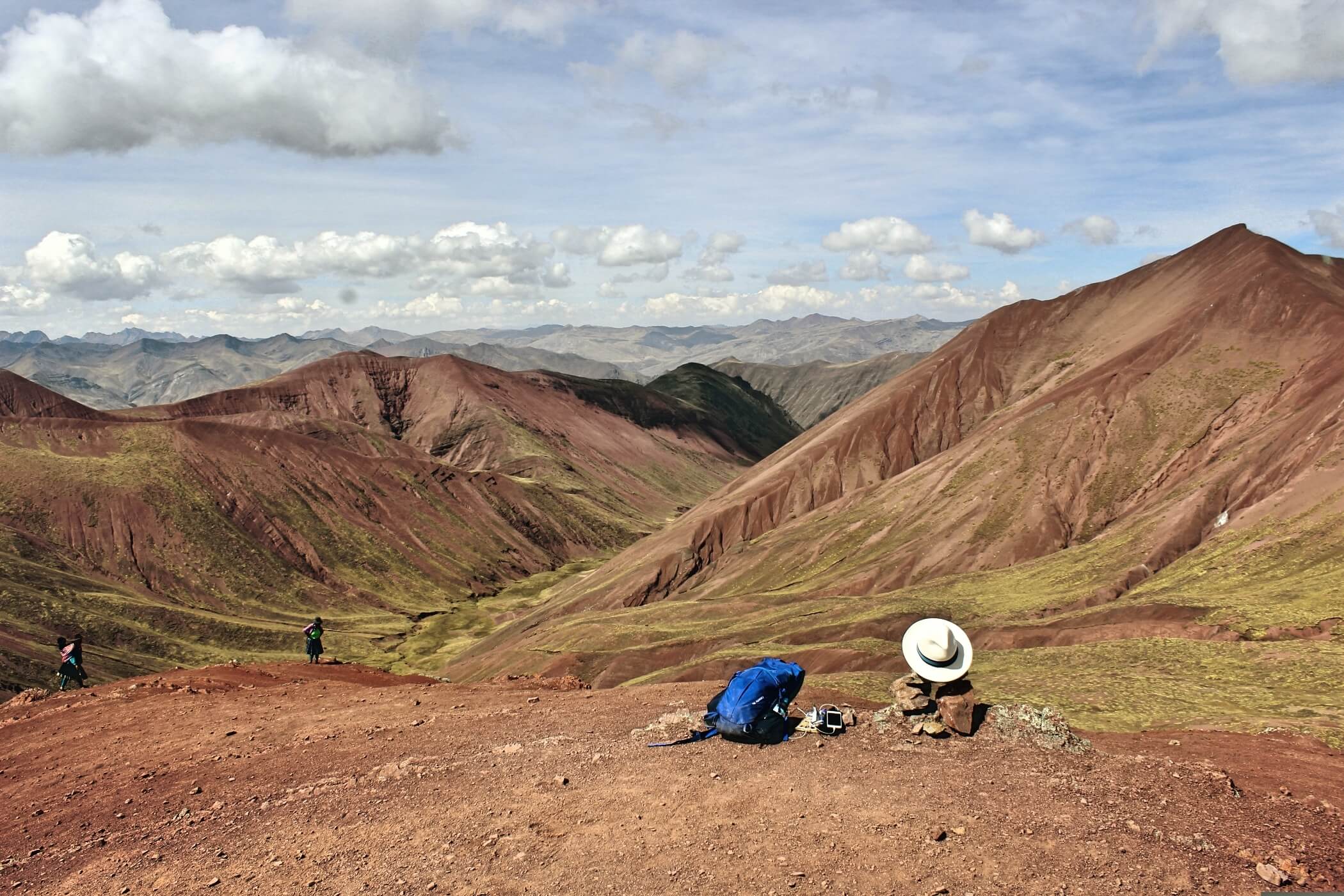
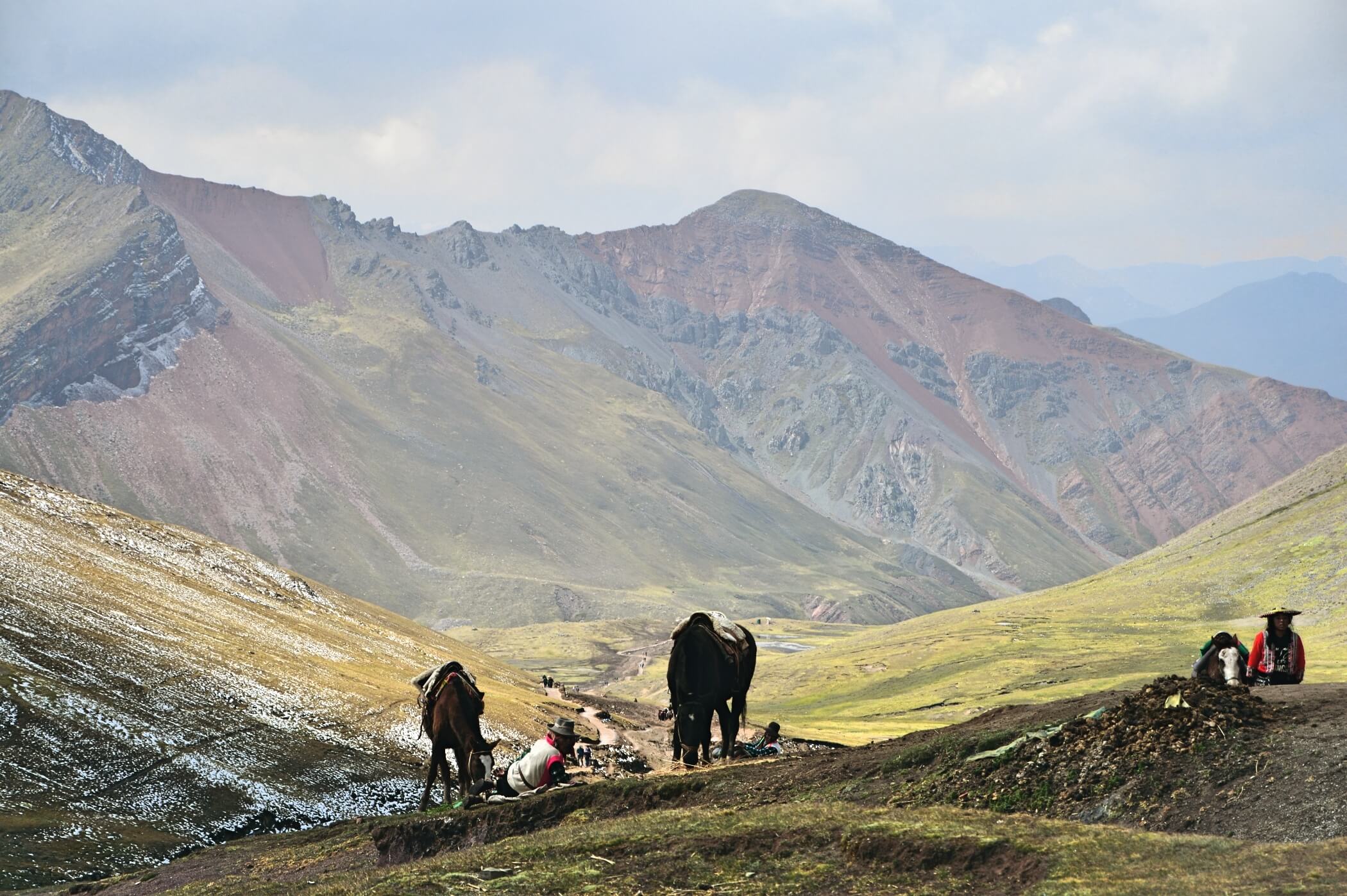
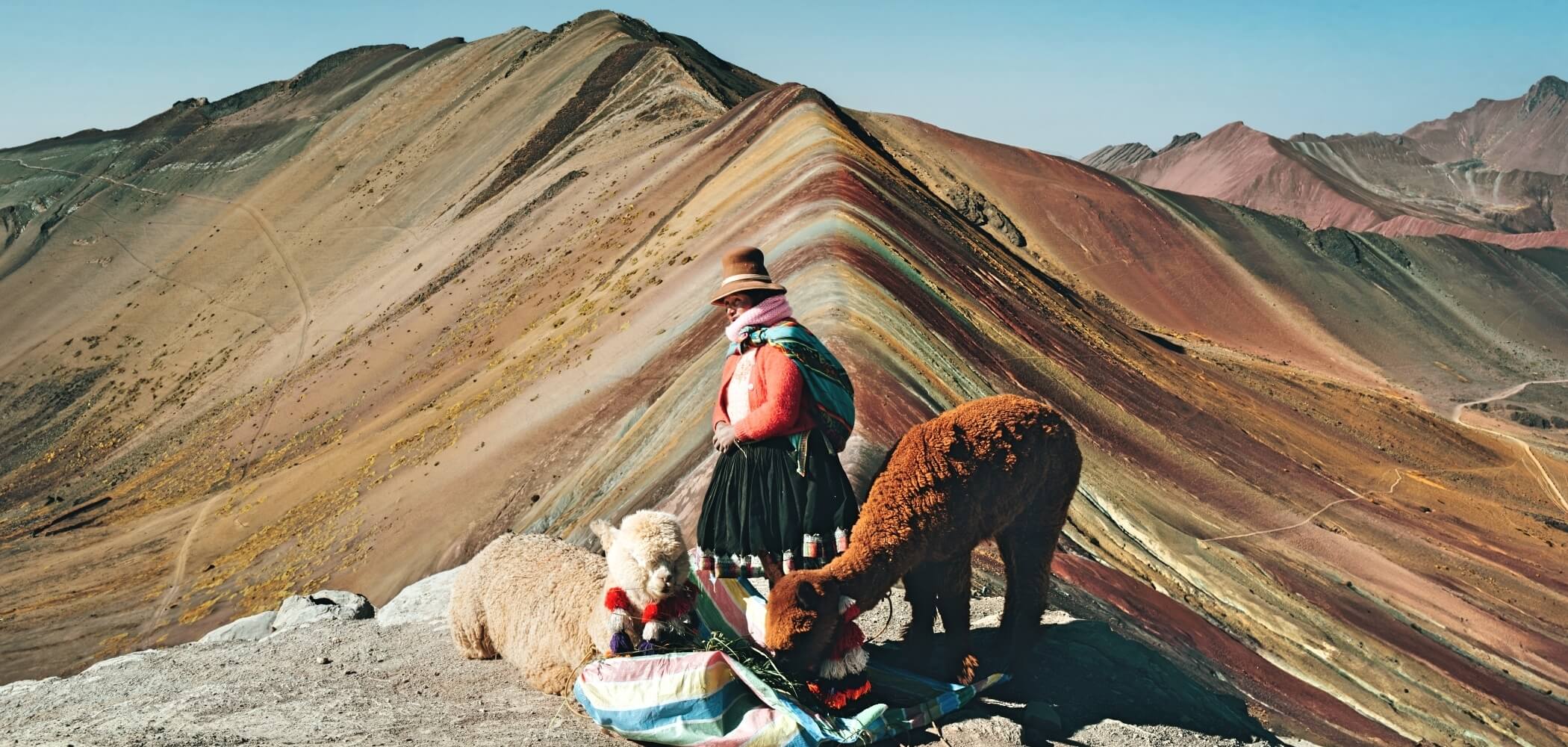
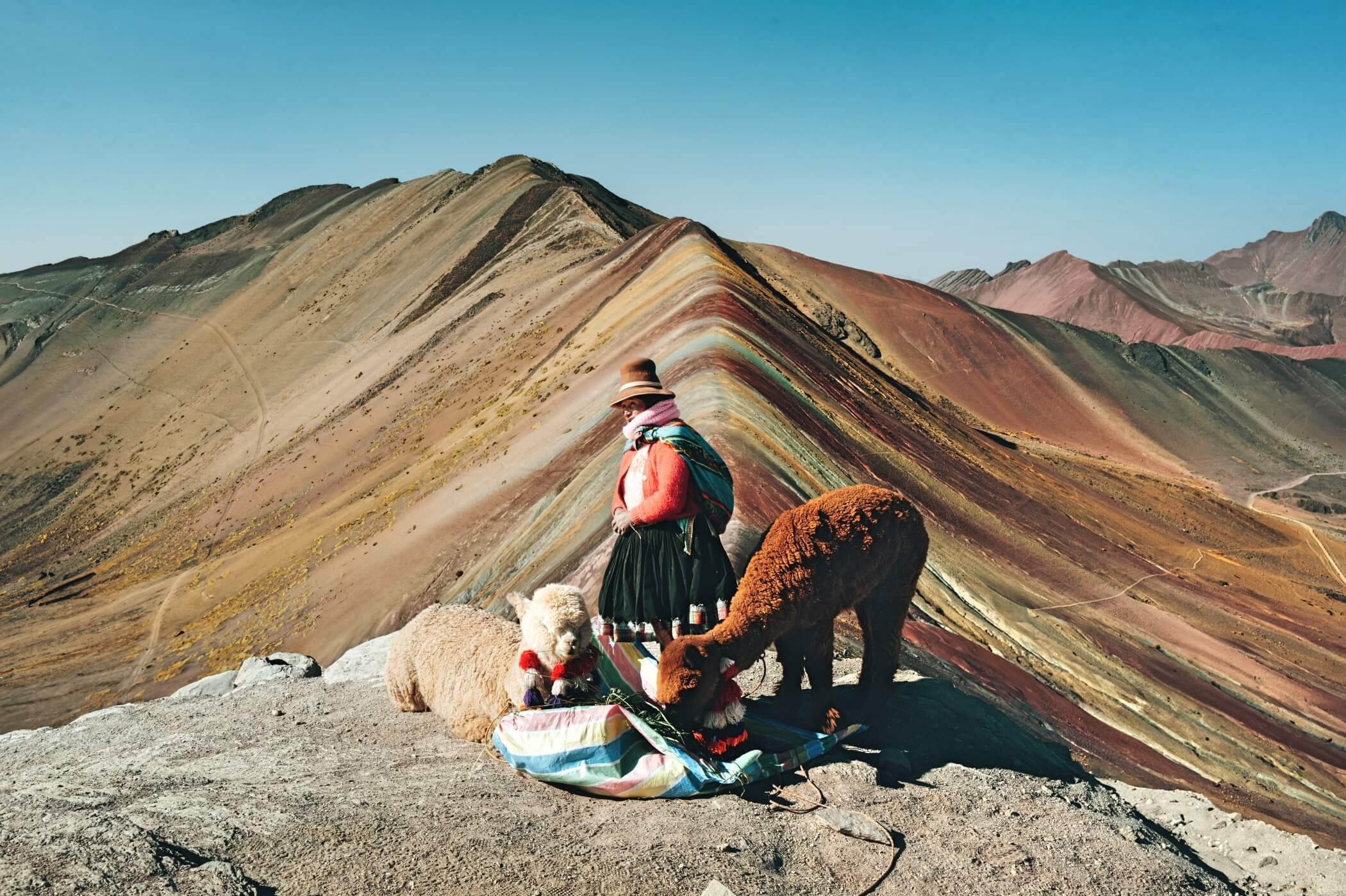
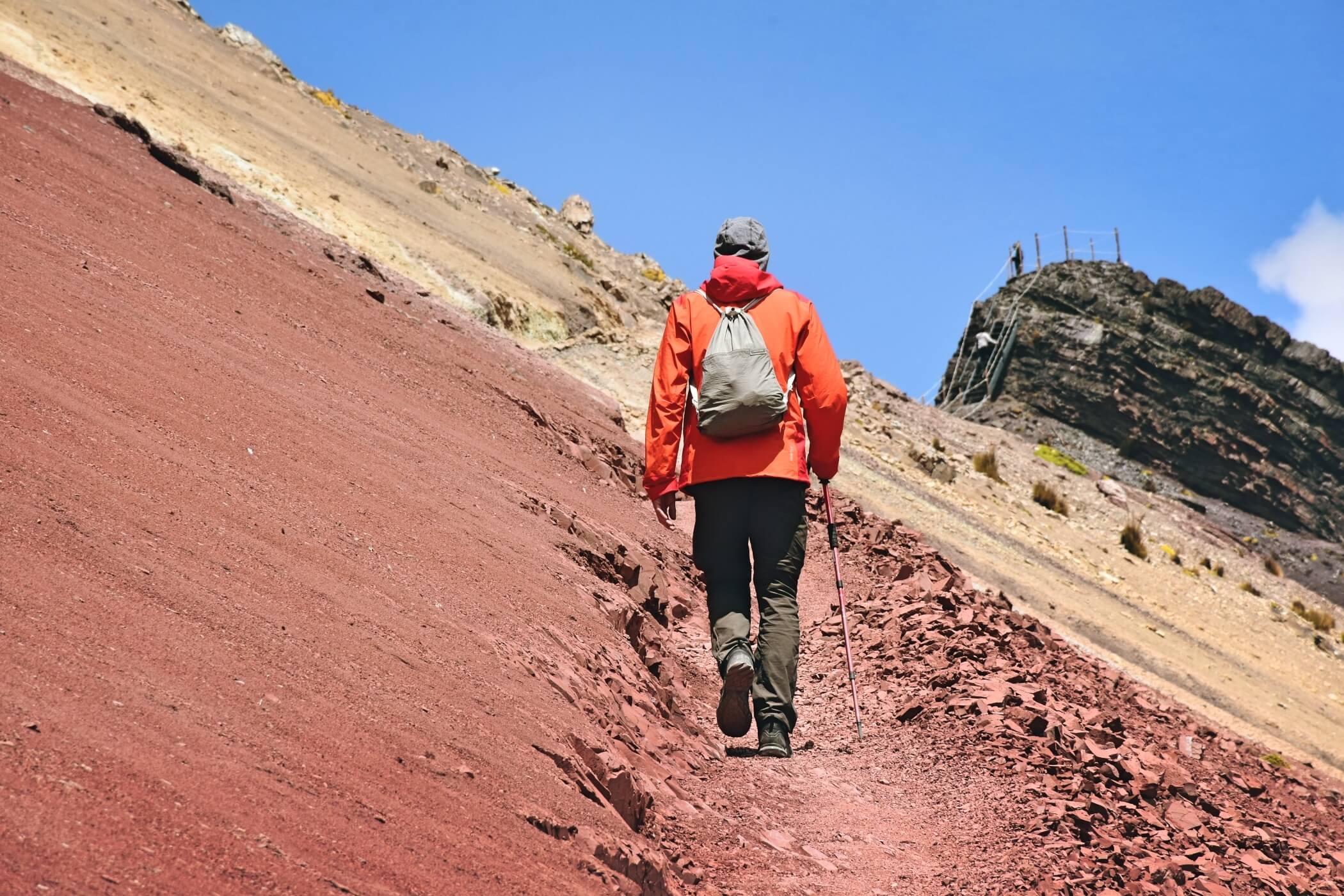
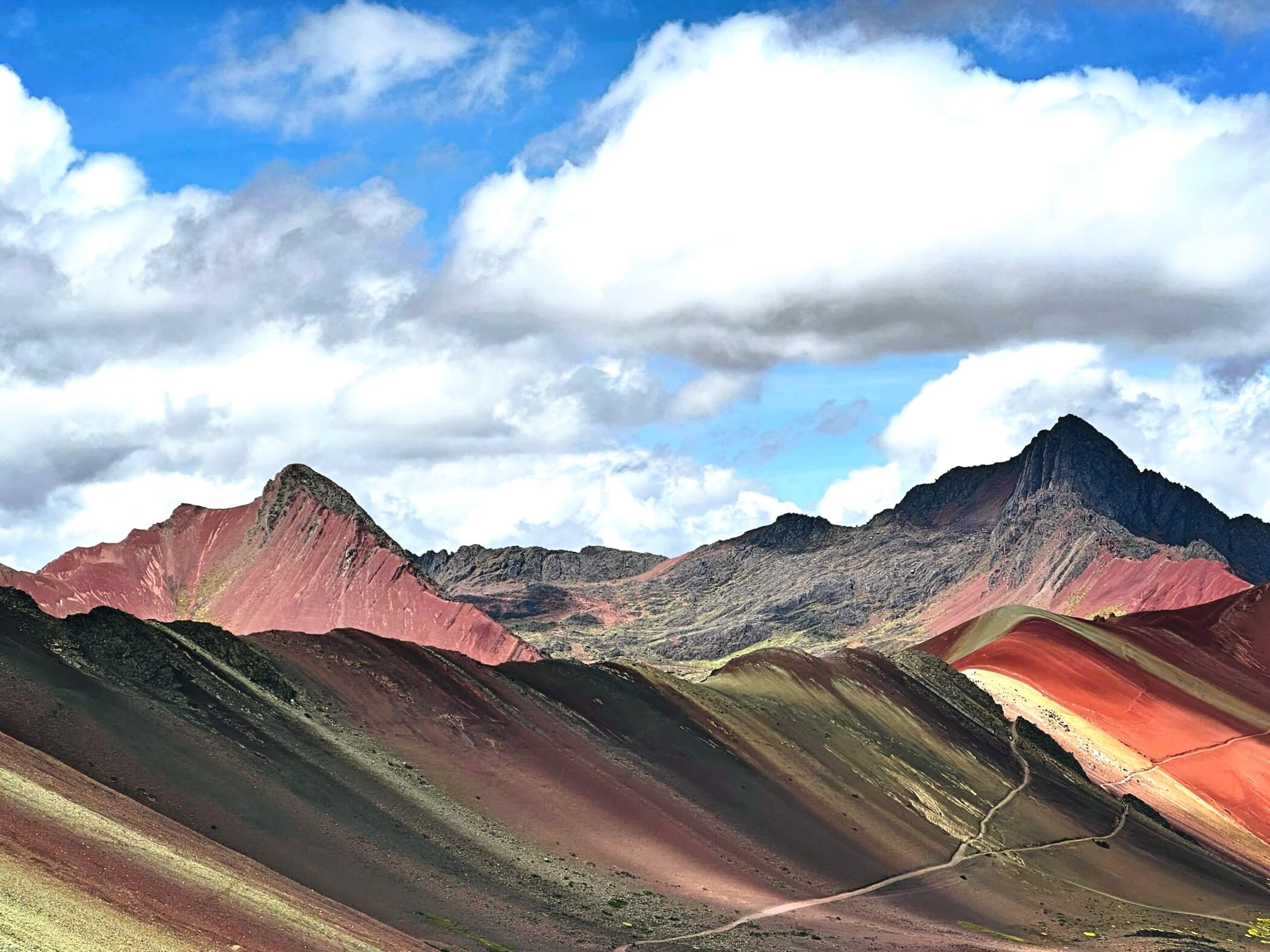
A day extension from this route leads to the now-famous Vinicunca – Rainbow Mountain. Its bands of ochre, red, pink, and green draw hundreds of day-trippers from Cusco.
But few know that the colours are not painted – they are mineral, formed over centuries of geological layering.
Seen from afar, the mountain looks unreal. Seen in context, after days in isolation, it becomes something deeper: a reminder that beauty in Peru often hides behind effort.
And in this place, luxury is not accommodation. It is presence.
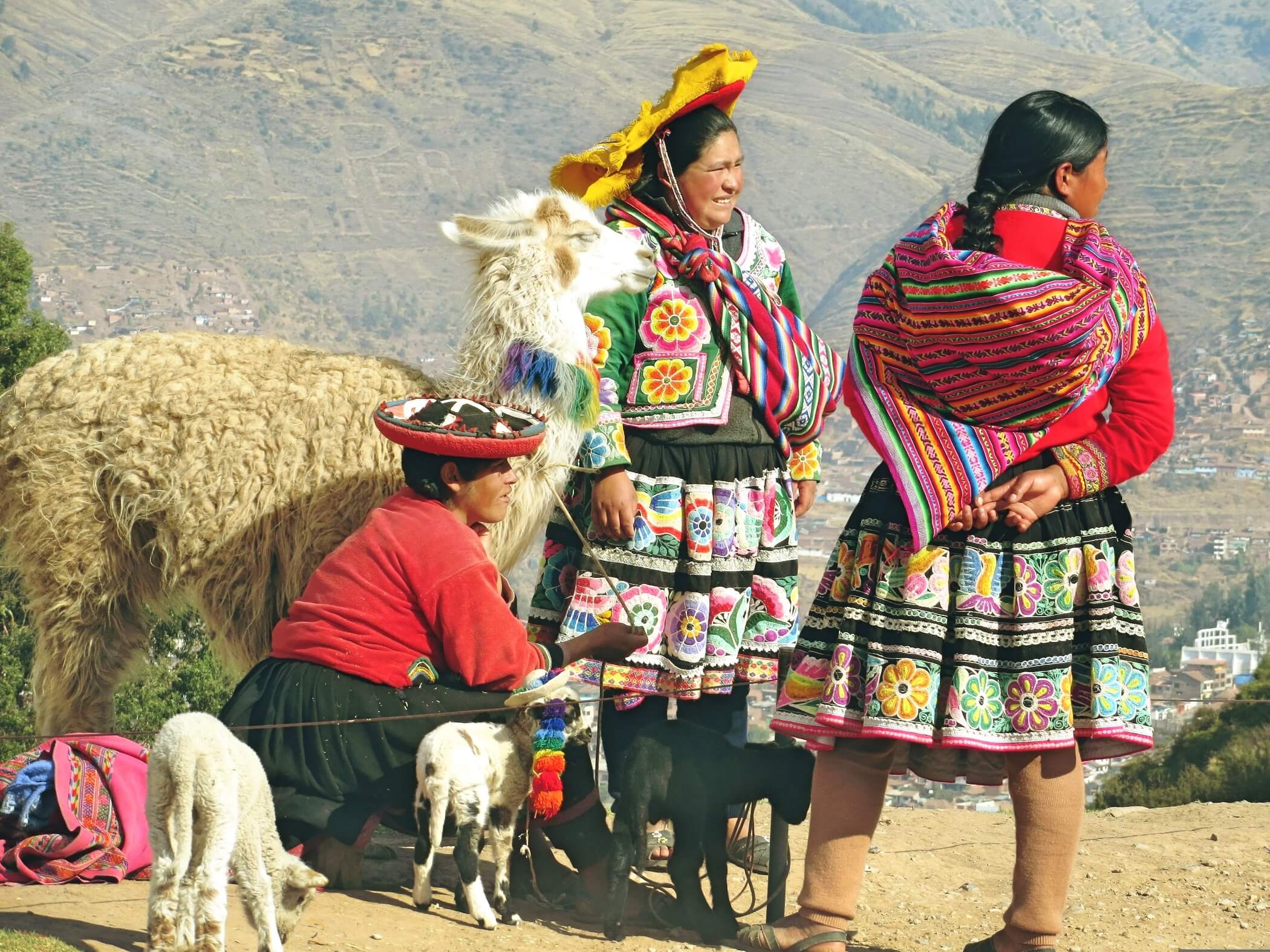
The lodges are rustic, but placed with care. Some travellers choose to do the trek with supporting llamas instead of porters. Others soak in natural hot springs at the end of a long day.
What you take from here is not rest.
It is a realignment of rhythm – slower, simpler, more alert.
Colca Canyon
There is no straight path into Colca.
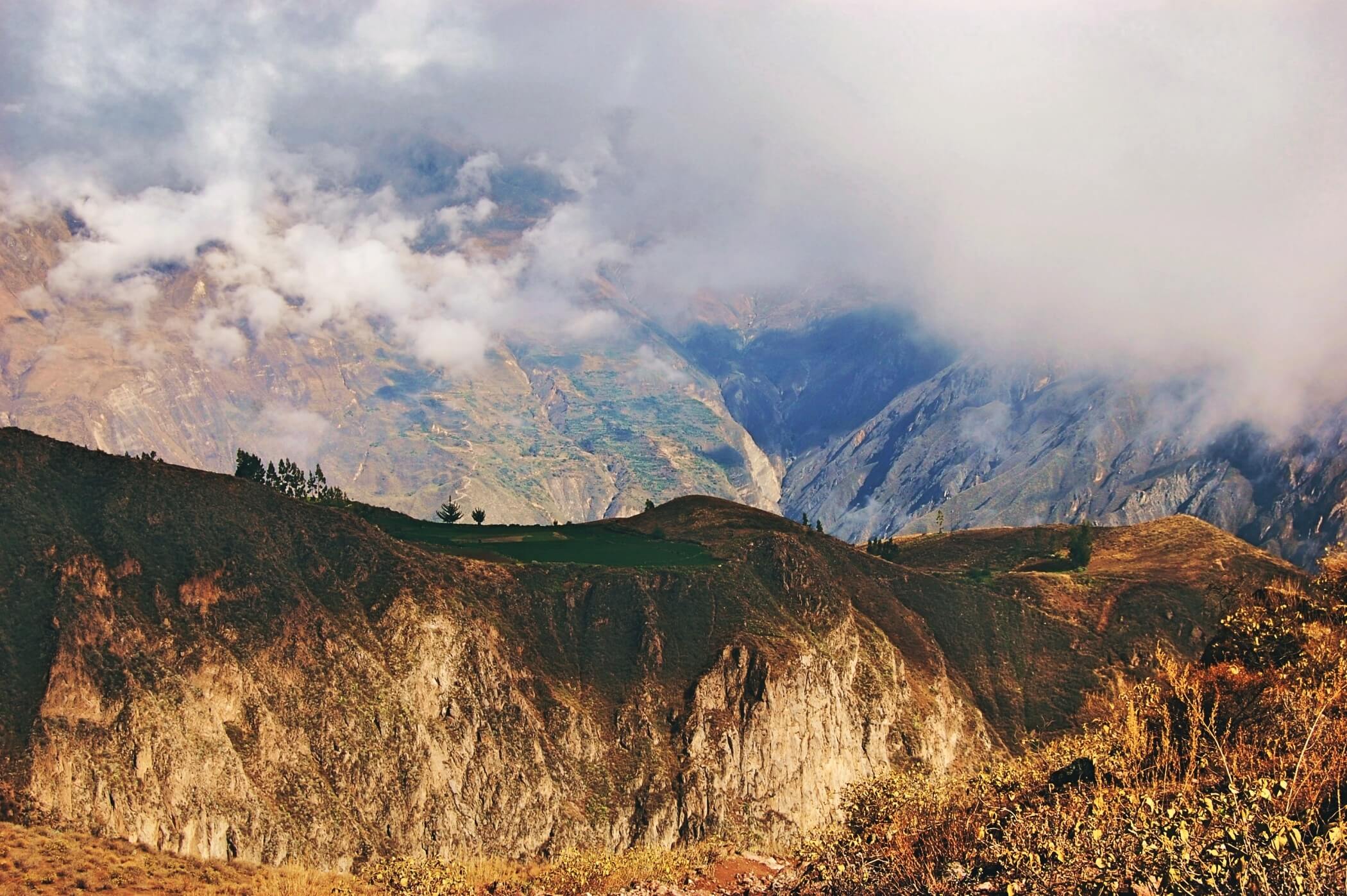
The road curves high above the rim, then drops – slowly, deliberately – into a land carved by water and fire.
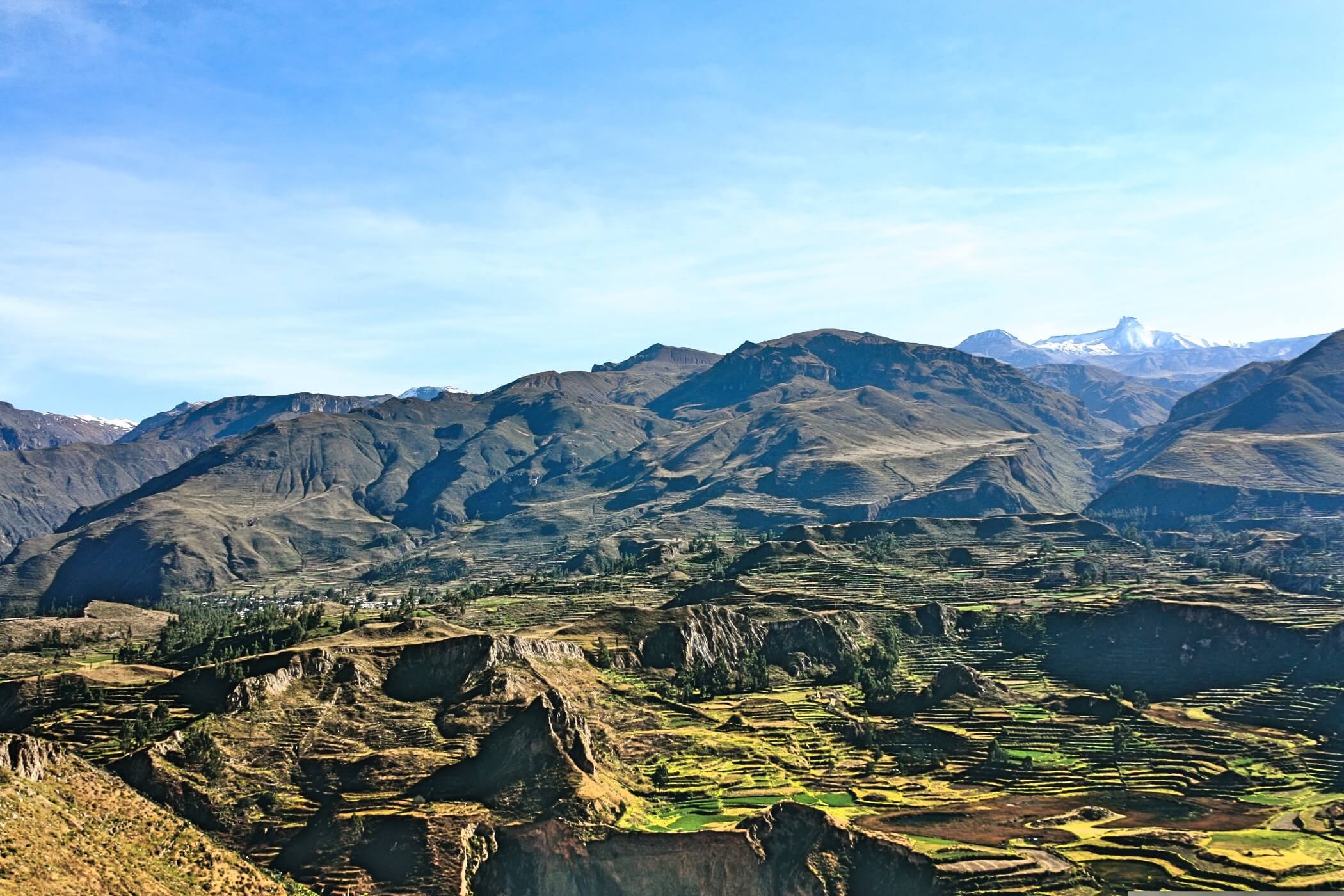
Twice as deep as the Grand Canyon in the United States, Colca Canyon is not shaped by spectacle. It is shaped by continuity – by centuries of Andean agriculture, stone terraces that cling to steep walls, and villages that seem to hang from nothing.
The air is thinner here, but warmer than in the high Cordilleras.
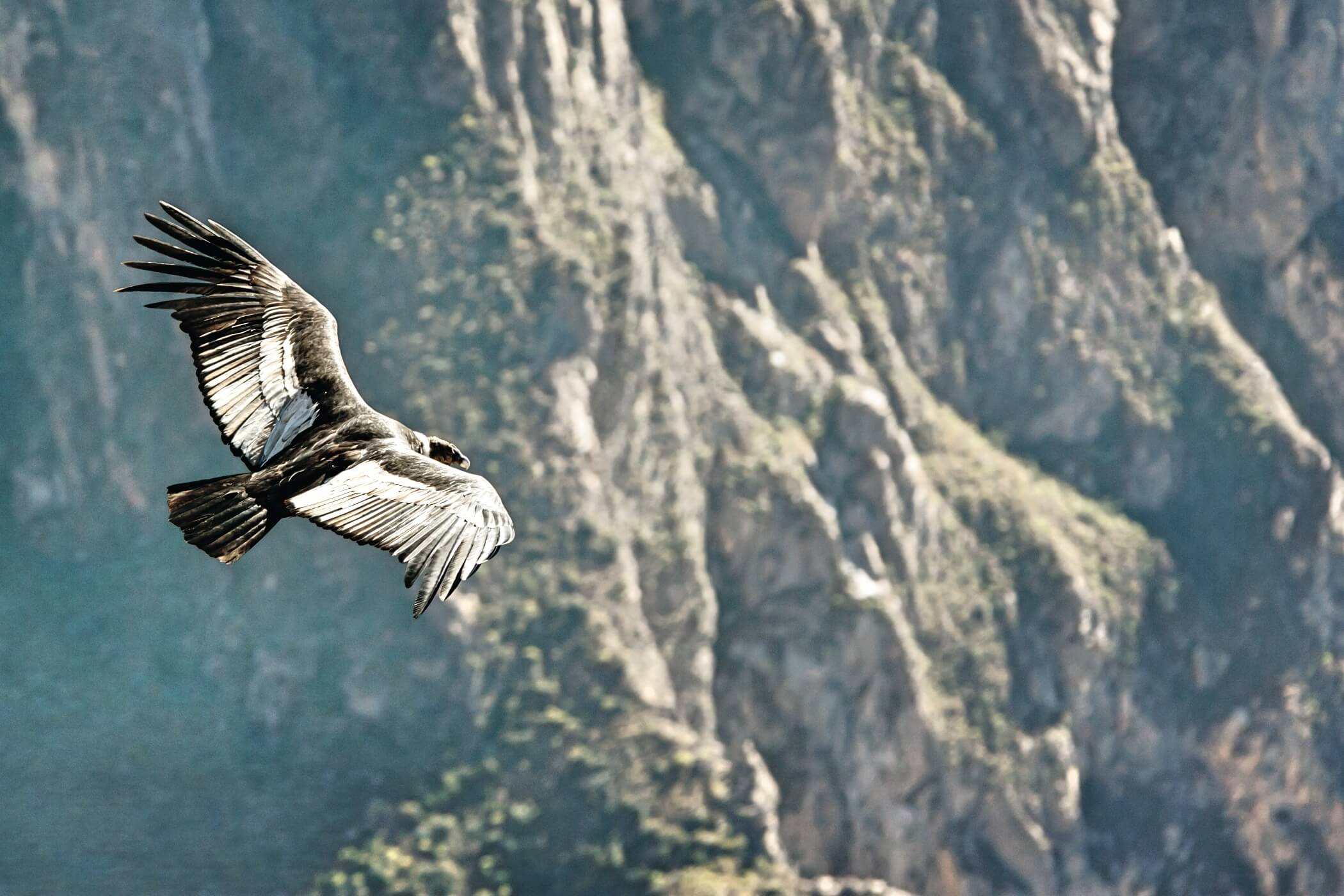
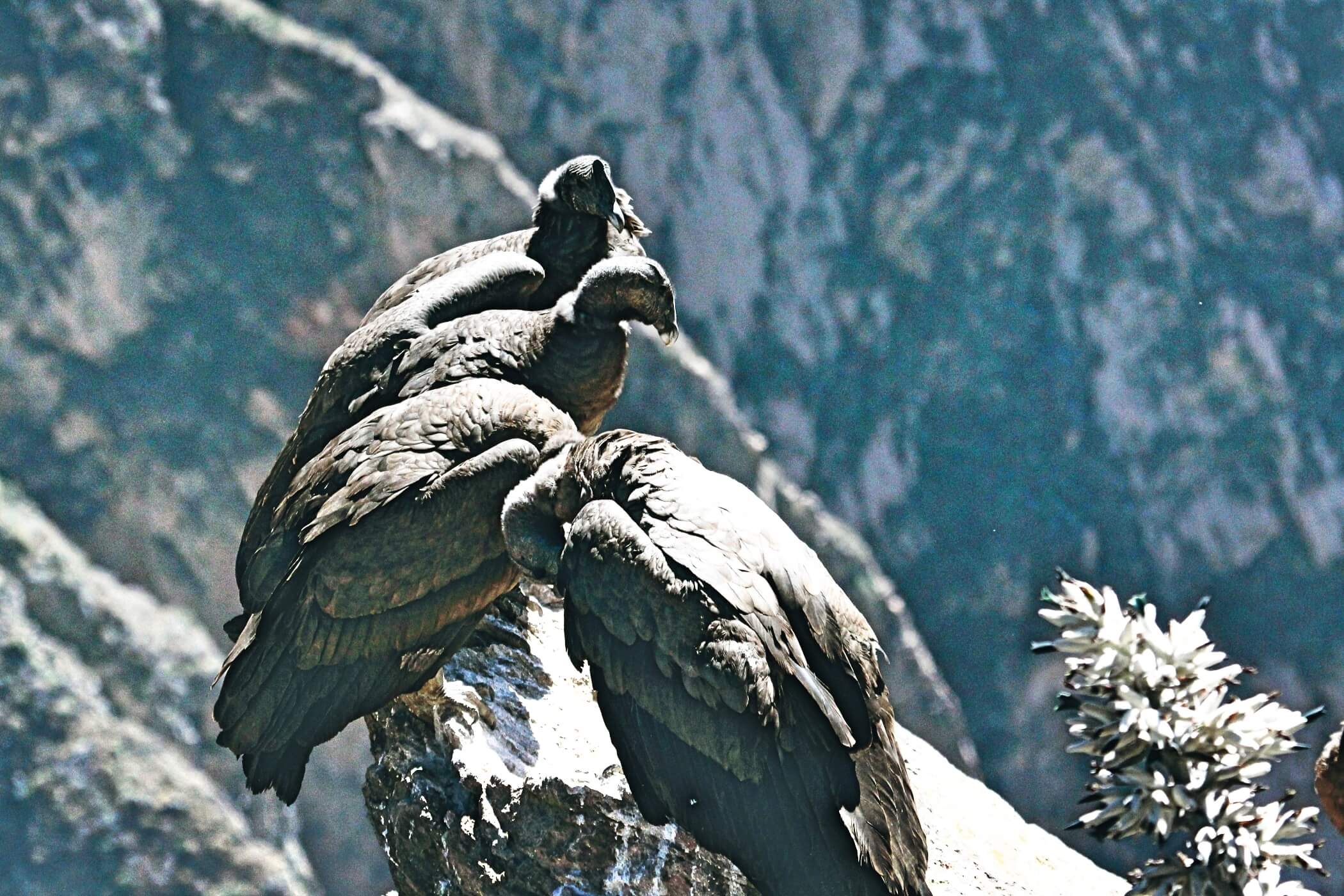
Condors rise slowly on thermals, appearing each morning like moving shadows over the cliffs. They are not tame. They are not placed. They simply come – because the canyon has always belonged to them.
Watching them circle overhead, just a few metres away, is not a tourist moment. It is a confrontation with scale, with time, with silence.
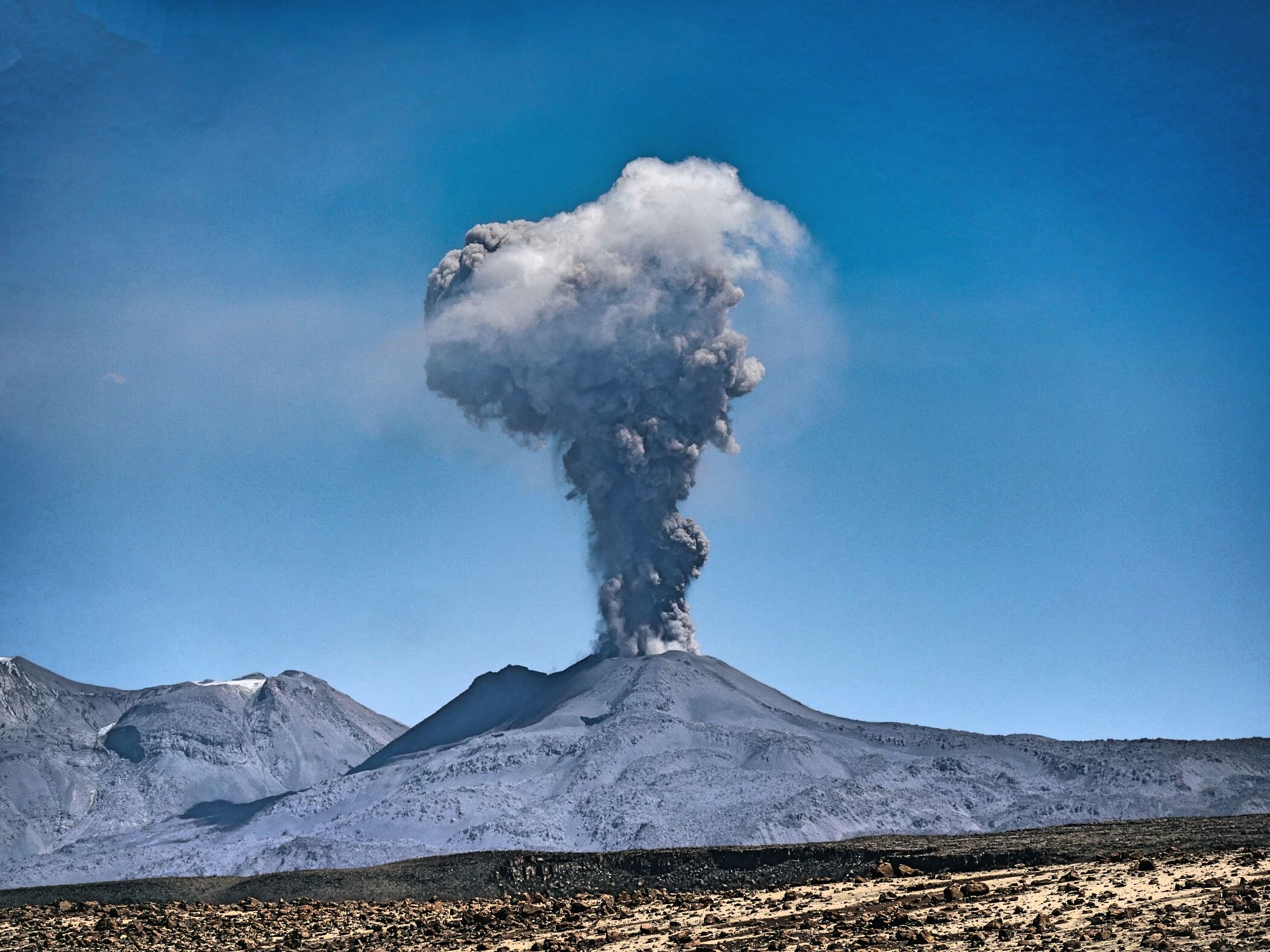
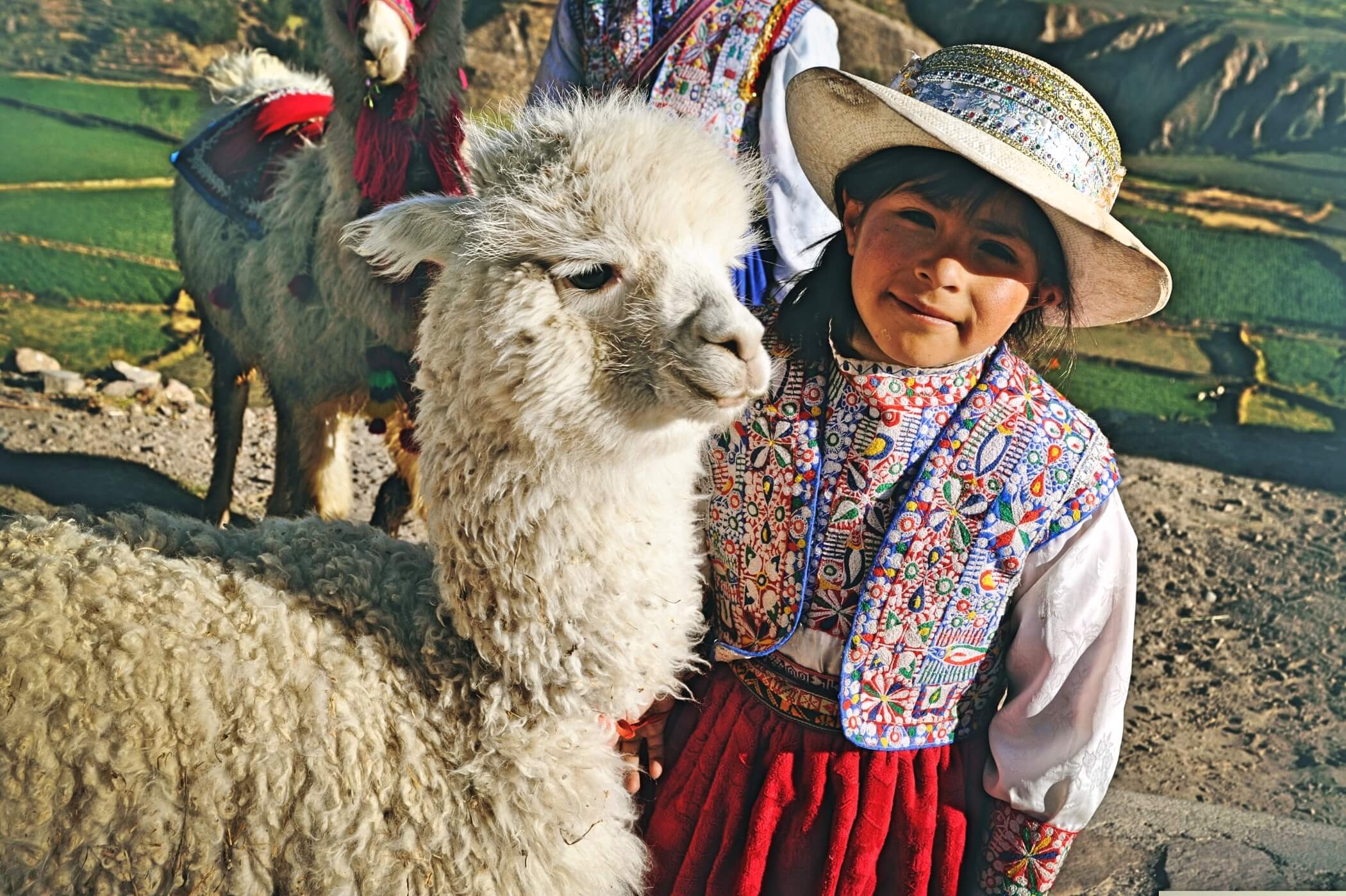
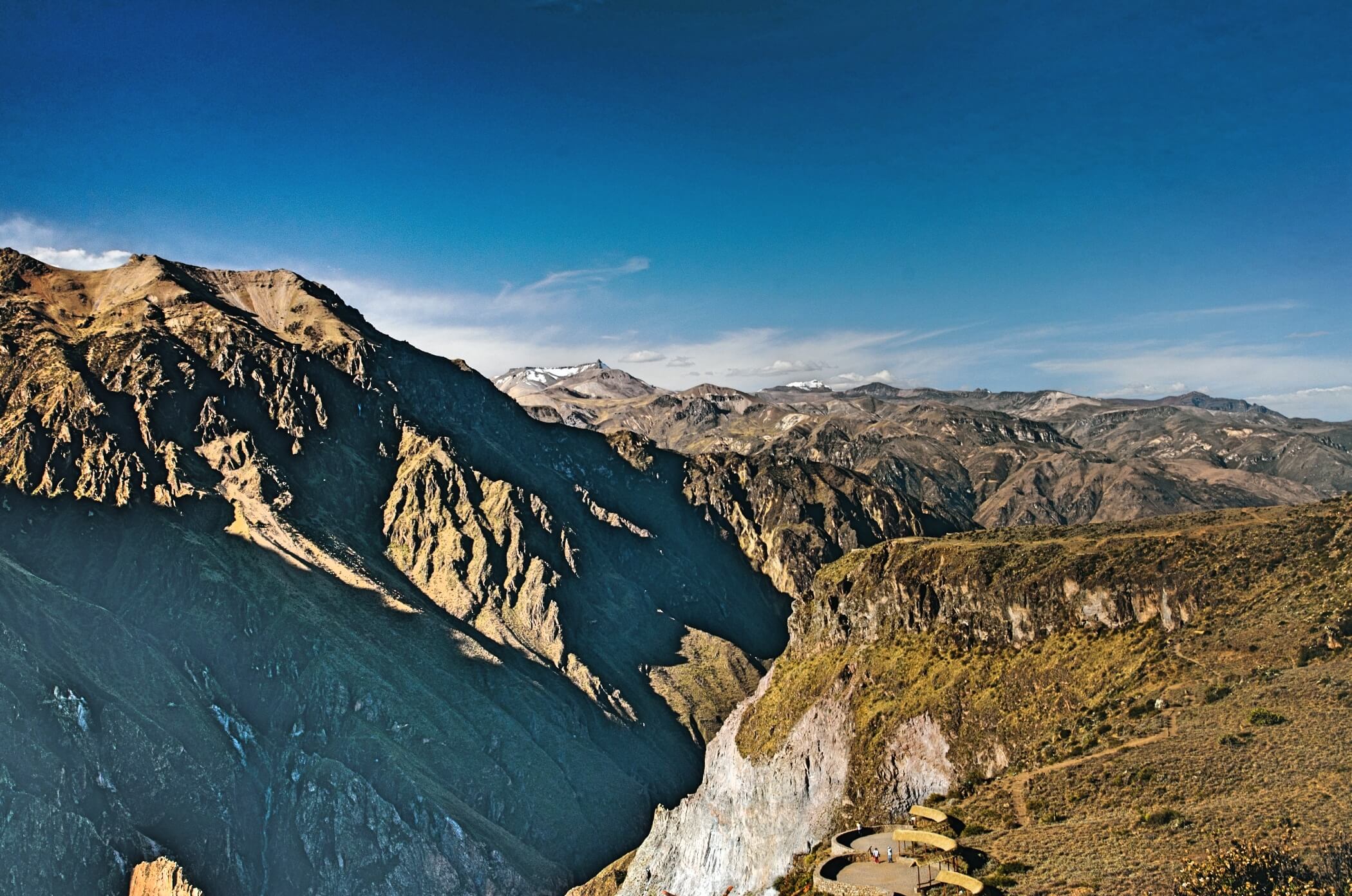
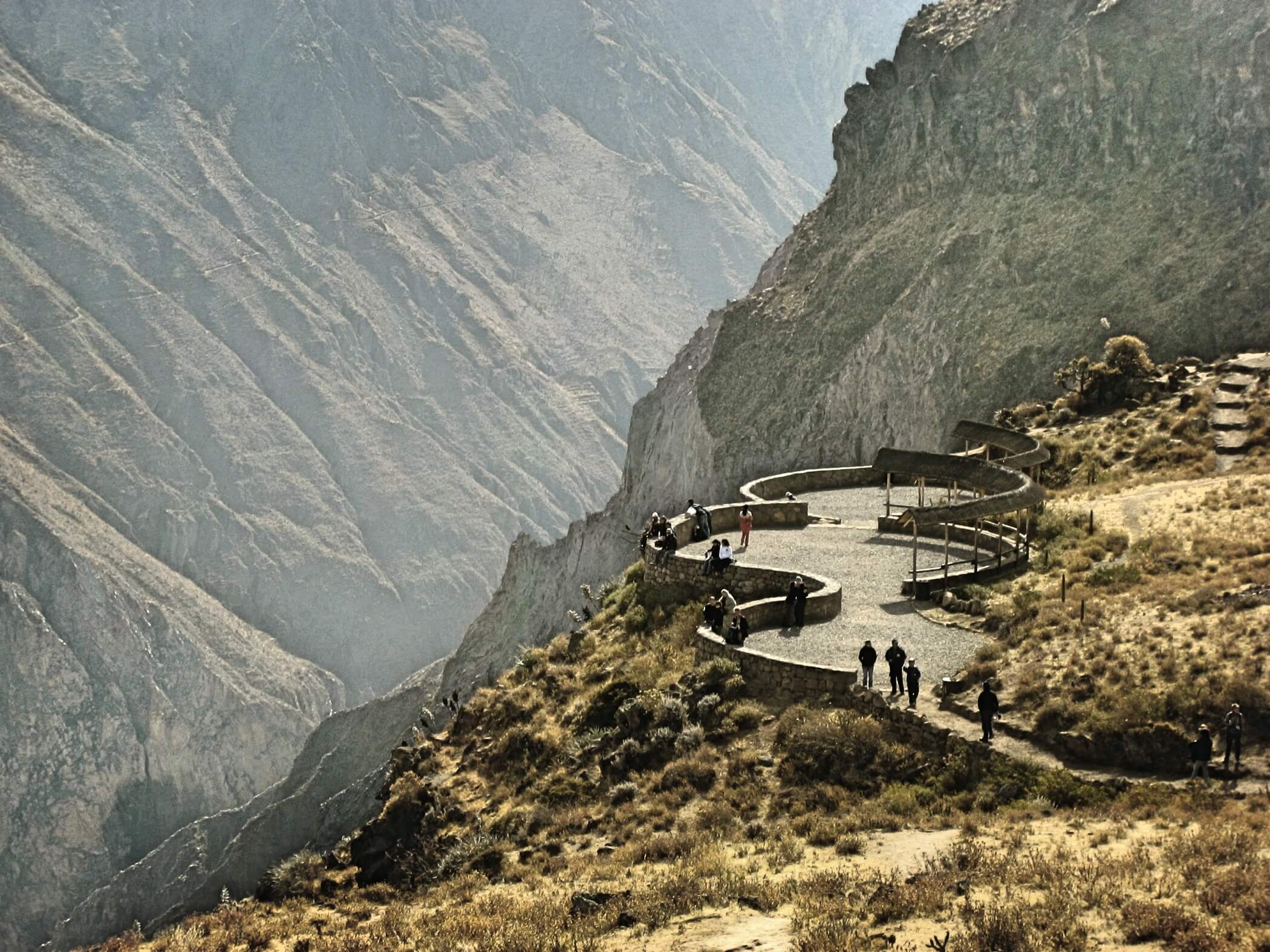
The trails here run deep – literally and emotionally.
One of the most iconic routes descends from Cabanaconde into the canyon and reaches Sangalle, also called the Oasis, where palm trees and pools offer rest after a hard day’s descent.
You can hike down in five hours. You can climb out in six. Or you can stay – spend the night in one of the rustic eco-lodges and feel the depth of the earth in your chest.
Colca is also a region of quiet resilience.
The villages of Chivay, Yanque, and Coporaque still hold onto ancient Quechua customs. The people farm, weave, and live close to the earth.
You can soak in nearby thermal springs, visit local markets, or sleep in haciendas where hospitality is handmade.
In Colca, luxury is not comfort. It is authenticity.
The kind that does not need to explain itself. The kind that reveals itself only when you walk long enough, far enough, and deep enough to feel it.
Sacred Valley – Movement Through History
Maras, Moray, and the Inca Echo
There are places in Peru where the past feels distant, and others where it walks beside you. In the Sacred Valley, the past is not hidden in museums.
It is cultivated, lived, and used.
You do not admire it from a distance. You cycle through it, touch it, taste it, and climb across it.
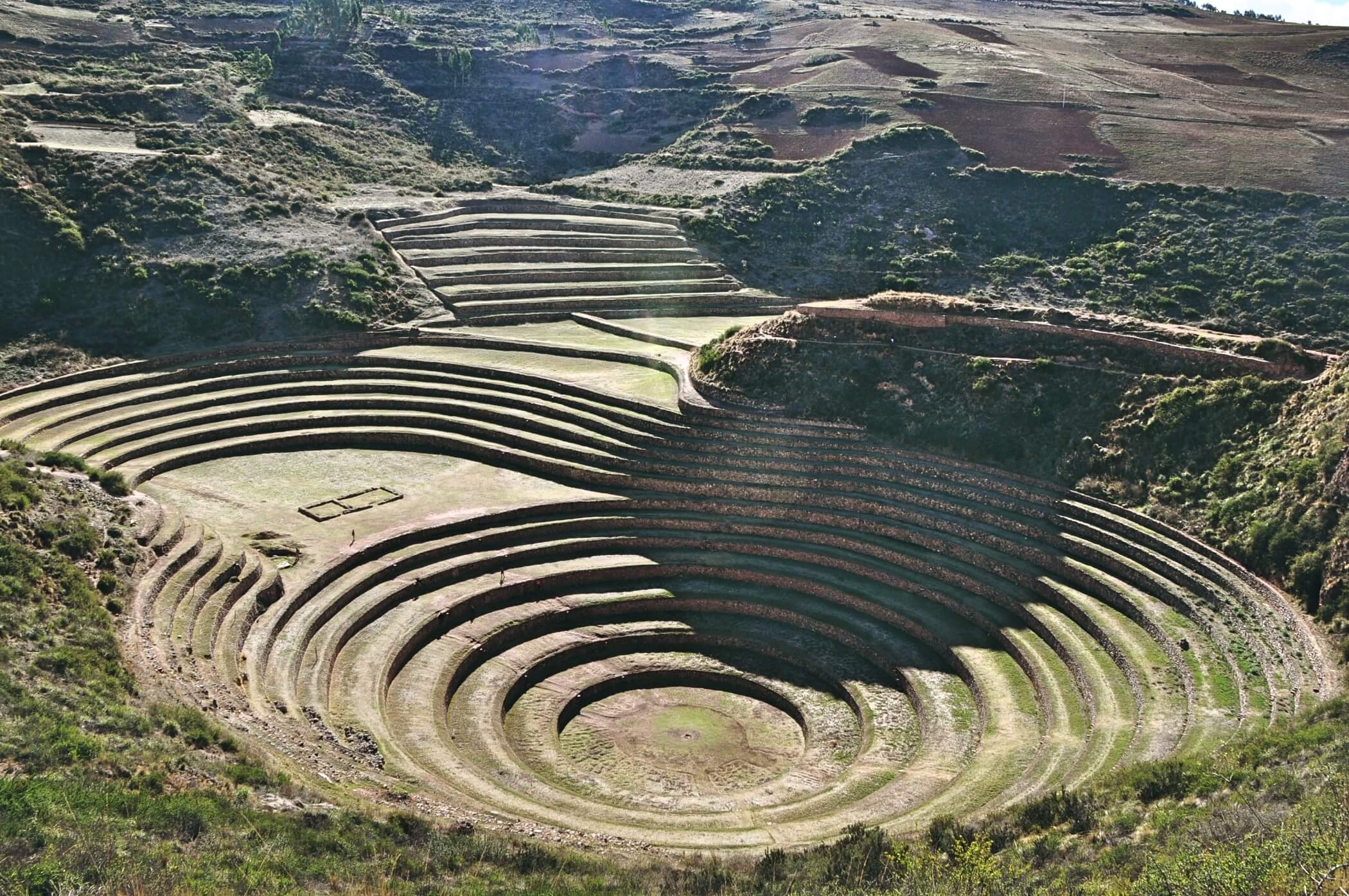
One of the most surprising routes begins with a bike descent from the plateau above Moray – a circular, terraced amphitheatre carved deep into the earth.
It is a perfect ring that once served as a vast agricultural laboratory for the Incas.
Each terrace has its own microclimate, altitude, and soil condition. The structure is not just architectural – it is experimental. It reveals a civilisation that was engineered with the precision of intuition.
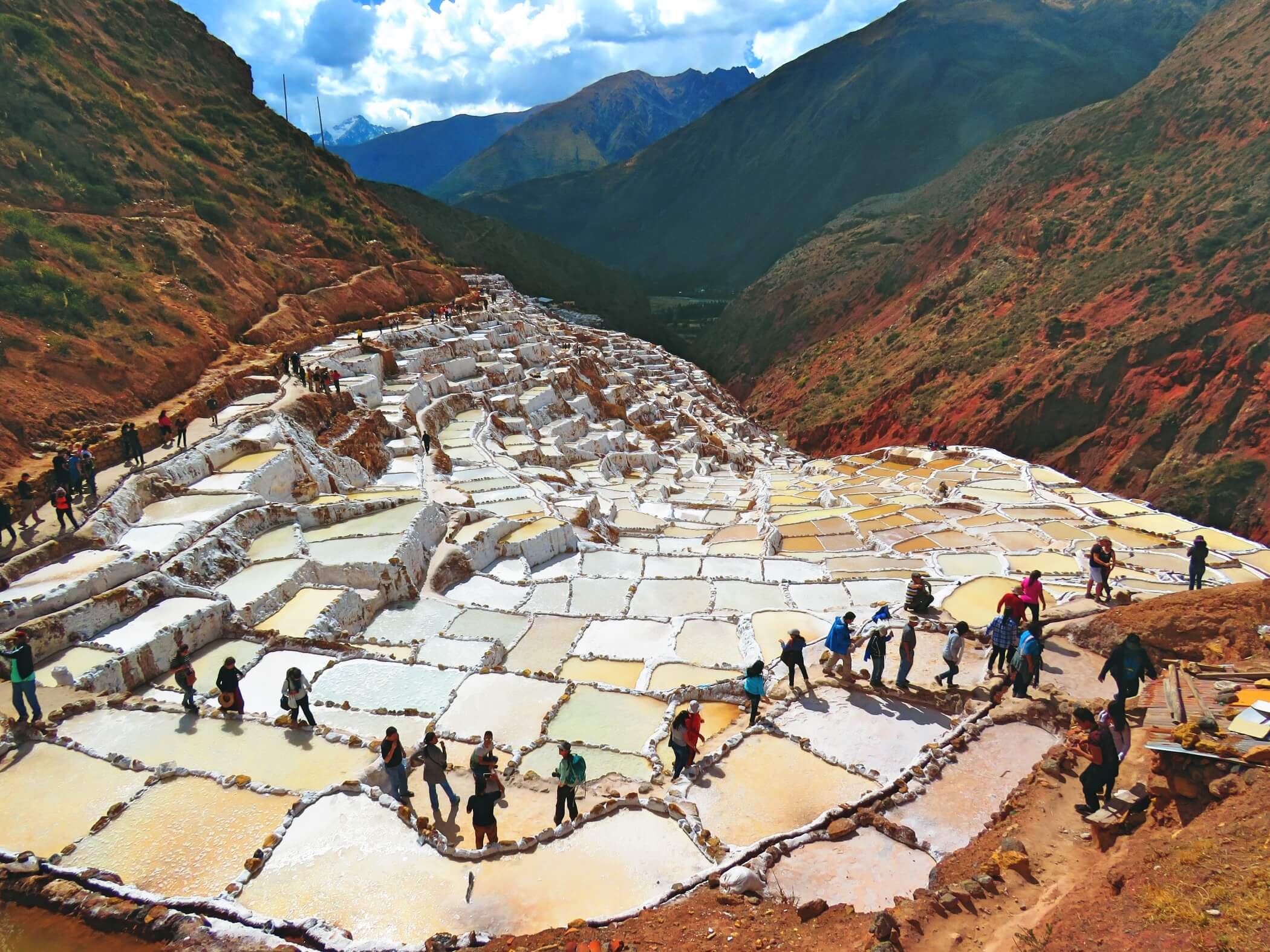
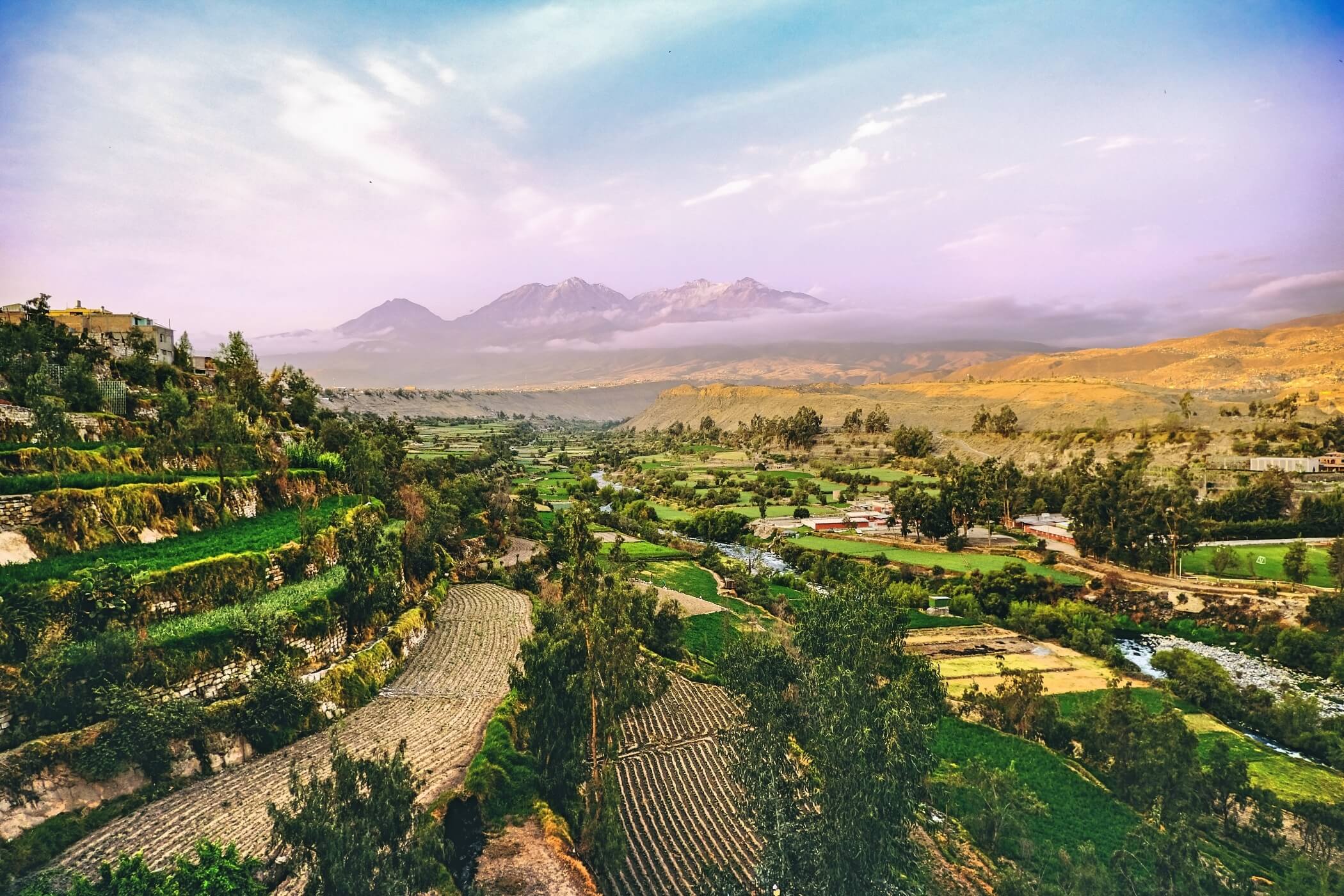
Families here have harvested the same plots for generations.
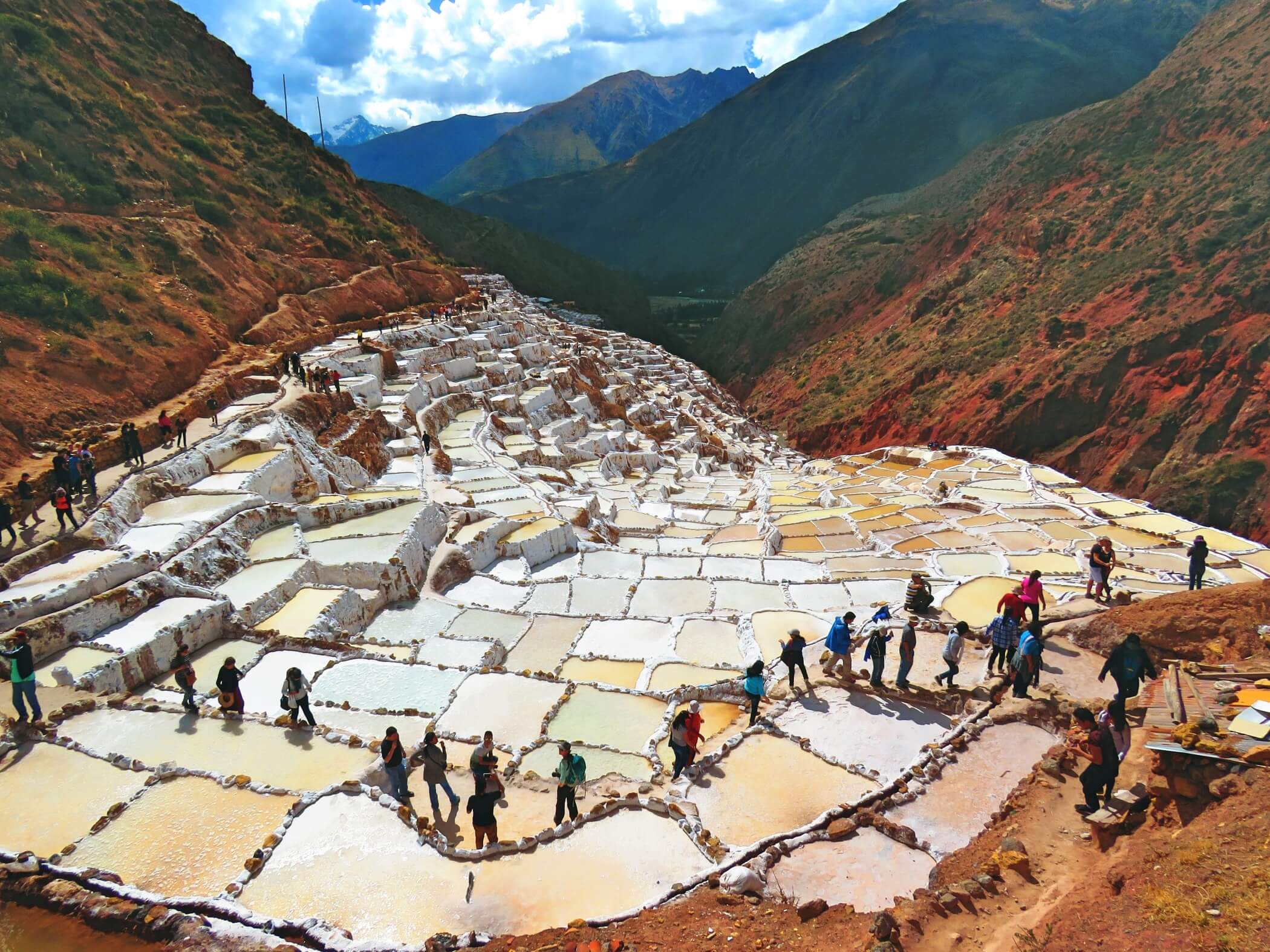
When the sunlight hits the crystals, the entire slope glows white – a geological manuscript left open to the sky. You walk along narrow paths between the pools, and every sound – your breath, your step, the flow of water – feels amplified.
What makes this valley different is the way time coexists.
Modern cyclists share the road with ox carts. Farmers in woven hats sell herbal tea to high-altitude hikers. Children run through ancient terraces. It is not a place frozen in heritage – it is a place where heritage has simply never stopped working.
And in that movement, there is meaning. Luxury here is rhythm, not escape.
The rhythm of the land, the rhythm of muscle, the rhythm of history, is still alive in the soil.
Ollantaytambo to Aguas Calientes
Some journeys are about distance. Others are about deepening.
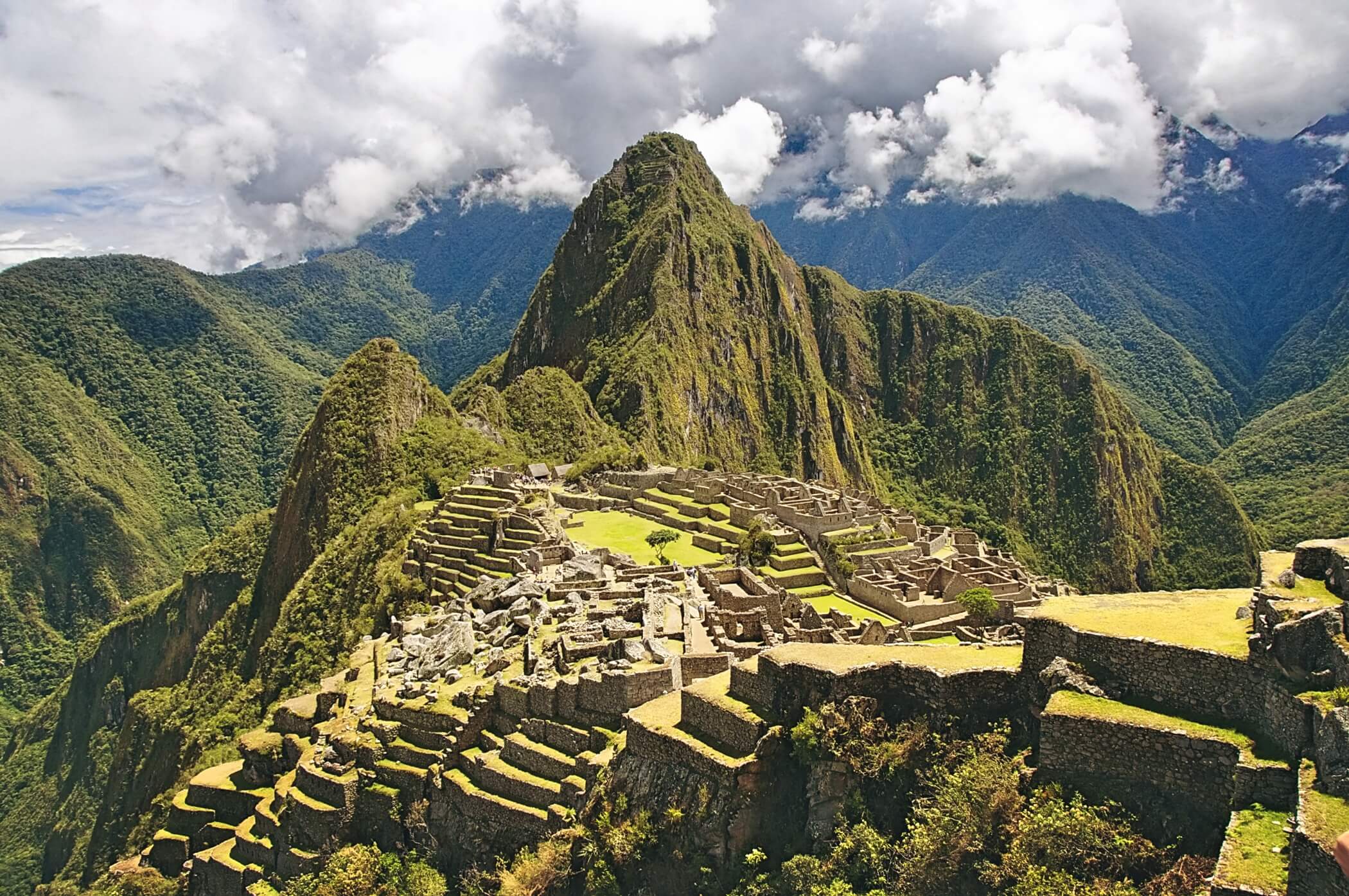
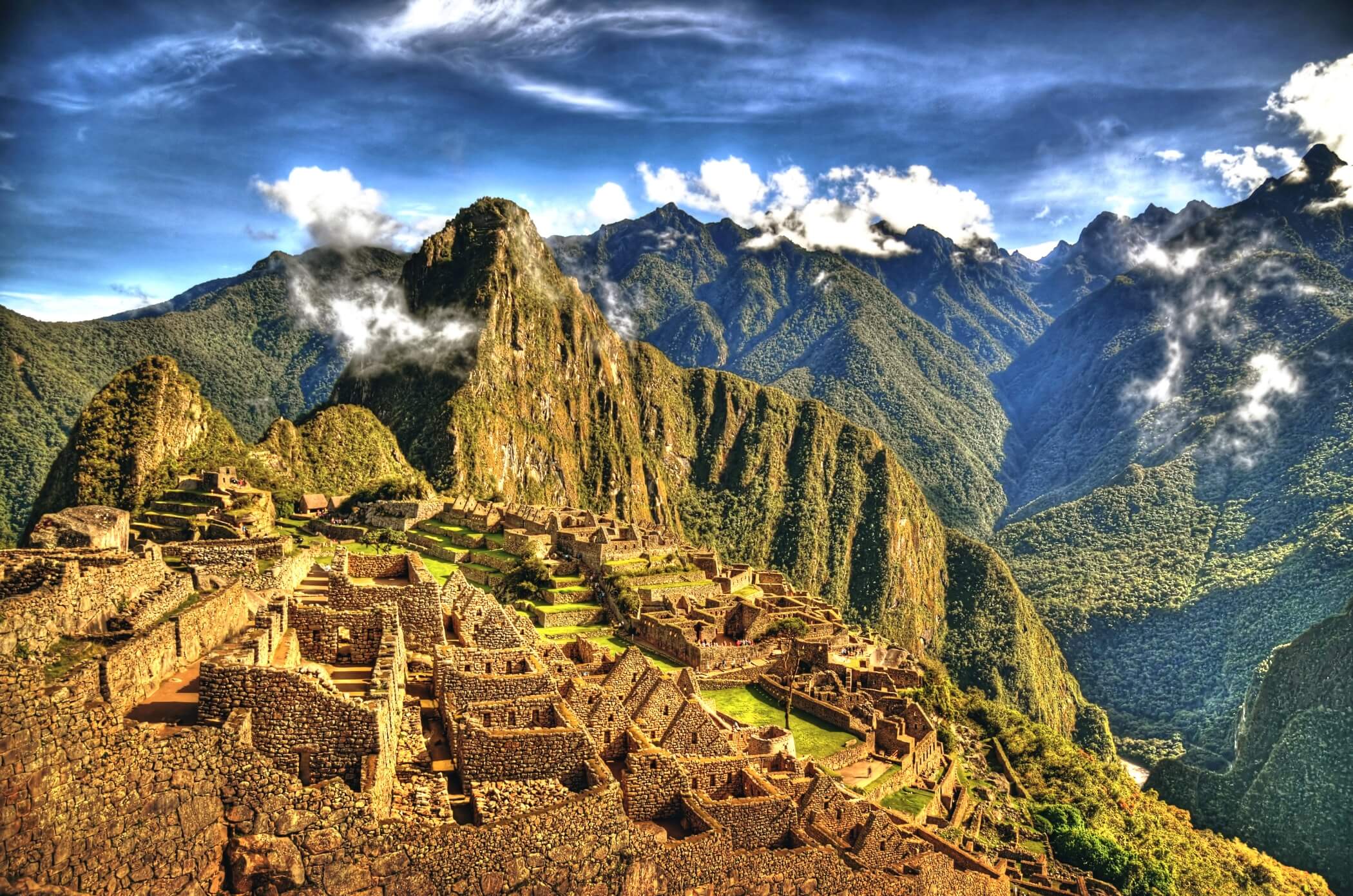
The route from Ollantaytambo to Aguas Calientes, whether taken by foot or rail, is not just a path to Machu Picchu. It is a gradual immersion into landscape, into altitude, into anticipation.
And no matter how many images you have seen, the real journey never feels familiar.
Ollantaytambo itself is not a departure point.
It is an archaeological site in its own right – a perfectly preserved Inca town where cobbled streets follow original foundations, and where terraced ruins rise dramatically behind adobe homes.
The town still breathes the structure of its builders.
You can stay in a local guesthouse with a view of the ancient fortress. At dawn, it is not a monument – it is a presence.
From here, travellers face a choice.
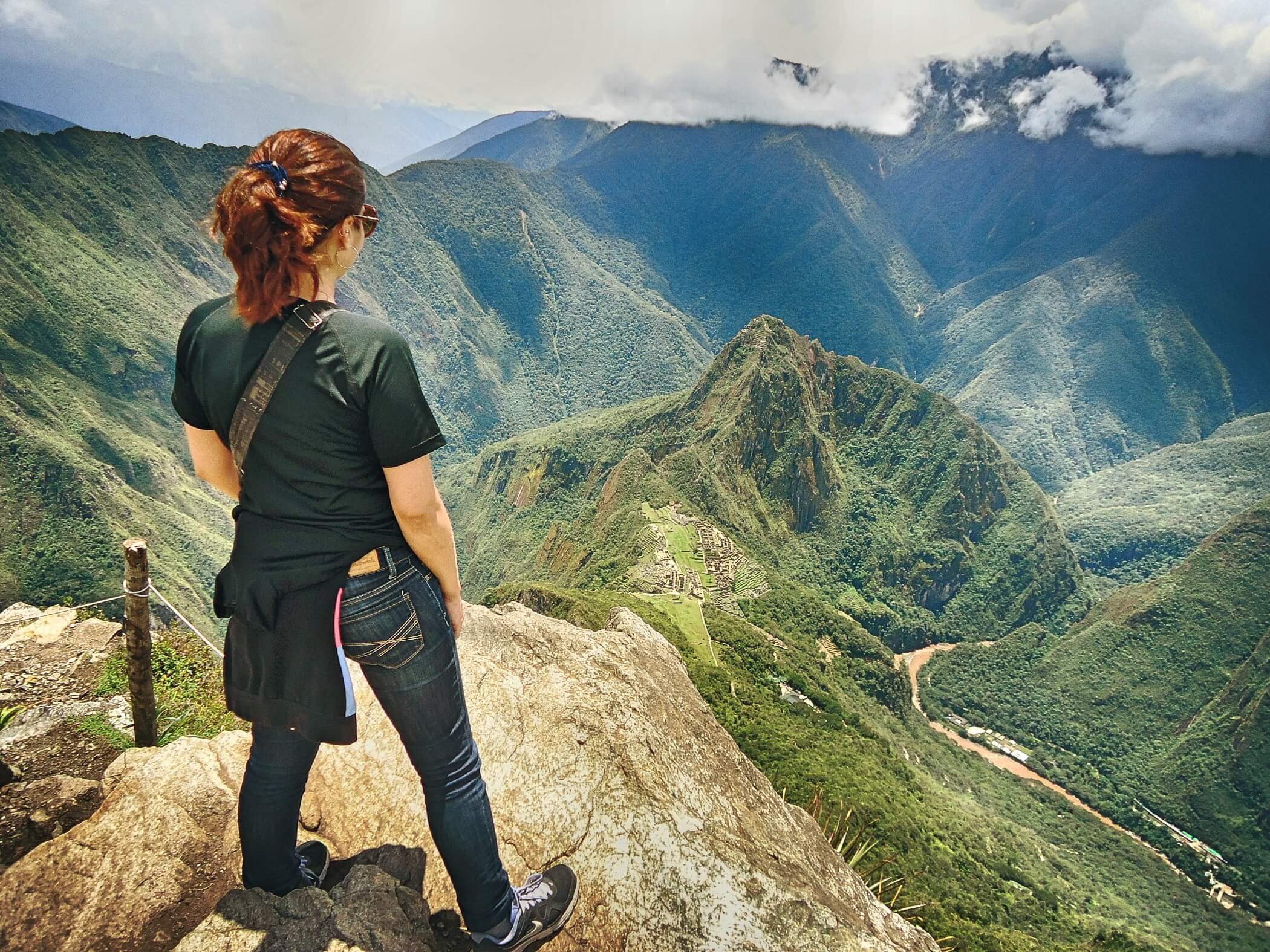
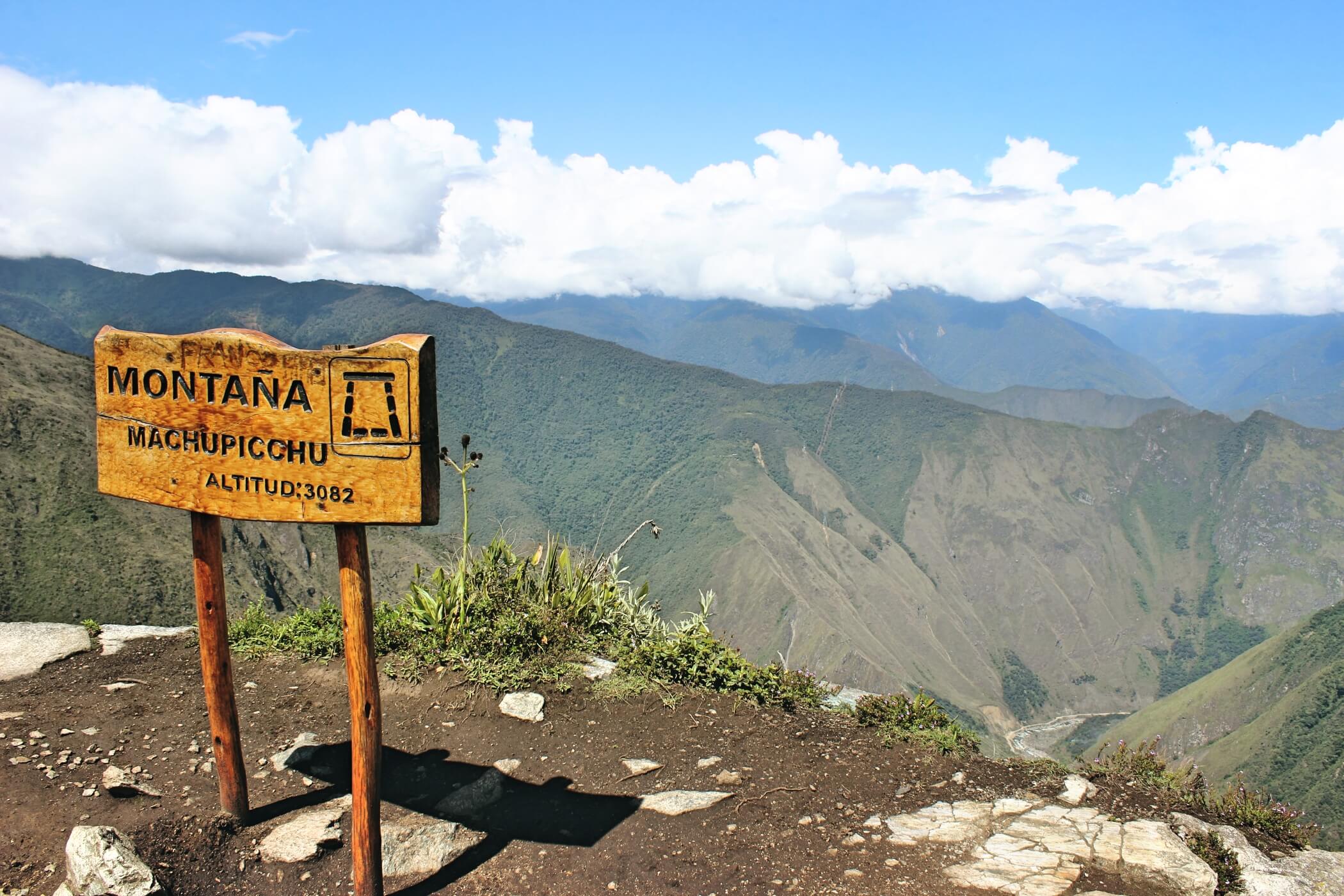
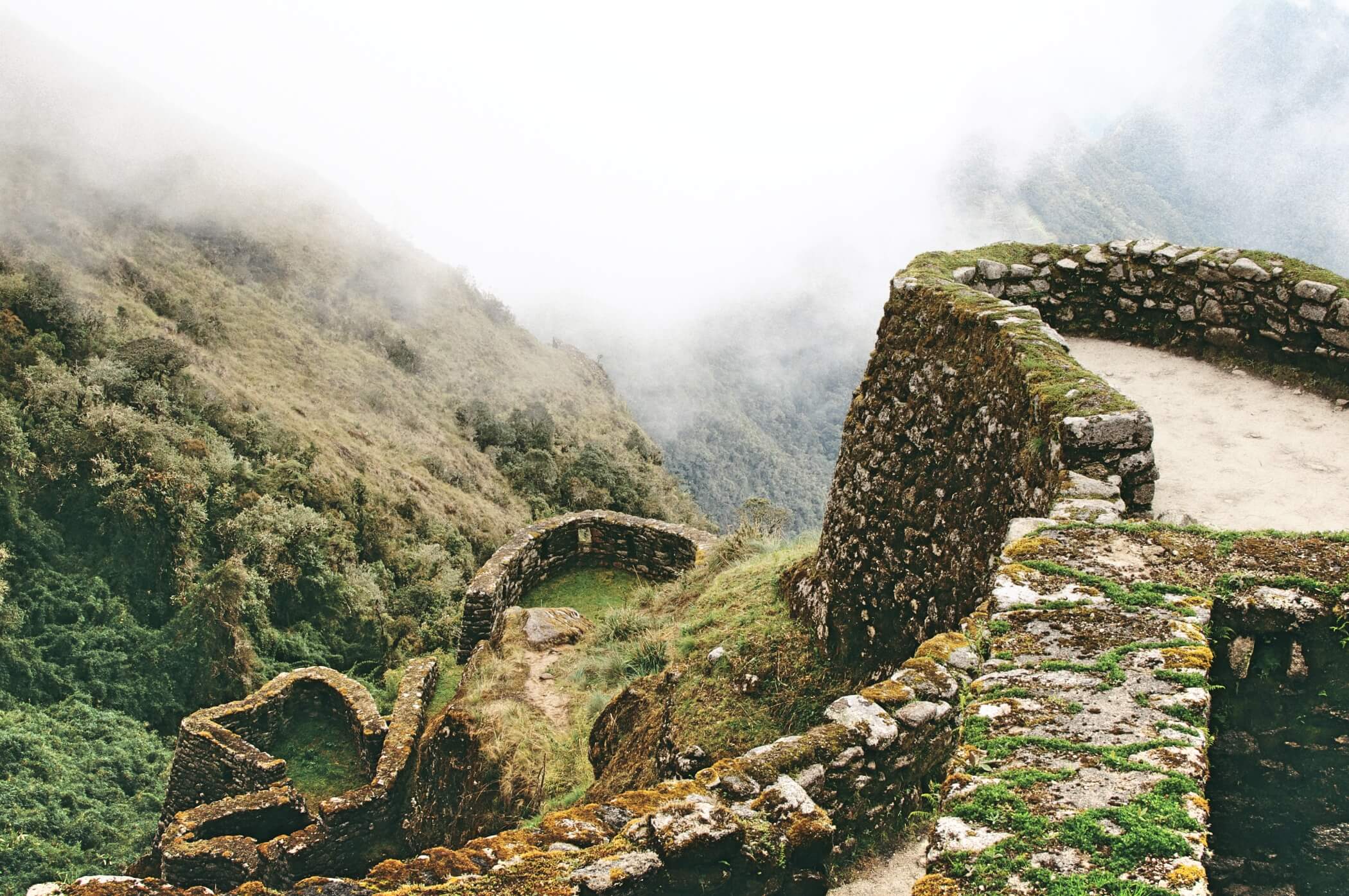
Some take the famous Inca Trail, a four-day trek along stone paths laid centuries ago. The trail leads through cloud forest, over high passes, and past forgotten cities overtaken by vines. Every night is spent in tents beneath the stars. Every step is a step deeper into myth.
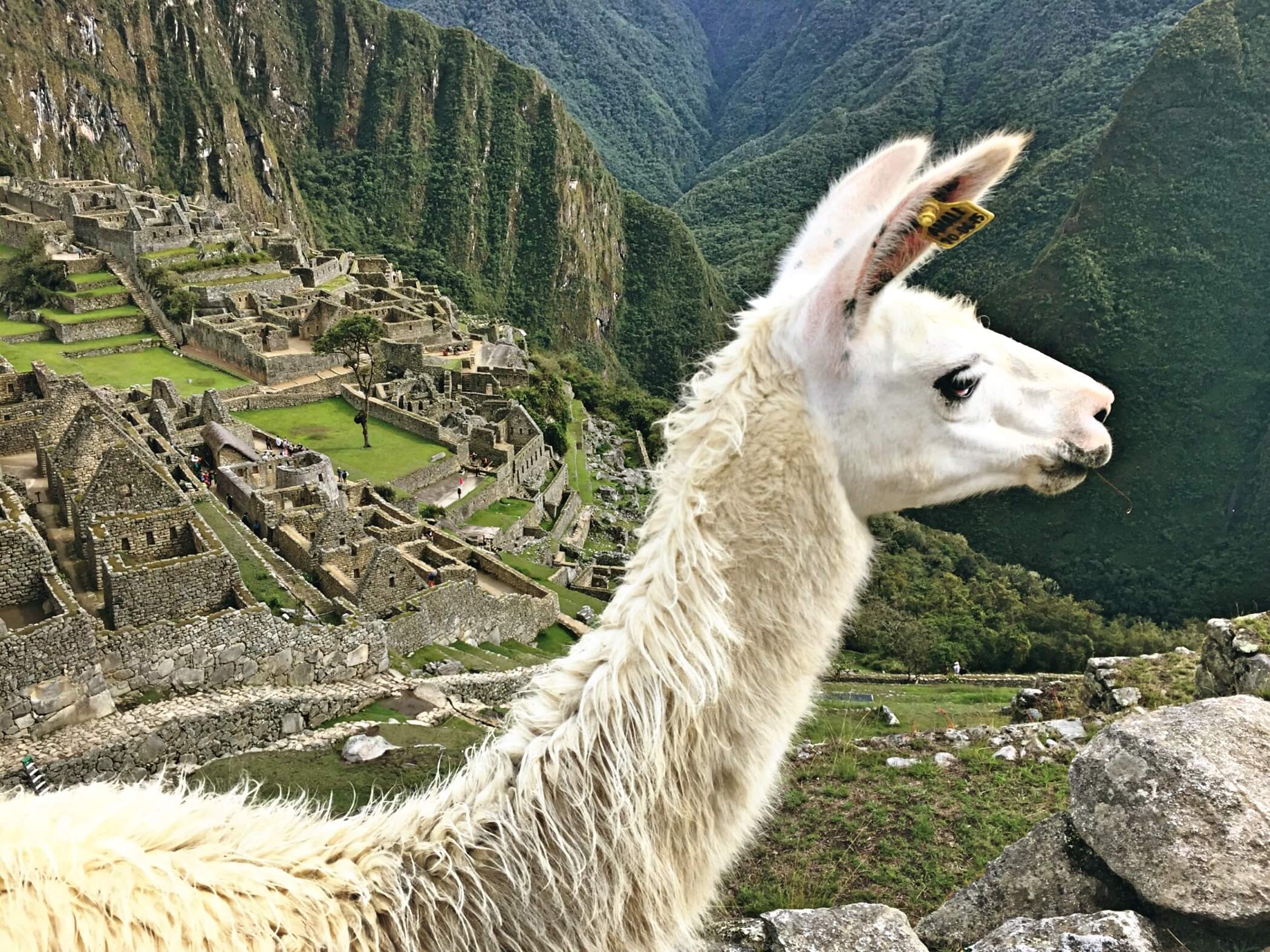
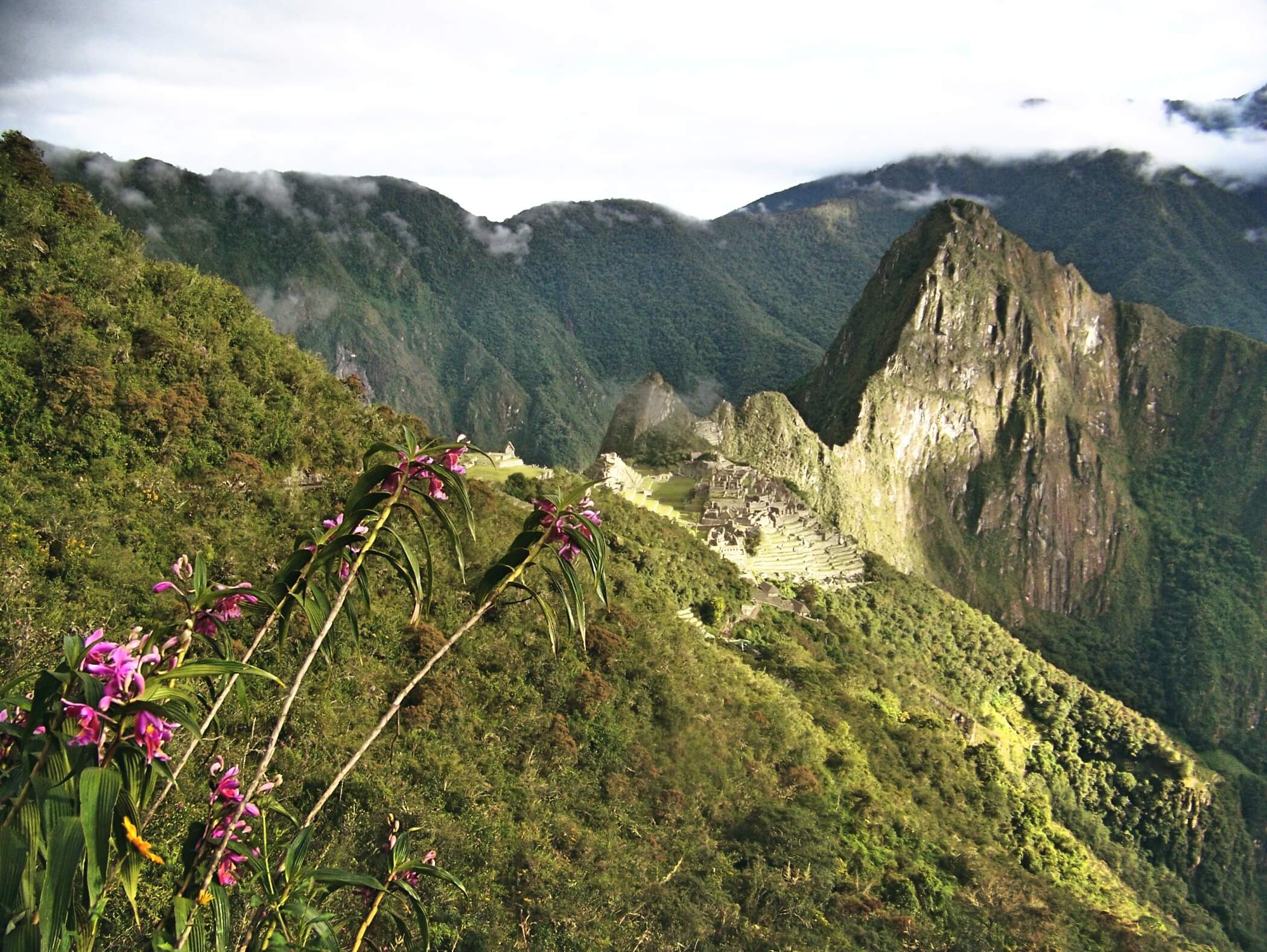
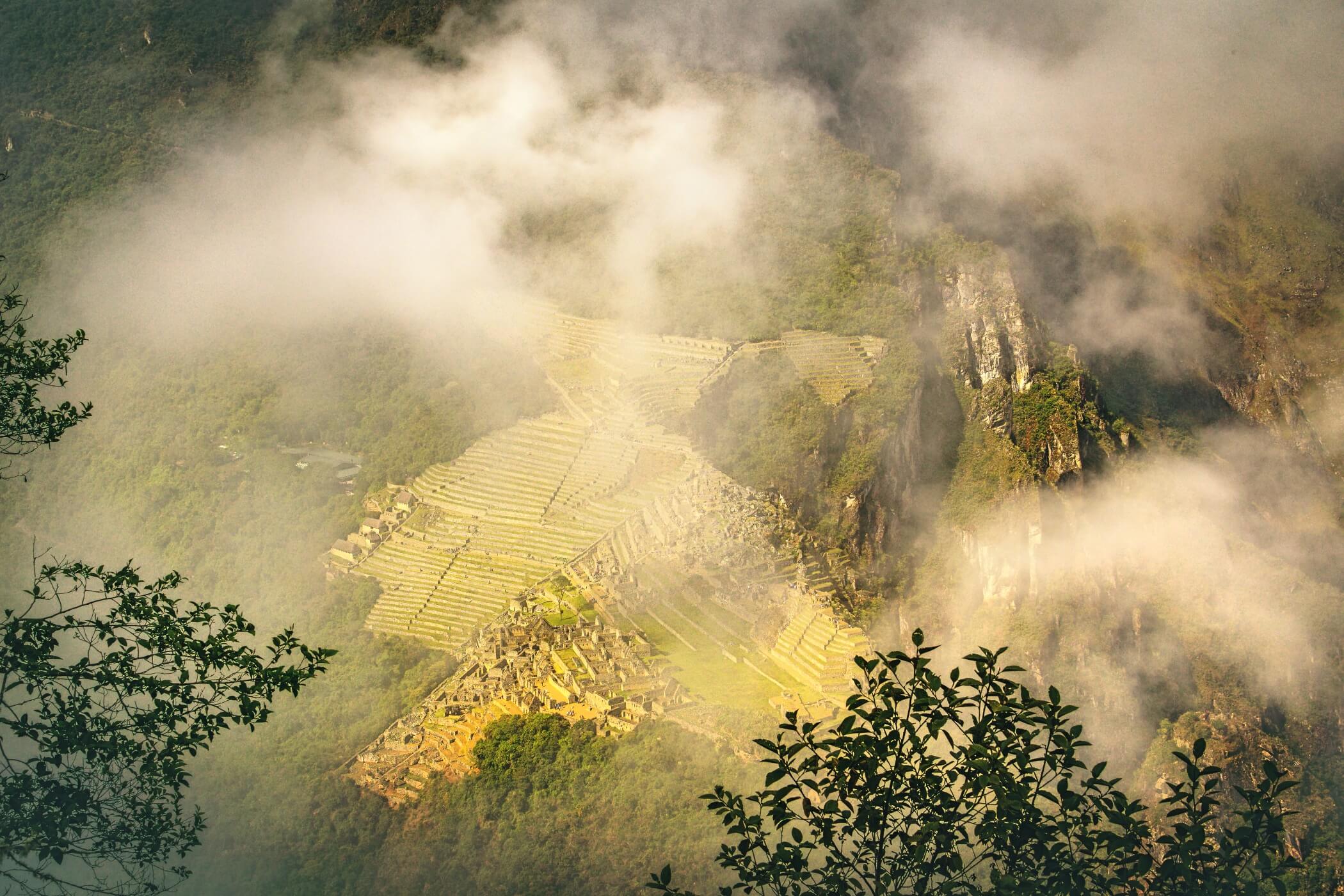
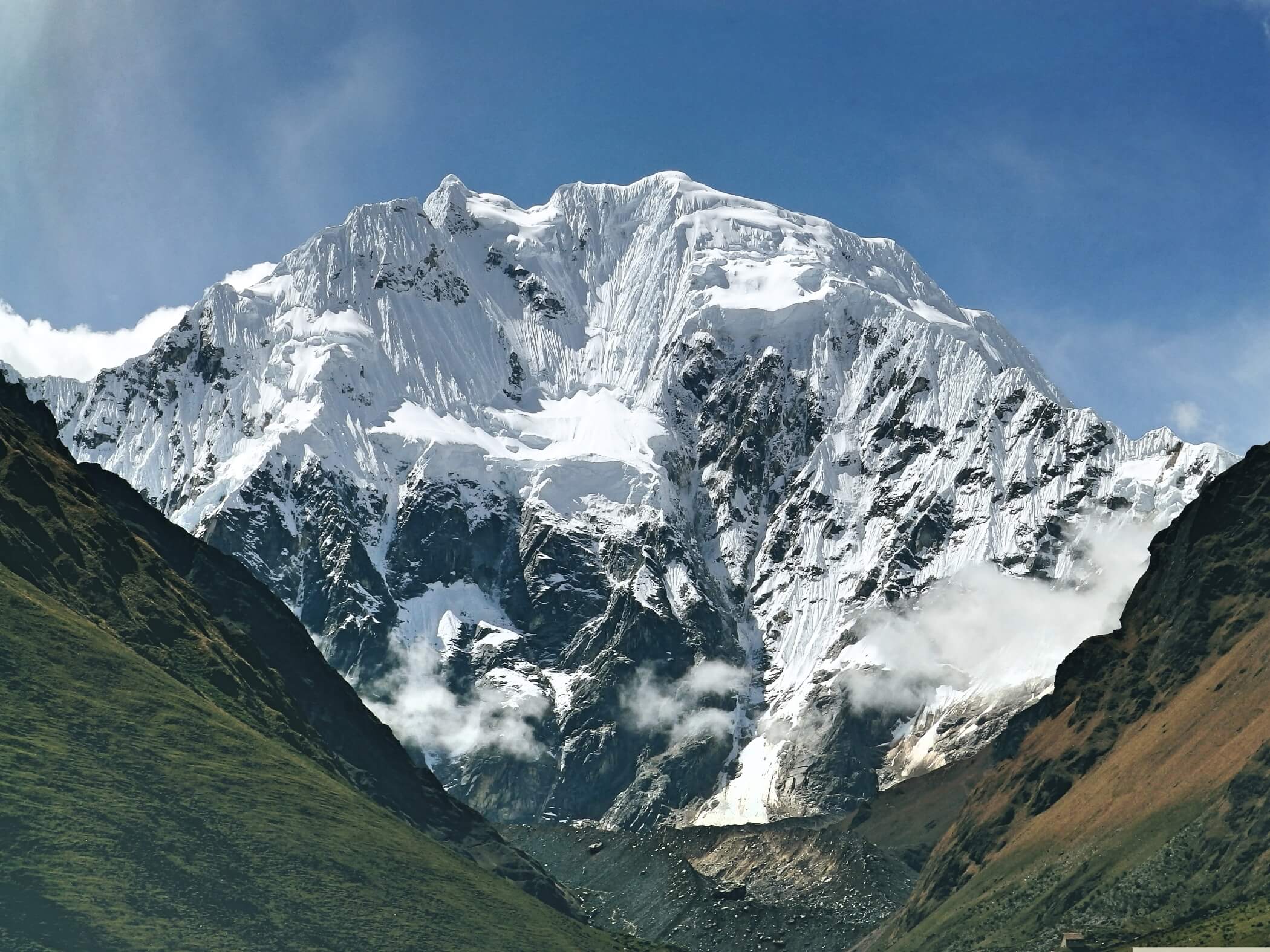
Others opt for the quieter Salkantay trek, where glaciers watch over the path, and jungle arrives suddenly, warm and green.
The rail journey, too, is not without meaning.
The train follows the course of the Urubamba River, winding through valleys where the mountains lean in close. Wide panoramic windows offer views of mist rising over cliffs, orchids blooming in jungle shadows, and stone outcroppings that seem deliberately placed – and often are.
Then comes Aguas Calientes, the final station before ascent. A strange town – part staging post, part contradiction – but alive with energy. Early in the morning, travellers rise in silence and begin the climb to the citadel.
And then it happens.
The moment at the Sun Gate. The first glimpse of Machu Picchu. Still distant. Still surreal. A city neither fully of this world nor fully out of reach.
You do not arrive at Machu Picchu.
You emerge into it. And that is why it stays with you. Not because it is famous, but because it meets you at the intersection of effort and reverence.
Amazon Basin – The Pulse Below
Tambopata, Madre de Dios
The Amazon in Peru does not begin suddenly. It seeps in.
The sky lowers. The air thickens. Colours turn deeper, richer, slower.
In Tambopata, in the heart of the Madre de Dios region, the rainforest is not a background – it is the medium through which everything else is experienced. Light moves differently. Time loosens its grip.
To reach the lodges here, you travel by boat. First along wide brown rivers, then through narrow green channels where branches arch overhead and the water mirrors the canopy.
There are no roads. No engines once you arrive. Just the sound of monkeys shouting across the treetops and macaws flashing red through the green.
Stillness is never silence in the Amazon – it is a state of heightened listening.
The region is protected as part of the Tambopata National Reserve, one of the most biodiverse zones on Earth.
It is home to over 600 bird species, 200 types of mammals, and countless insects, frogs, orchids, and trees. But this is not a place you catalogue – it is a place that envelops you.
Your footsteps are guided by local naturalists who understand every smell, every rustle, every change in the wind.
Accommodations are simple yet elegant – open-air bungalows on stilts, mosquito nets that glow in the twilight, lanterns lit before nightfall.
There is no signal. No noise. Only presence. The scent of the jungle at night is like nothing else – deep, earthy, humid, alive.
And that is the Amazon’s truth: it does not need to convince you of anything. Its presence is total. Its luxury is surrender.
Iquitos – Only by River or Sky
Iquitos is not an outpost. It is a paradox.
One of the largest cities in the Peruvian Amazon, it sits in the middle of the rainforest, unreachable by road, surrounded by jungle and water. You can only arrive by boat or plane.
The moment you land, it becomes clear: this is not a destination you pass through. It is a world you enter.
The city itself is alive with contrast.
Old colonial facades face chaotic riverside markets. Motorbikes hum through dense streets while the forest waits just beyond the last house.
Iquitos is not polished. It is raw, electric, and deeply human. And at its edges, the jungle begins again – not as a boundary, but as a presence. You do not leave it behind. You are surrounded by it.
From Iquitos, expeditions head deeper into the Amazon basin.
Multi-day journeys follow the Ucayali and Marañón Rivers into the Pacaya-Samiria National Reserve – one of the largest and most untouched protected areas in Peru.
Wildlife here is not occasional. It is constant. Pink river dolphins break the surface. Monkeys flash through the canopy.
Every sound, every shadow, might mean something.
Luxury riverboats cruise slowly through this flooded world, offering cabins with panoramic windows, naturalist guides, and morning coffee with sunrise over the treetops.
But luxury here is not the vessel – it is the immersion. Visits to river communities reveal a way of life inseparable from the forest.
Schools float. Boats replace streets. Medicine grows wild. Nothing here is designed for show. Everything is real.
In Iquitos, nothing is stable – not the land, not the air, not the rhythm. But everything is alive. And that, in the truest sense, is the value of coming here. Not to witness the Amazon from afar, but to feel its pulse from the inside.
The Altiplano – Stillness in the Sky
Lake Titicaca and the Floating World
Lake Titicaca is a place where stillness becomes substance.
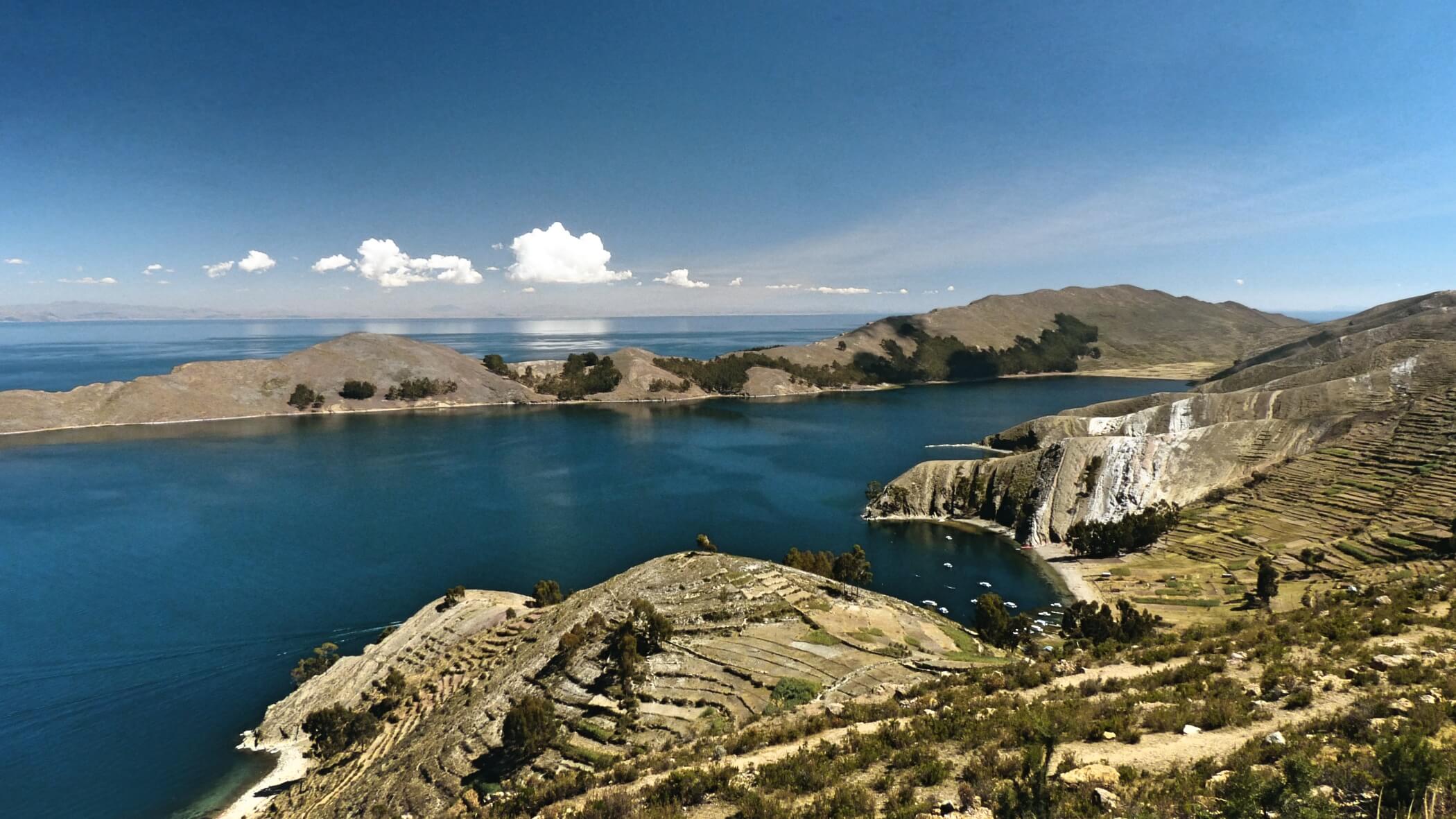
At 3,812 metres above sea level, it is the highest navigable lake in the world, but statistics fade as soon as you step onto its glass-like surface.
The light is sharper here, the air thinner, and the silence deeper. What remains is the sensation of altitude, not just in breath, but in thought. The lake does not feel like water. It feels like the sky stretched downward.
According to Andean mythology, this lake is the birthplace of the sun. That origin story feels believable when you look across the horizon and see nothing but light.
And yet, Lake Titicaca is not a myth. It is inhabited, cultivated, and crossed every day by people who live in perfect synchrony with its rhythms.
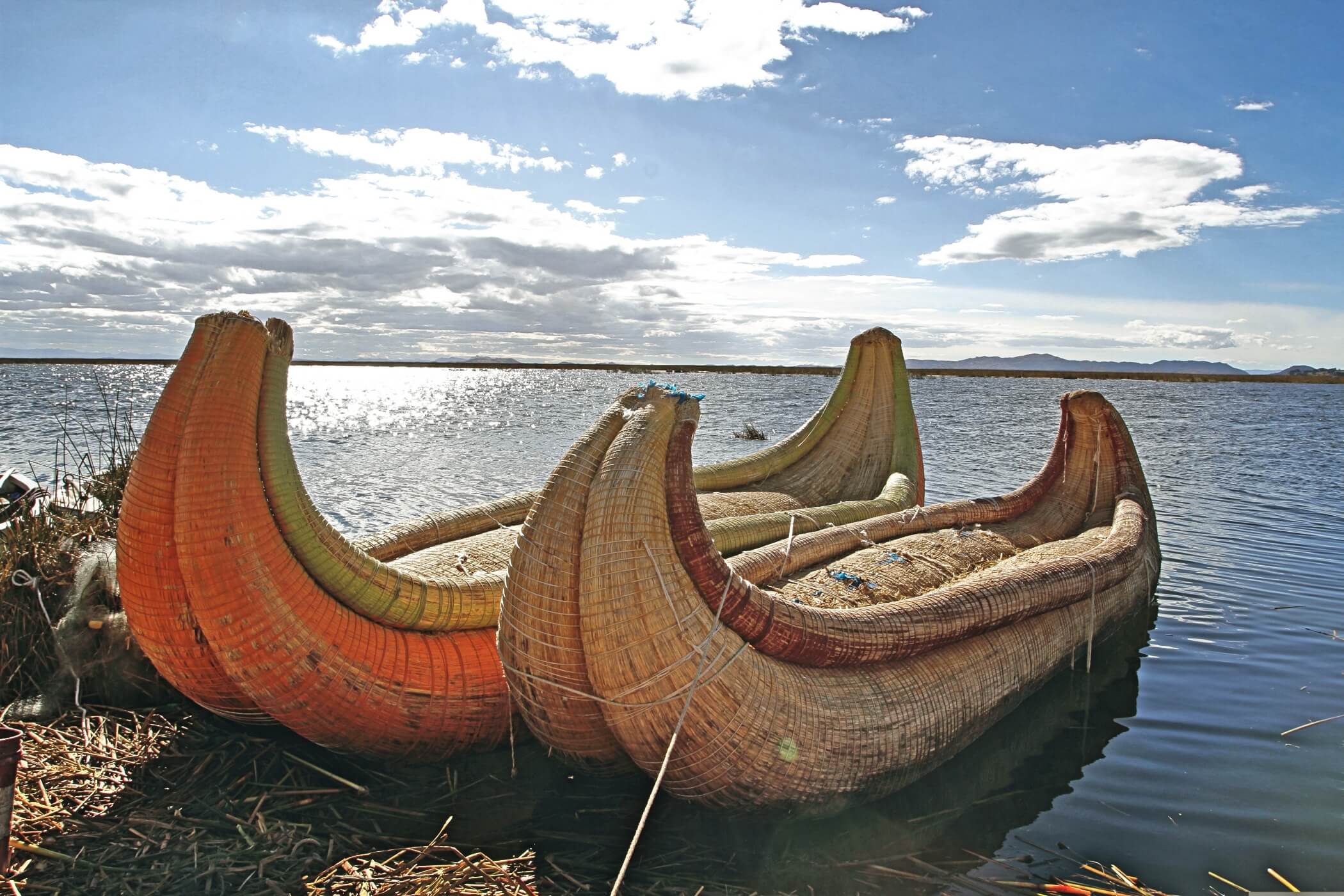
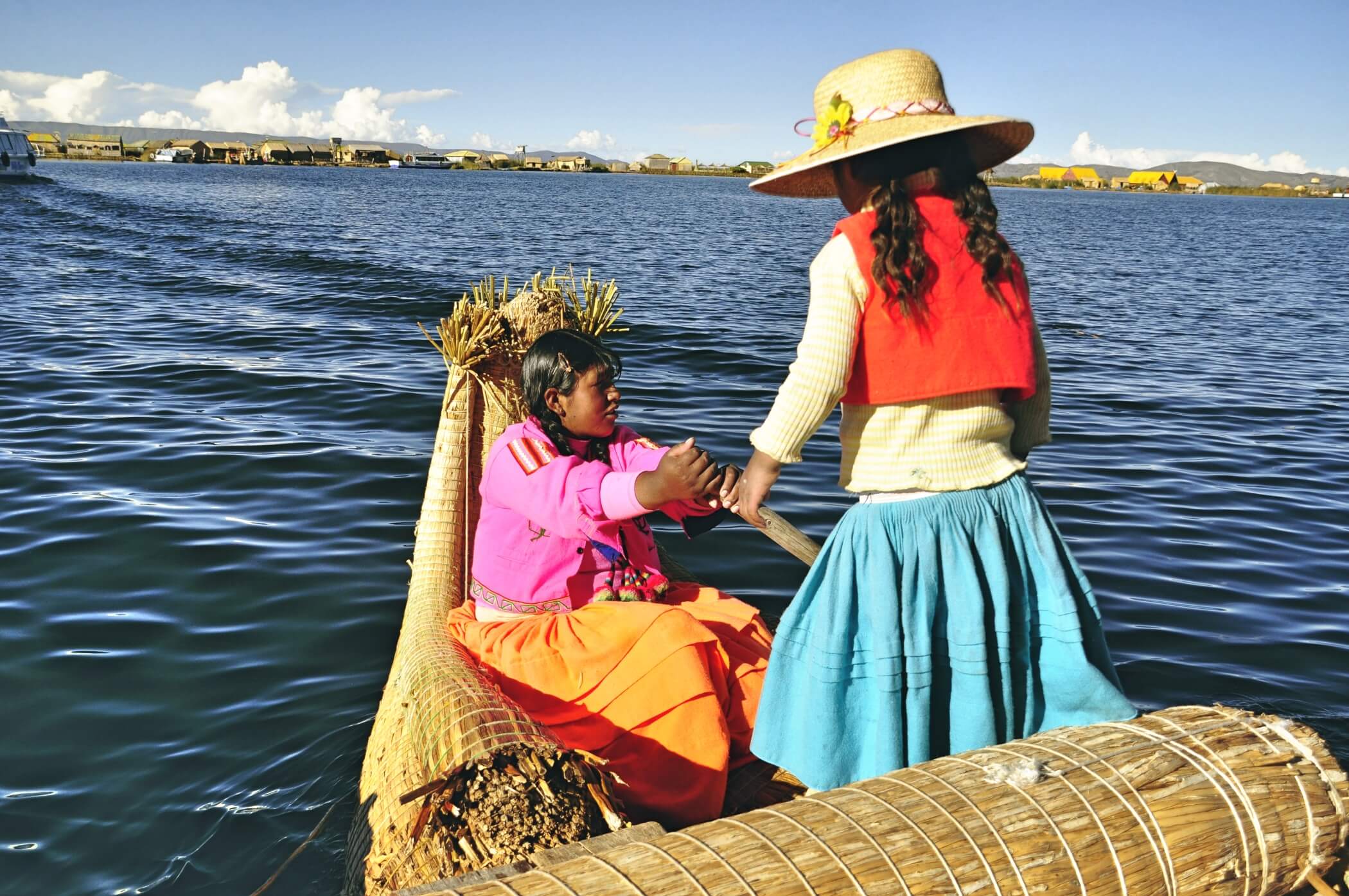
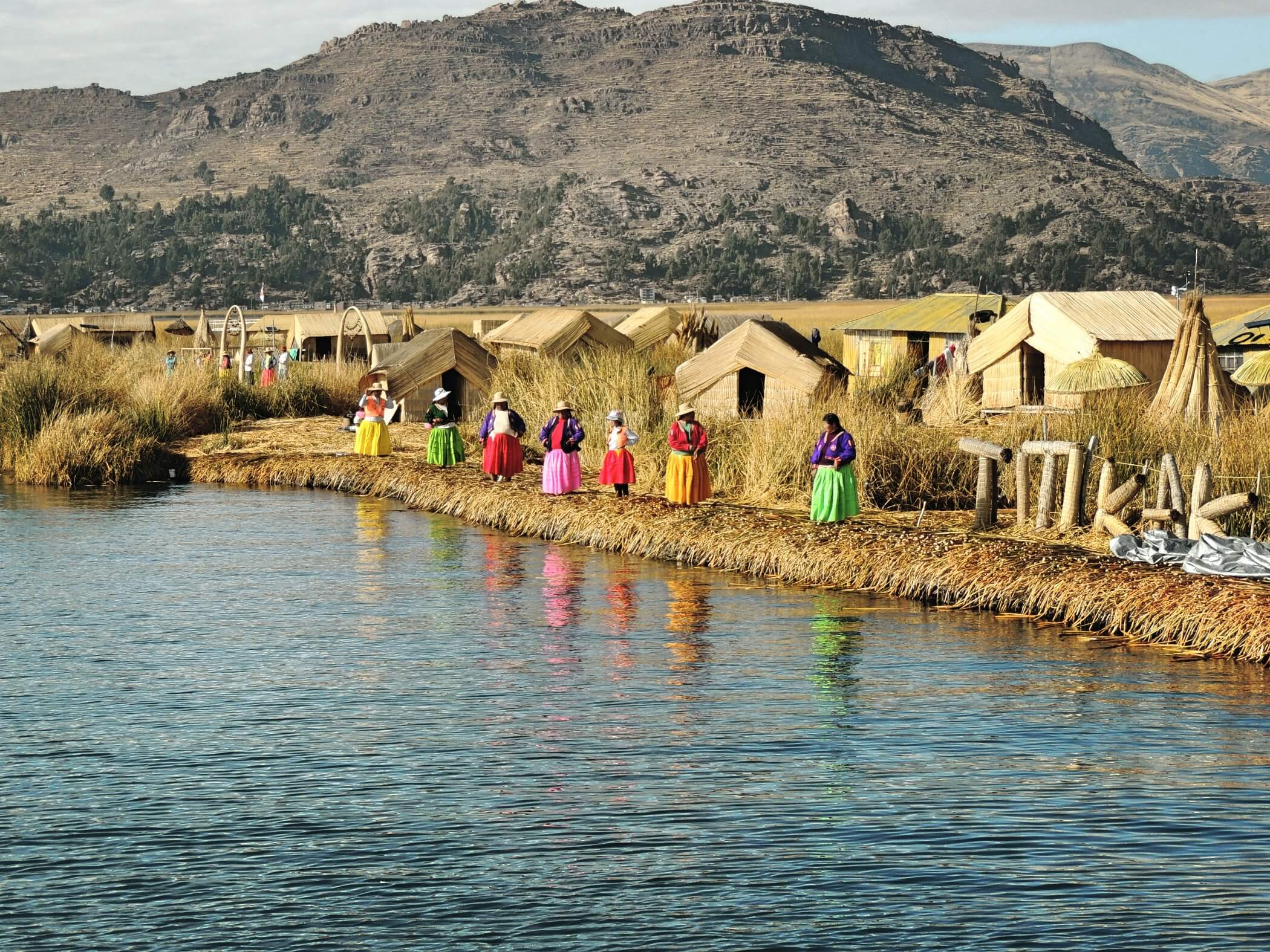
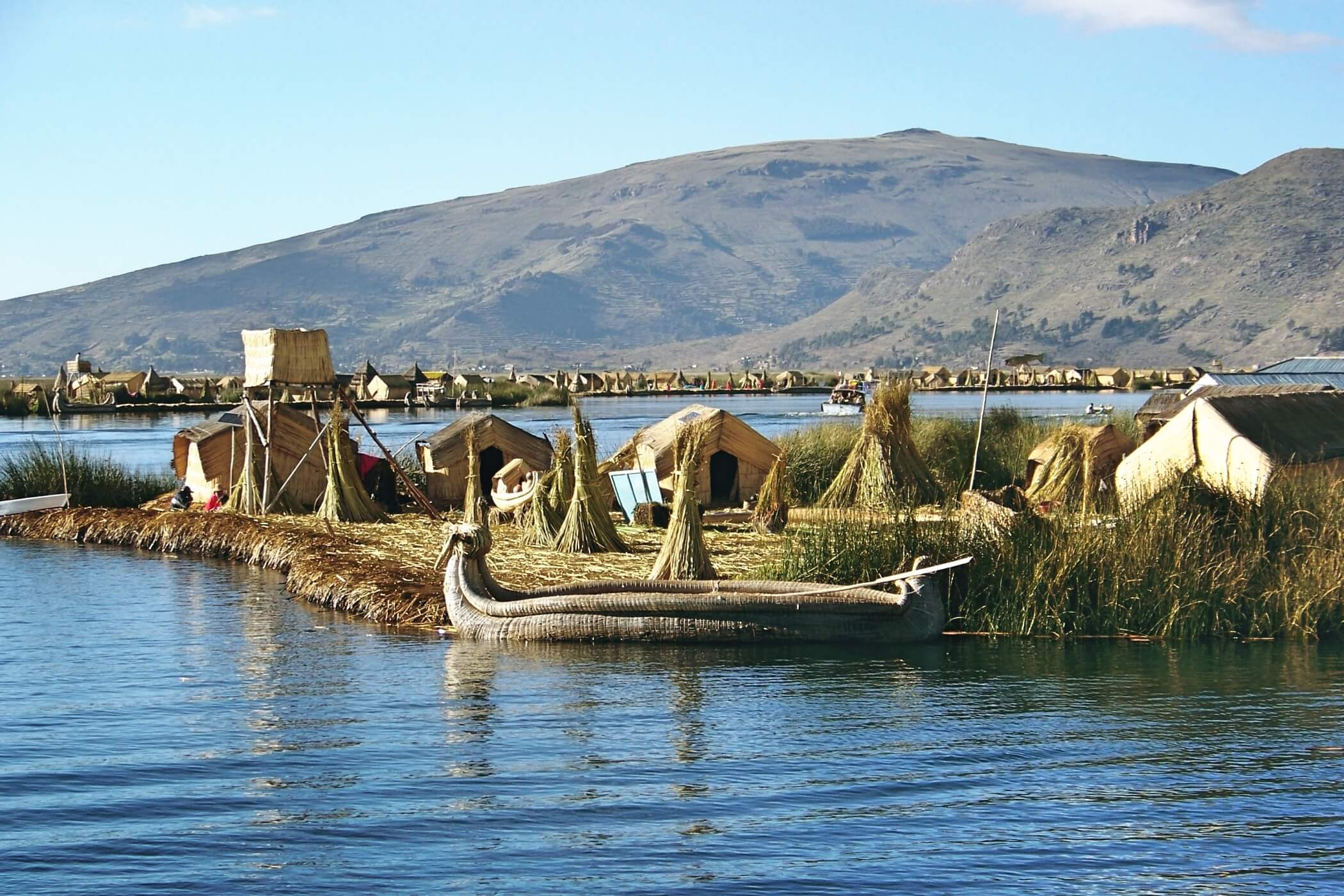
The most iconic are the Uros, who live on floating islands made entirely from layers of totora reeds. They build not only their homes, but also their boats, schools, and churches from the plants beneath their feet. The islands shift with the wind and rise with the water.
They are not symbolic. They are real.
Beyond the floating islands, communities on Taquile and Amantaní maintain a more rooted, but equally profound, relationship with the lake.
Here, you can stay in a family home, share simple meals made from quinoa and lake trout, and listen to Quechua spoken softly at dusk.
There is little infrastructure. Electricity is intermittent. But what you gain instead is access to time that flows more slowly, to stars that burn more clearly, to traditions that have not been interrupted.
The luxury of Lake Titicaca is not in comfort, but in clarity.
You see further. You breathe differently. You walk slower, not because you are tired, but because there is finally space to feel where you are.
Puno and the Path to Bolivia
At first glance, Puno feels like a gateway – a stop on the way to something else. But this city on the southeastern edge of Lake Titicaca holds more than transit. It holds transition.
Between countries. Between altitudes. Between realities shaped by earth and those shaped by myth.
Puno itself climbs steeply up from the lakeshore, its buildings scattered across dry hillsides with views that stretch far into the altiplano.
This is not a manicured town. It is functional, weathered, and alive.
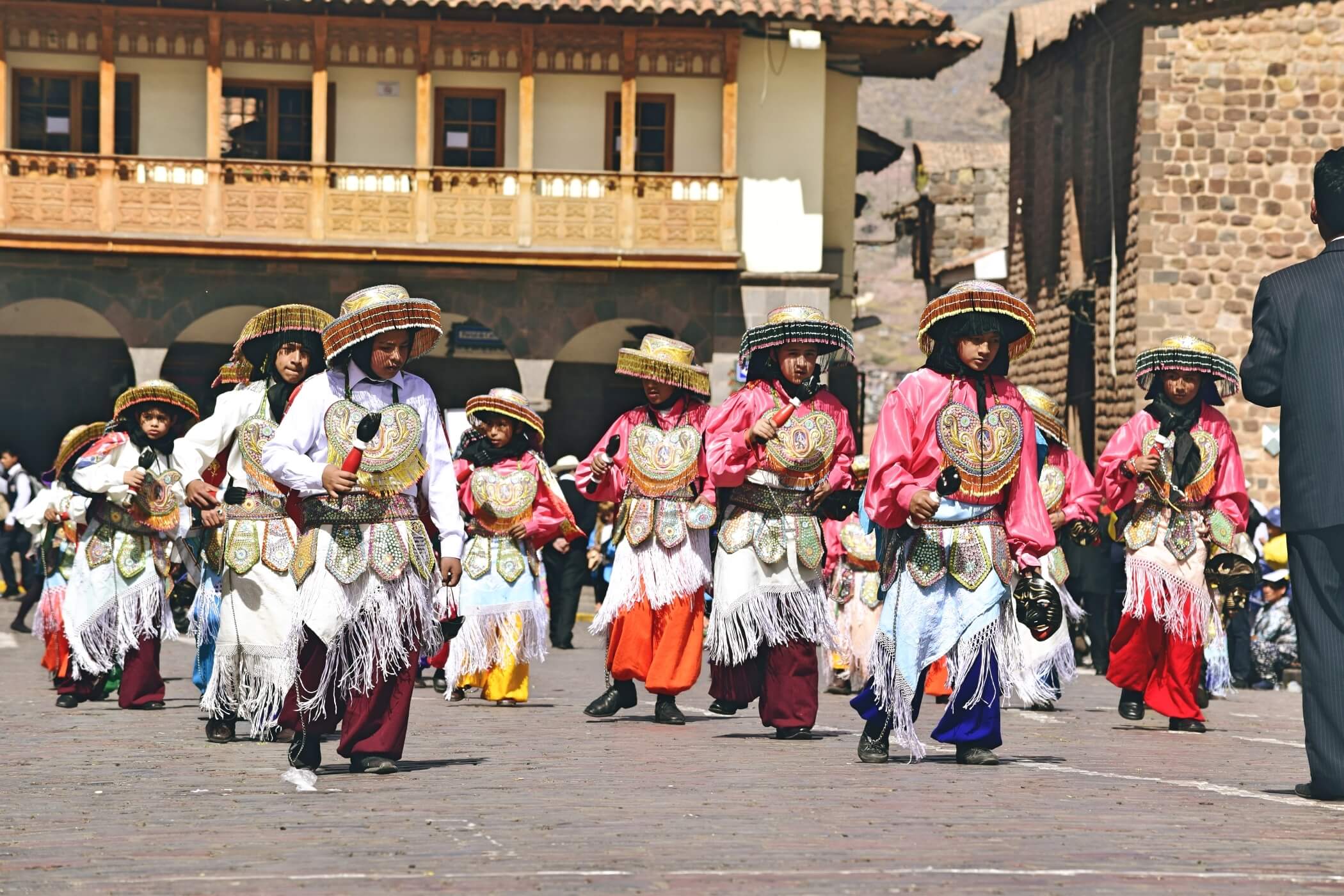
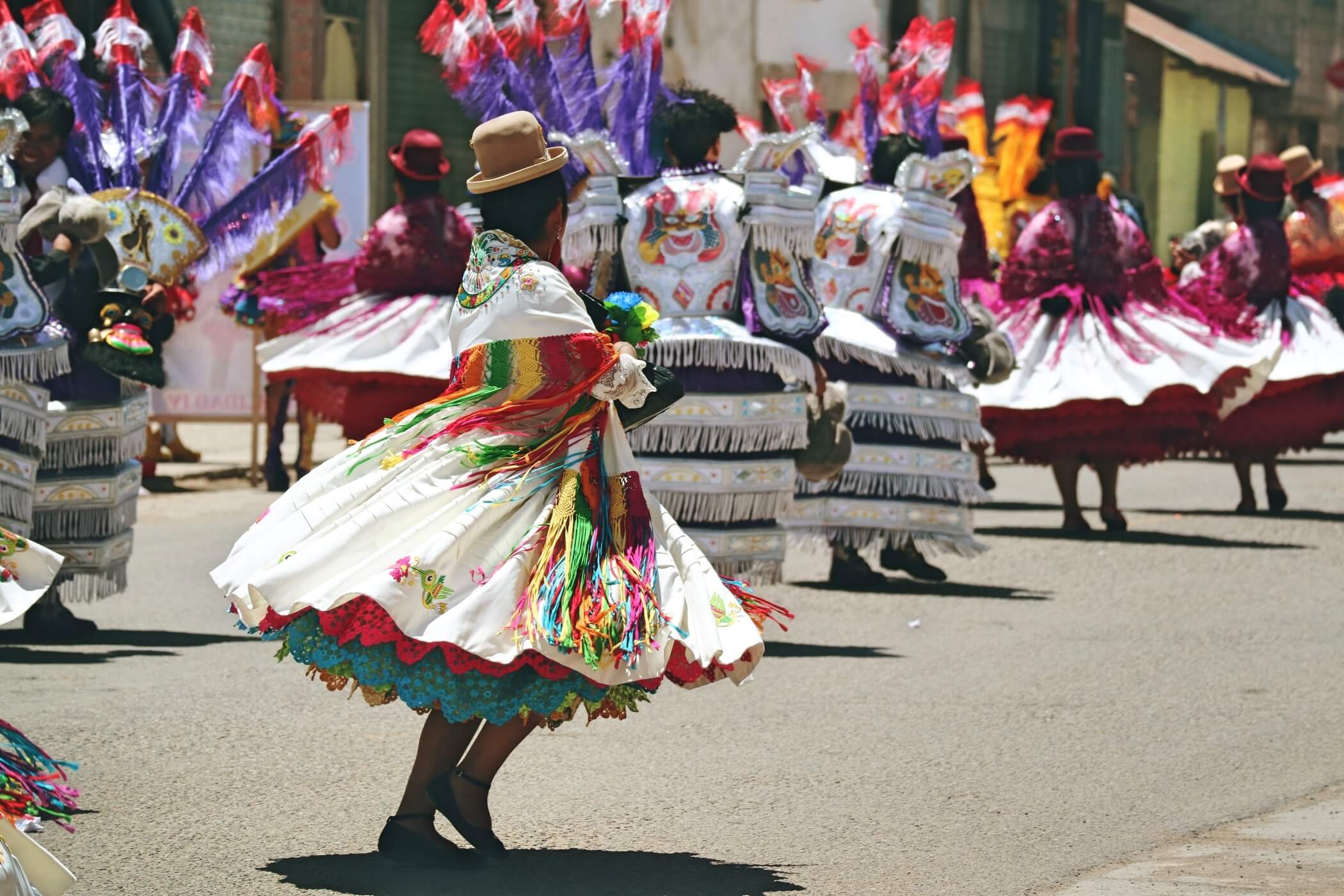
But its true identity emerges during festivals – especially the famous Fiesta de la Candelaria, when thousands take to the streets in embroidered costumes, dancing for hours at over 3,800 metres. The energy is both celebratory and ceremonial. It comes not from tourists, but from within the people who live here.
Just outside Puno, the landscape opens.
You drive across open plains towards the Bolivian border, passing farms, wetlands, herds of alpacas, and ruins half swallowed by wind and grass.
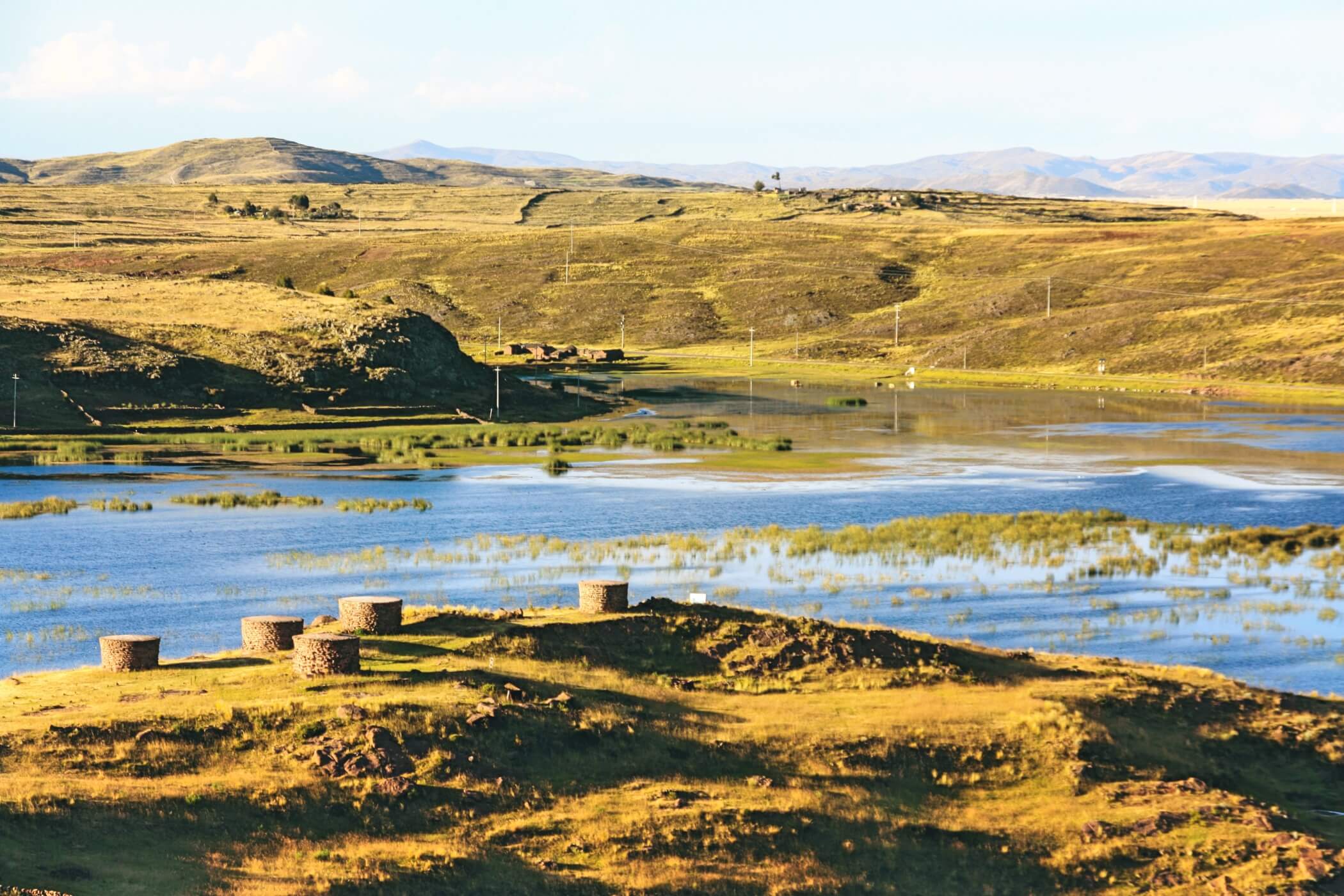
One of the most mysterious stops is Sillustani, a pre-Inca burial site where enormous cylindrical stone towers – chullpas – stand watch over the lake of Umayo.
Built by the Colla culture, these towers were designed not just as tombs, but as vertical symbols of cosmology – their orientation aligned with the sun, the seasons, and rebirth.
This is a region where transitions are not abrupt. They are layered.
Cultures blend at the edge. You feel it in the language, the faces, the music carried on the wind. And as you move east, toward Bolivia, the land stretches wider.
Fewer people. Bigger skies. The lake remains in view, but the journey begins to tilt again – toward another country, another mythology, another altitude.
In this part of Peru, luxury does not come from infrastructure.
It comes from access to cultural continuity, to spiritual rhythm, to a landscape that makes space for silence.
The Coastline – Desert Meets Ocean
Paracas and Ballestas Islands
Peru’s coastline does not fade gently into the sea. It ends with contrast, where desert cliffs collapse into Pacific waters and wind shapes both sand and silence.
The Paracas Peninsula, located just a few hours south of Lima, is where this tension becomes tangible.
It is not lush. It is not soft. It is fierce, stripped down, and elemental – and that is its power.
Paracas is the entry point to the Ballestas Islands, often referred to as the “poor man’s Galápagos,” though the name does the place little justice.
These small rocky islands, accessible by speedboat, host vast colonies of sea lions, Humboldt penguins, and thousands of seabirds.
The journey there crosses beneath the Candelabra geoglyph, etched into the side of a coastal hill – a mysterious pre-Columbian symbol that no one has definitively explained. It stares out to sea, as if pointing to something older than maps.
The reserve itself is a protected zone of cliffs, salt flats, and beaches so wide they feel like horizons.
You can explore it by bike, 4×4, or on foot, with nothing but the wind as company.
Flamingos feed in shallow bays. Fishermen return with the day’s catch. The colours – gold, white, slate blue – shift with the sun.
There are no trees here. Only rock, air, and water.
Luxury in Paracas is found in the quiet precision of its contrasts.
A private picnic on a cliff edge. A lodge with floor-to-ceiling windows that frame only the sky. A morning boat ride where you see not performance, but the ecosystem in motion.
It is not comfort imposed on nature – it is comfort found within it.
Huacachina and the Ica Dunes
Just a short drive from Paracas, the landscape shifts once more – and suddenly, dramatically, you find yourself surrounded by dunes.
Towering, golden, windswept.
The kind that do not simply rise from the earth, but seem to be sculpted by it.
In the heart of this desert lies Huacachina, a tiny oasis town wrapped around a palm-fringed lagoon. It looks almost imaginary – like something drawn into the sand by hand.
Huacachina is one of the few natural desert oases in South America.
It has long been a retreat for Peruvians seeking stillness, but today it draws a different kind of traveller: one who comes not for escape, but for exhilaration.
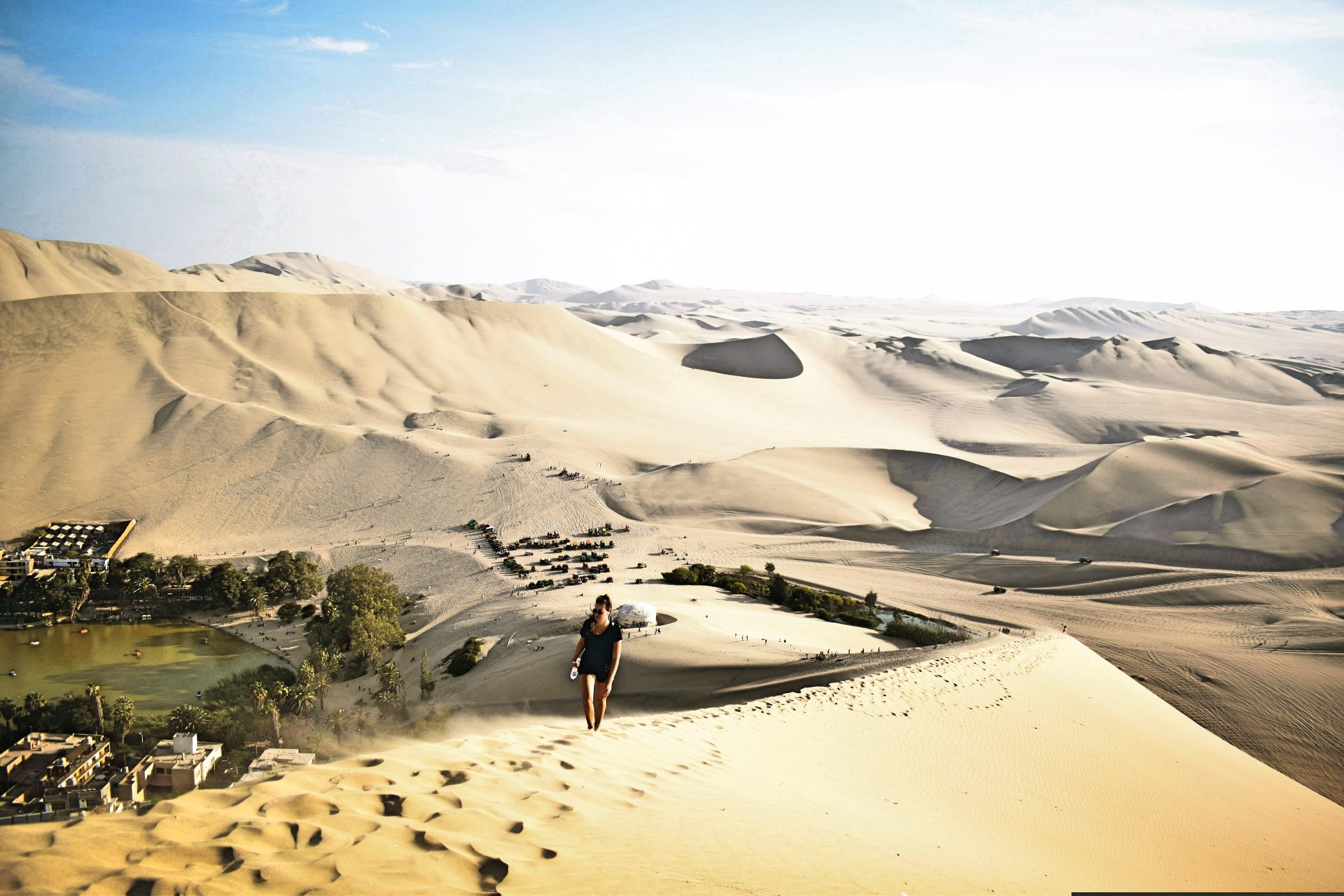
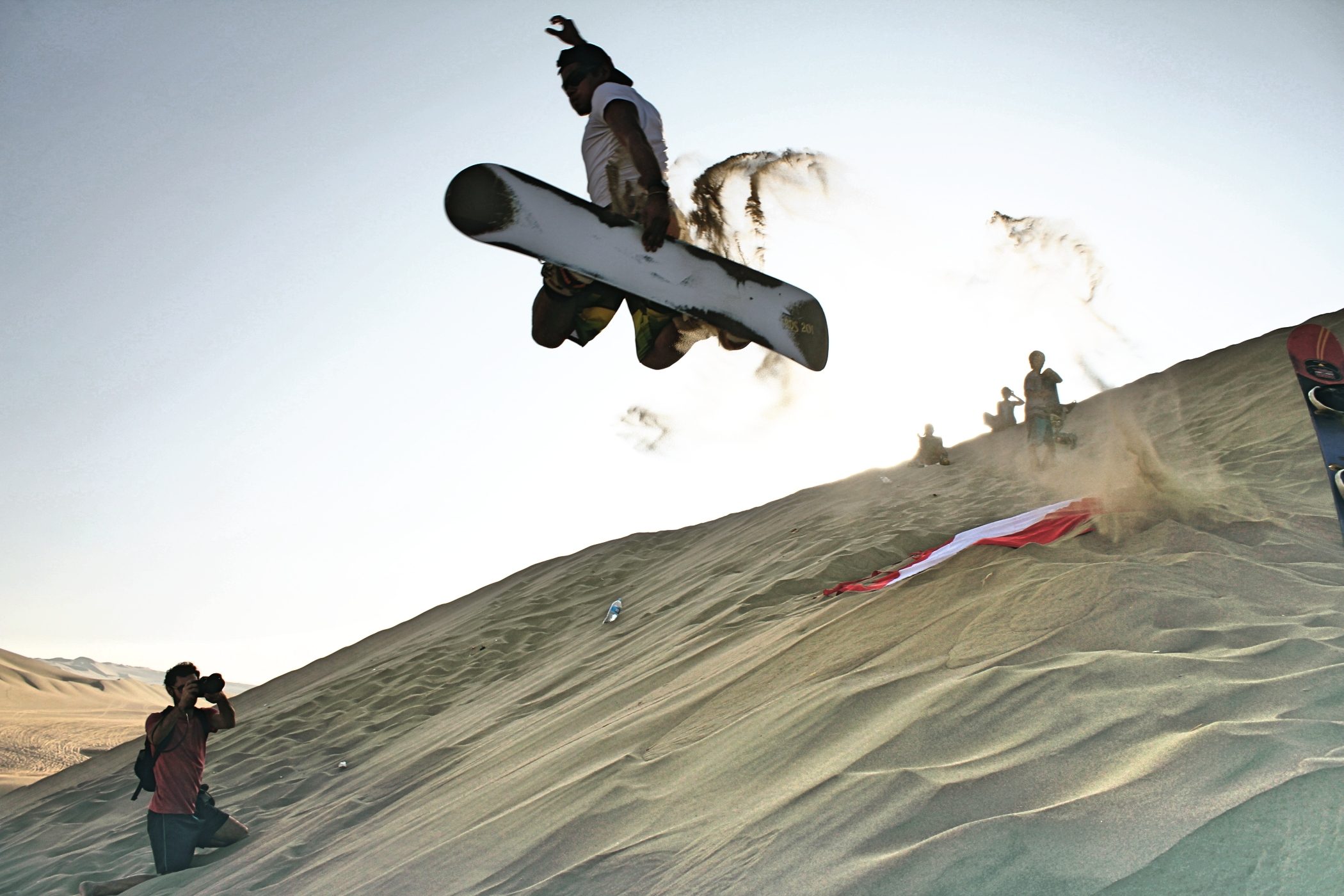
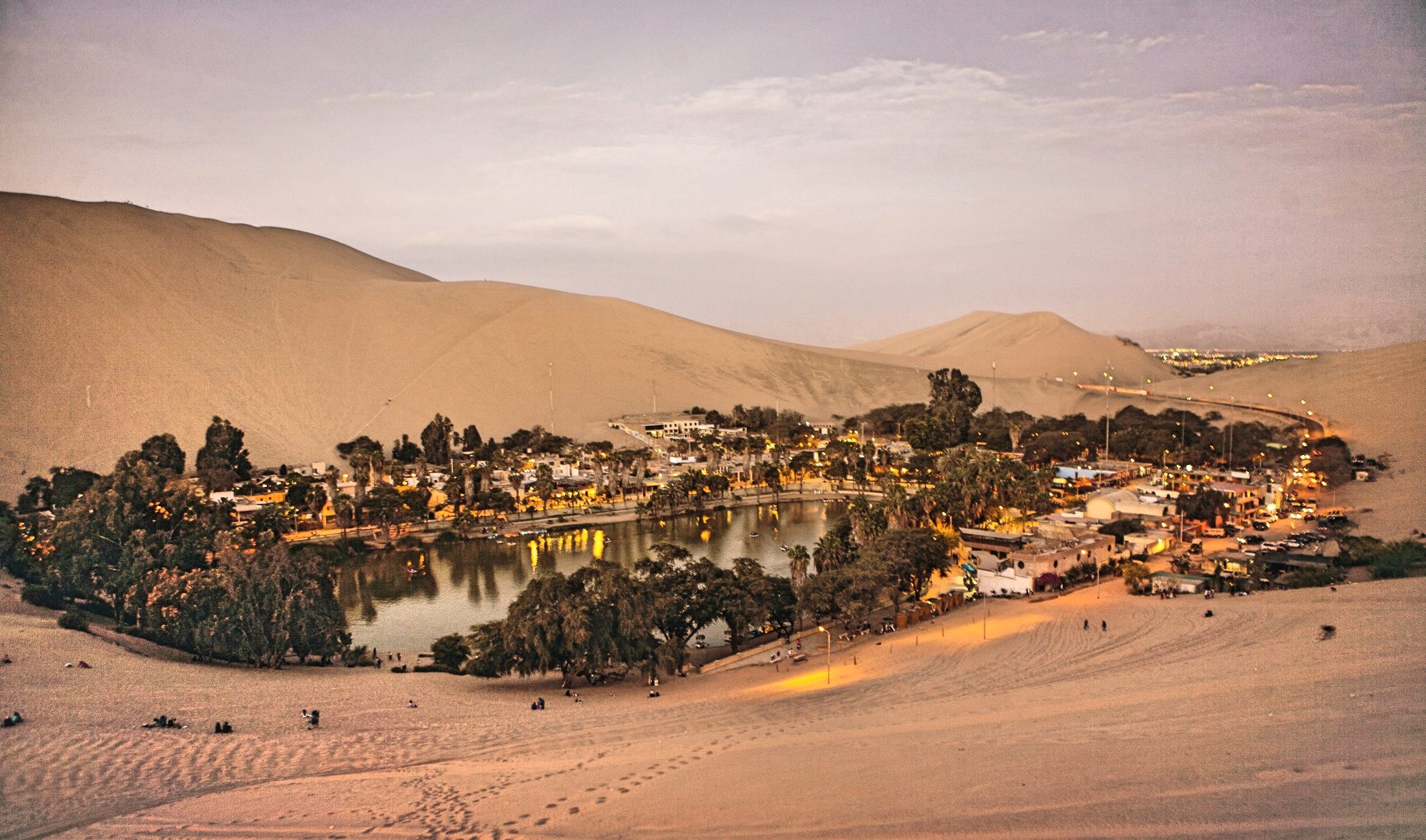
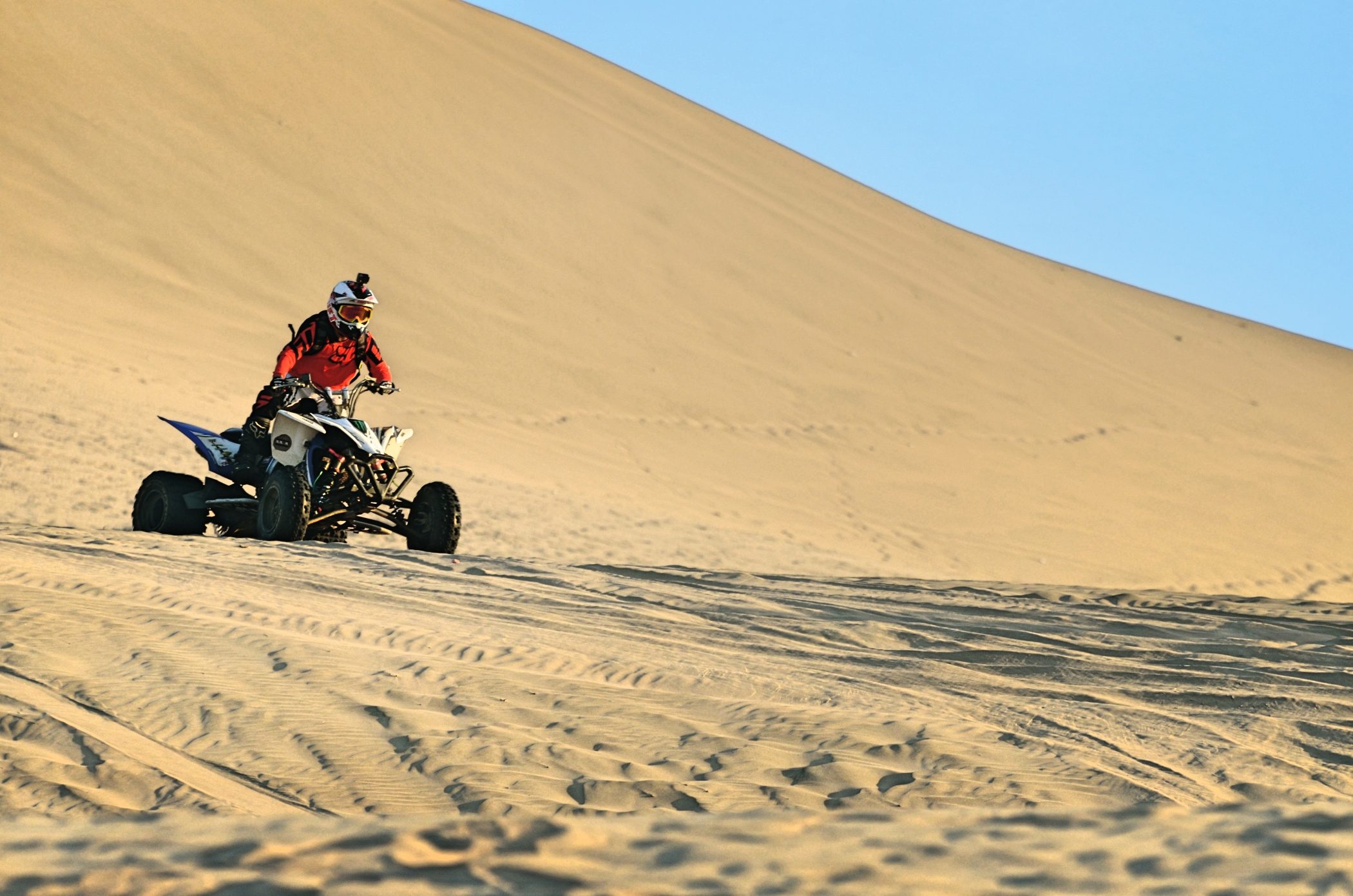
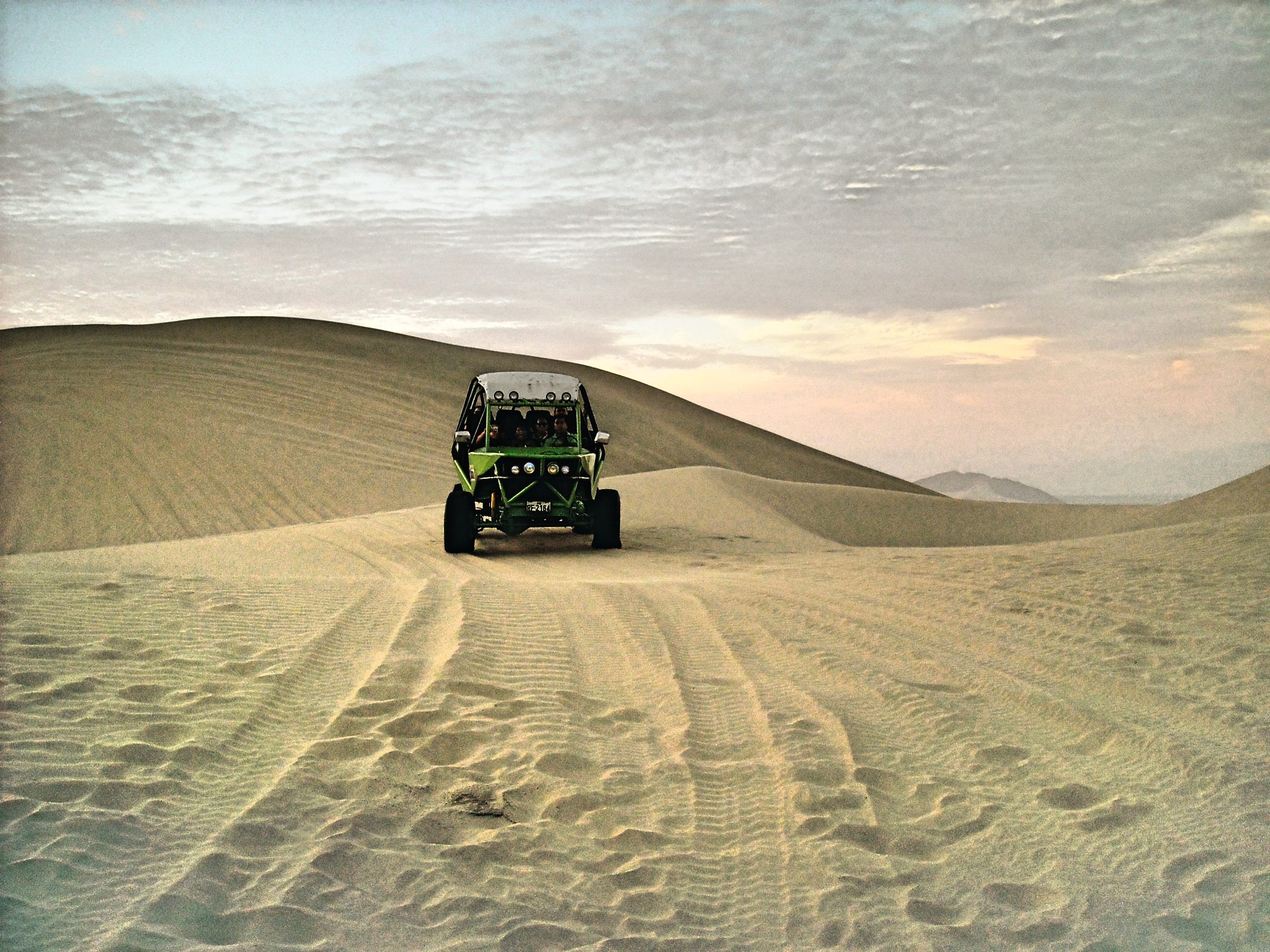
The surrounding dunes are playgrounds for speed and descent.
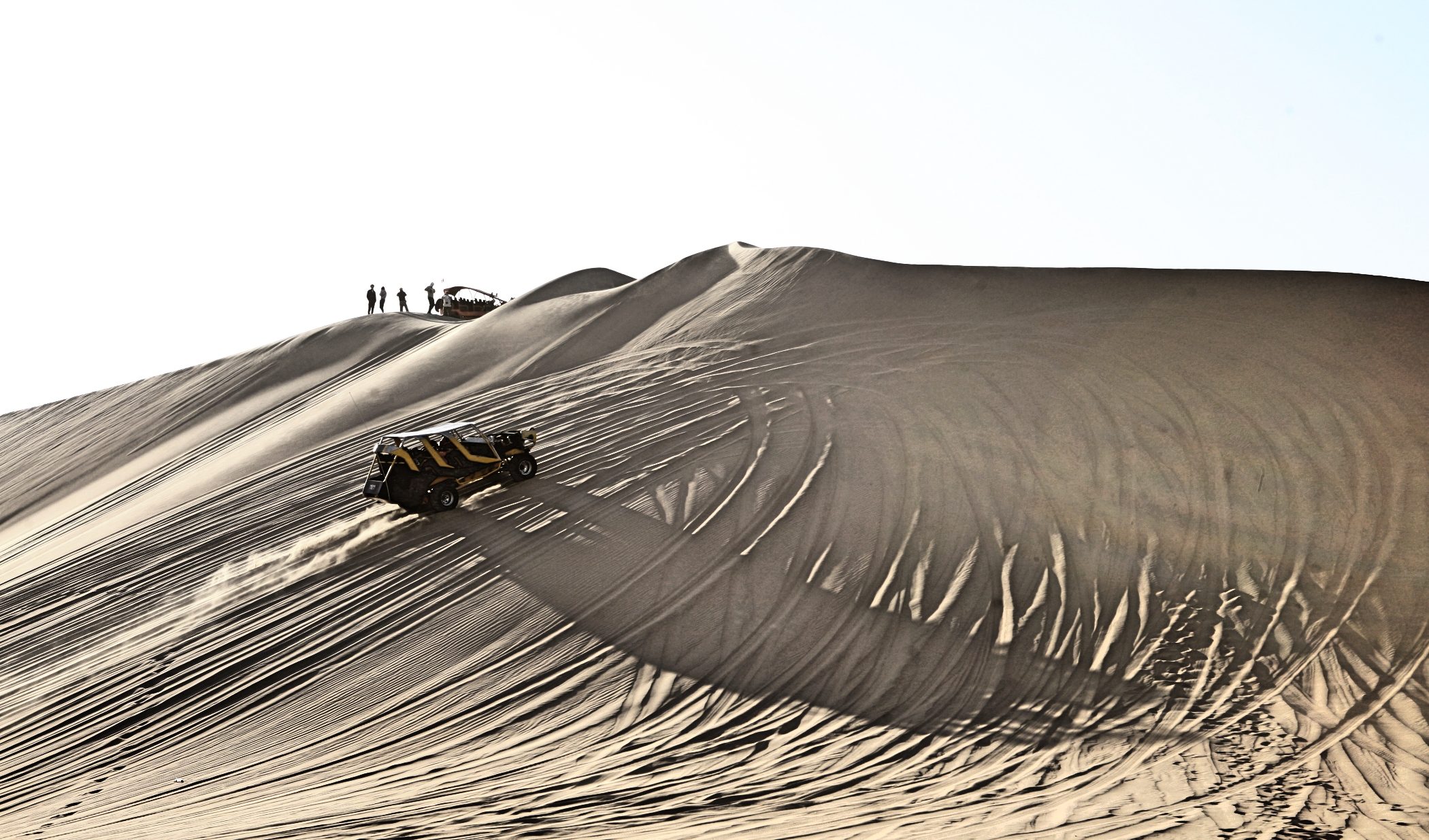
You sandboard down near-vertical faces, ride dune buggies through heat and silence, and climb barefoot to watch the sunset turn the world to gold.
Yet beneath the thrill, there is something deeper. The desert here teaches slowness.
There is no shade to hide in, no sound to distract you.
At night, stars fall into the blackness without resistance. In the distance, the silence becomes so complete that even breath feels intrusive.
What seems like an adrenaline destination quickly reveals itself as a space for perspective.
The region around Ica also adds another layer: wine and pisco culture.
Nearby vineyards stretch across the desert, irrigated by ancient engineering. Tastings here are earthy, honest, rooted in the land’s scarcity.
And with every glass, every evening breeze, every footprint erased by the wind, you realise: luxury in Huacachina is not activity.
It is emptiness, used well.
The Urban Pulse – Cities That Ground You
Lima – Not a Capital, but a Collision
Lima is not an escape from Peru’s wild geography – it is a concentration of it.
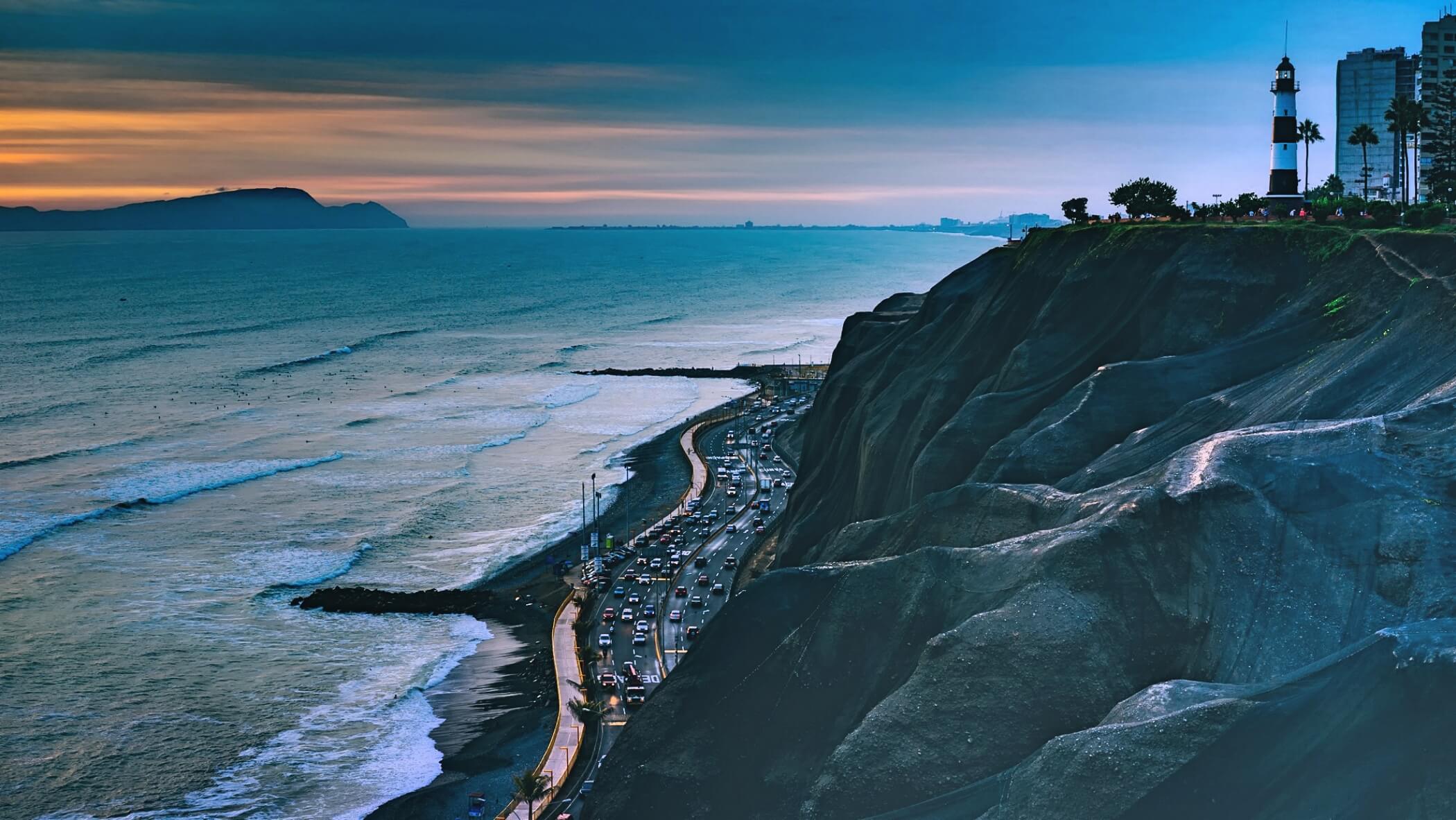
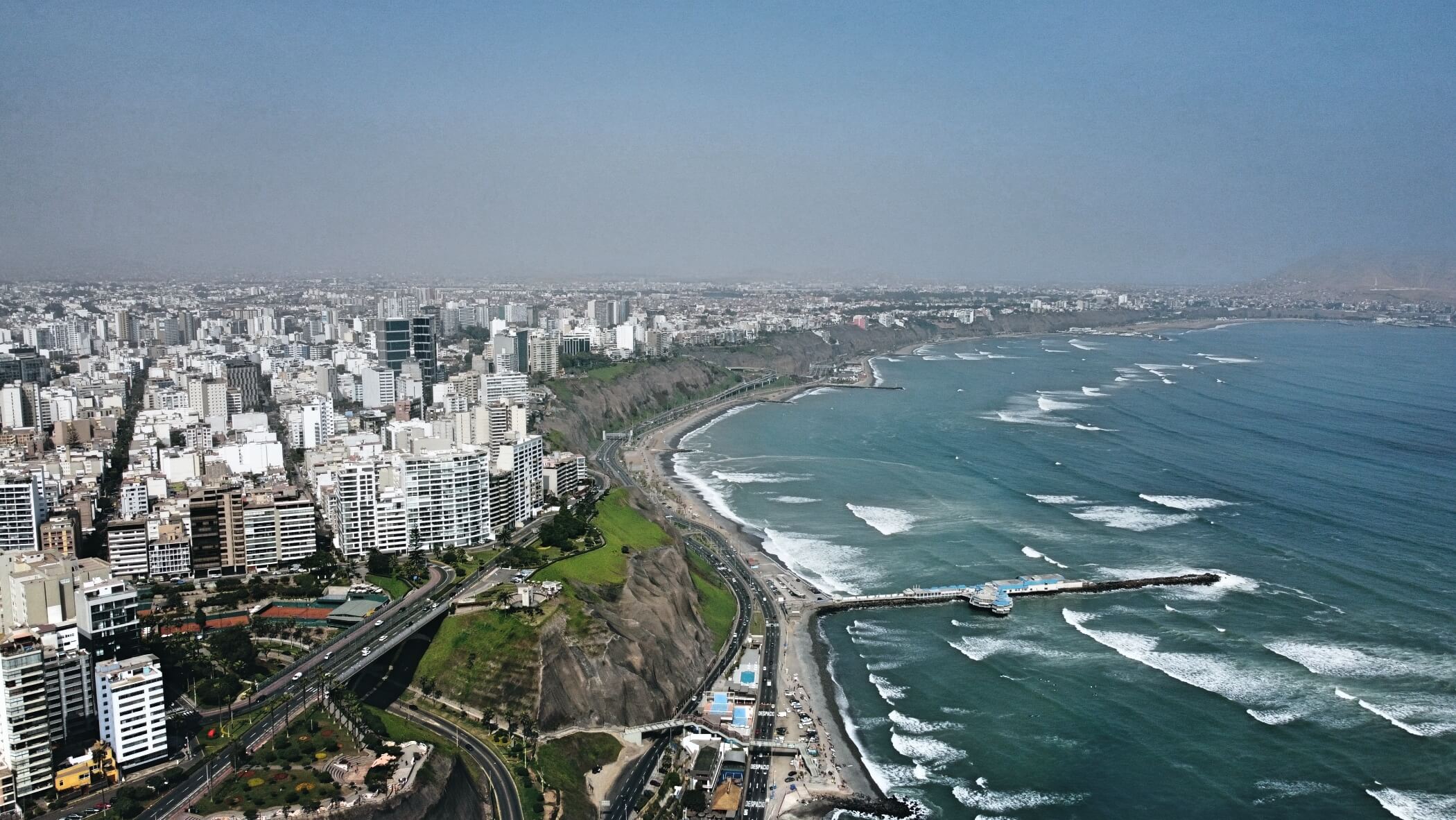
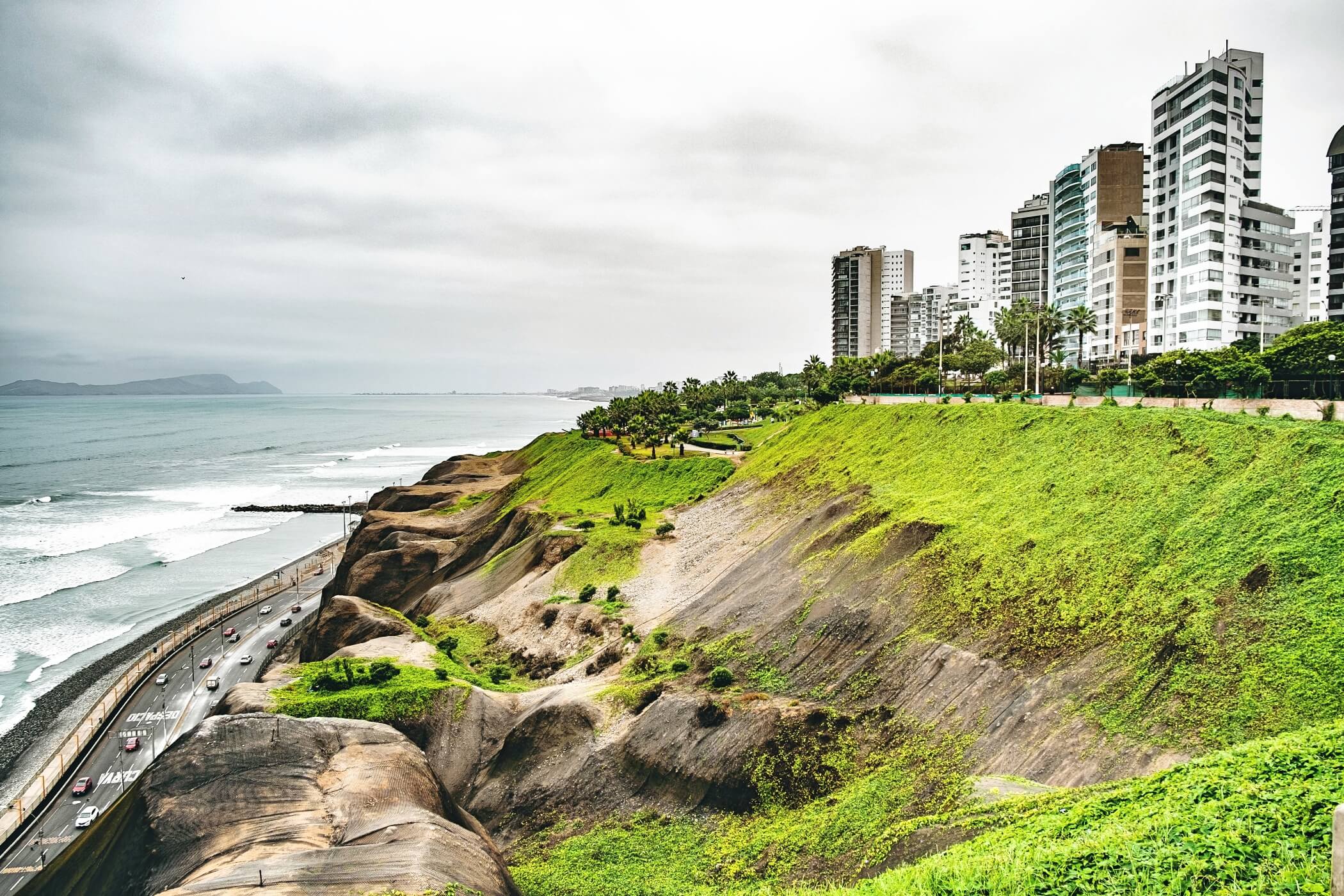
Perched on cliffs above the Pacific, with desert at its back and cloud banks hovering over the water, the capital feels like a place suspended between elements.
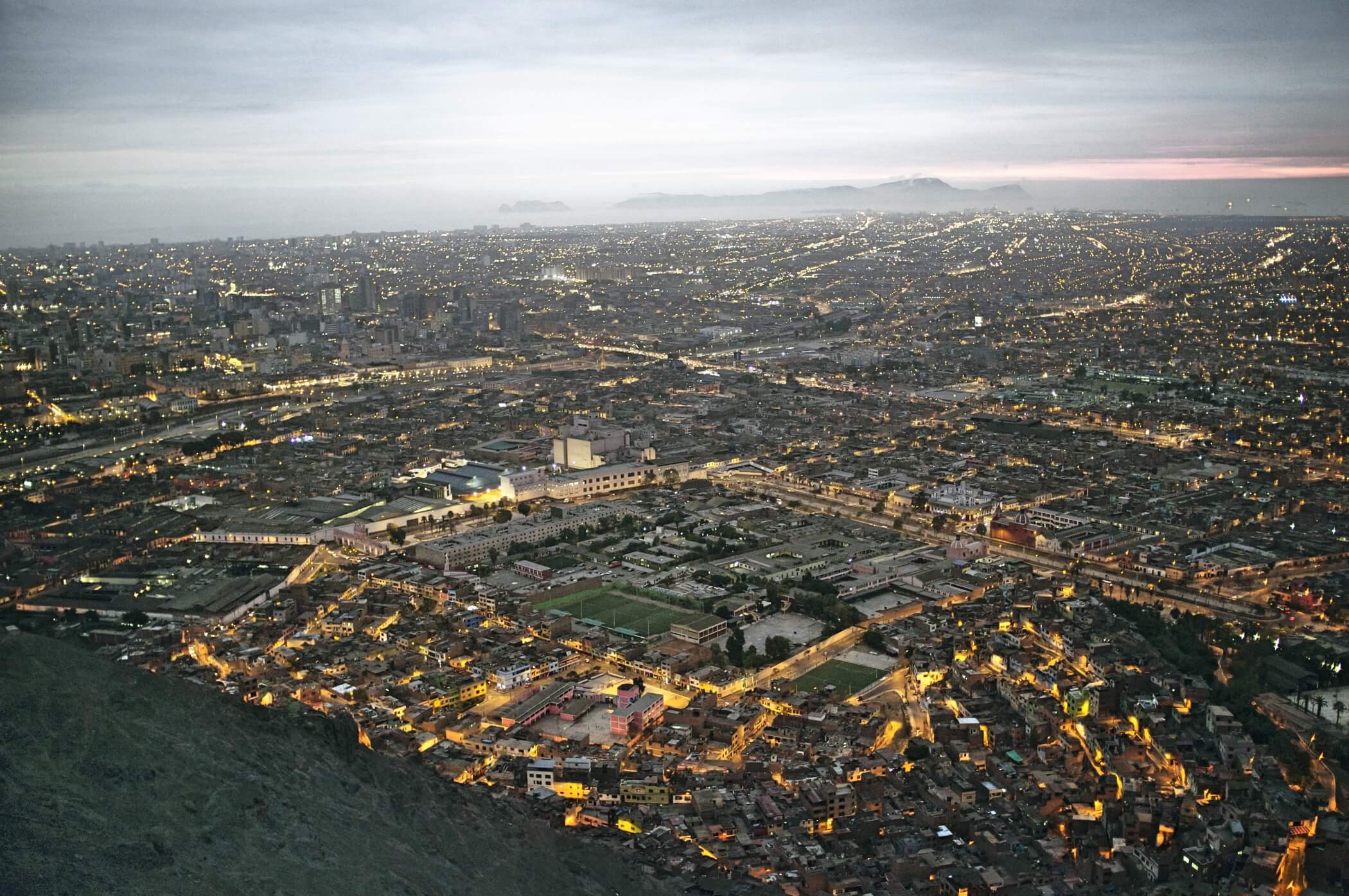
It is massive, chaotic, and unapologetically layered. This is not a city that tries to please everyone.
It simply exists, on its own terms.
What surprises most visitors is Lima’s creative force.
Beneath the concrete and traffic lies one of Latin America’s most dynamic culinary and cultural scenes.
In Barranco, once a seaside retreat and now a bohemian enclave, colonial buildings house galleries, artisan boutiques, and rooftop bars that face the sea.
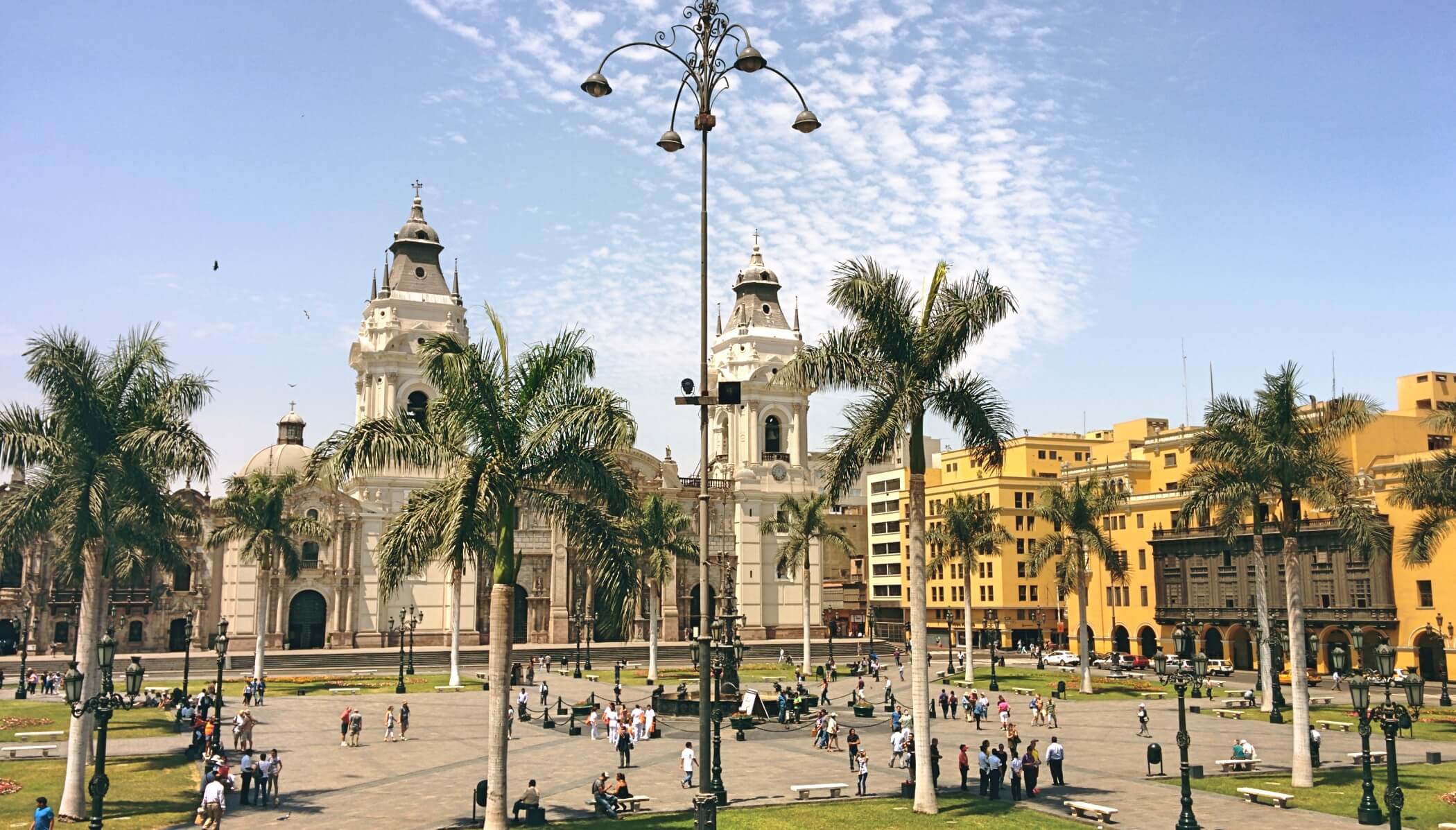
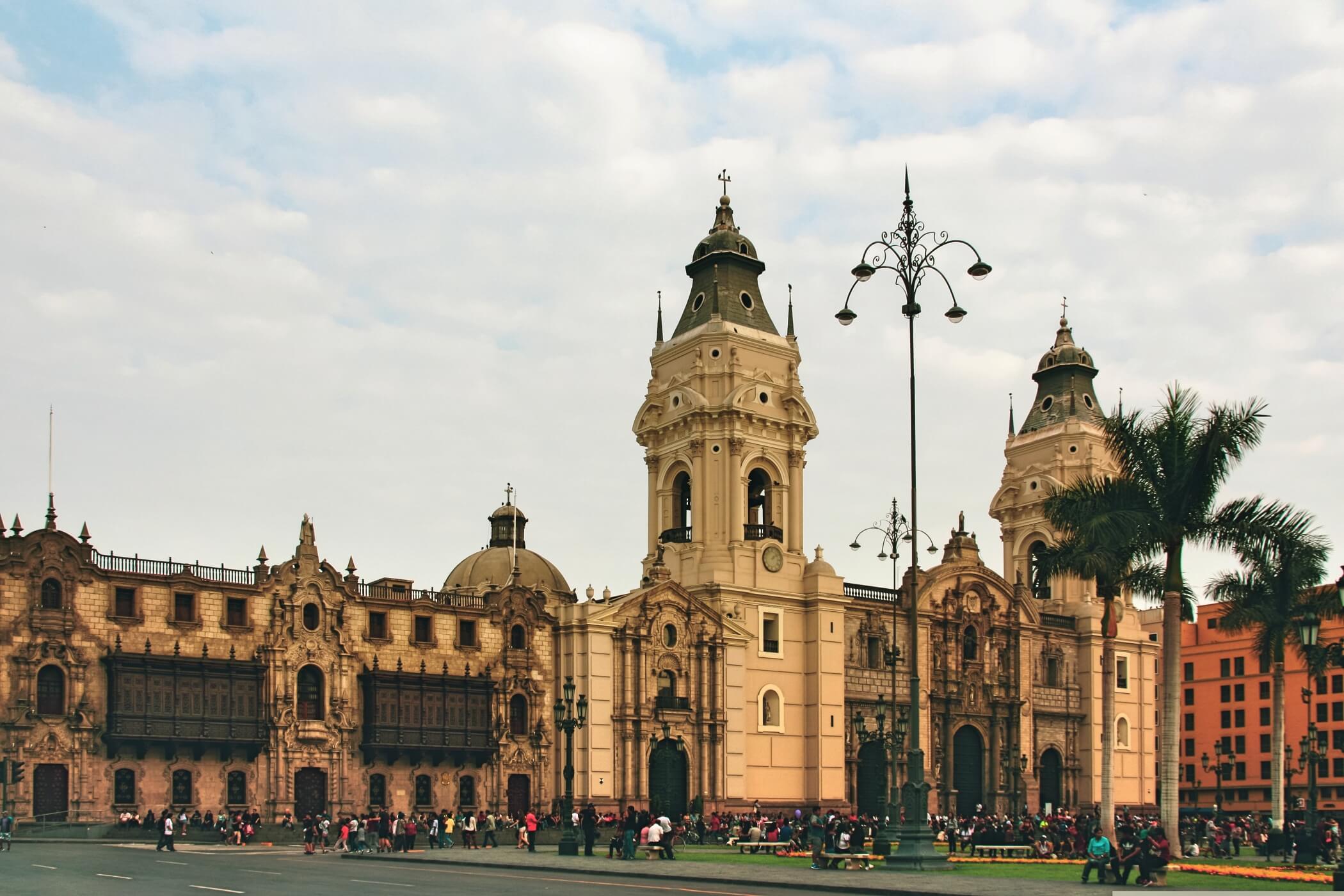
In Miraflores, you find cycle paths skimming the cliffs, paragliders floating above the shore, and hotels where minimalist design meets crashing surf. Elsewhere, the centre of Lima holds colonial cathedrals and chaotic markets in the same breath.
But Lima’s real signature is food.
The city is widely regarded as the gastronomic capital of South America, with world-renowned restaurants like Central, Maido, and Astrid y Gastón leading a movement rooted in local biodiversity and global technique.
You do not just eat in Lima – you explore Peru through its ingredients.
From jungle fruits to Andean potatoes, from coastal ceviche to Amazonian broths, the flavours here carry altitude, climate, and identity.
Luxury in Lima is not about tranquillity.
It is about access to craft, to complexity, to creative collision.
You are not separated from the city’s chaos. You are invited into it. And if you listen closely, you realise it is not noise.
It is rhythm.
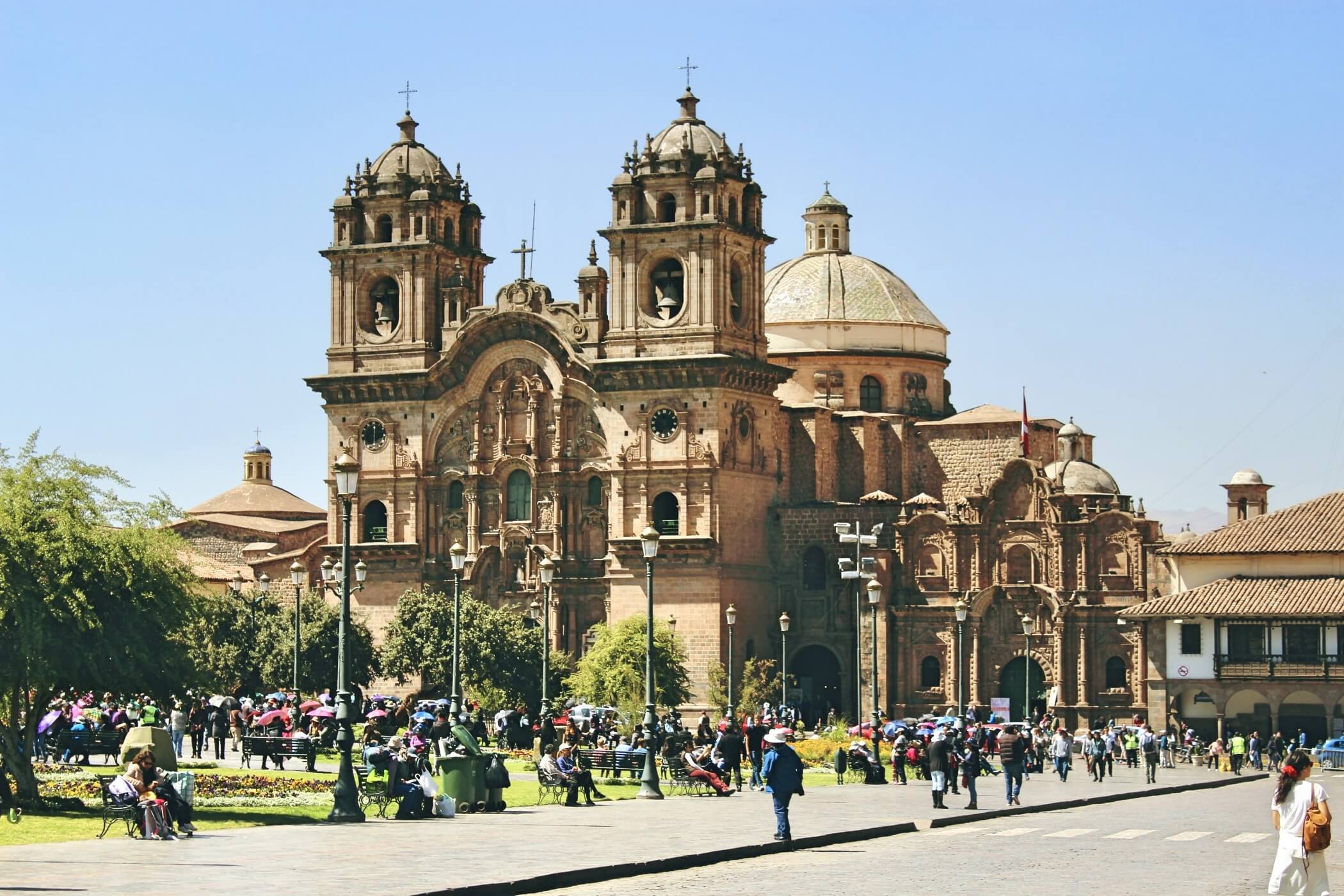
Cusco – High, Layered, Timeless
Cusco is not a base for Machu Picchu. That would be an insult to its depth.
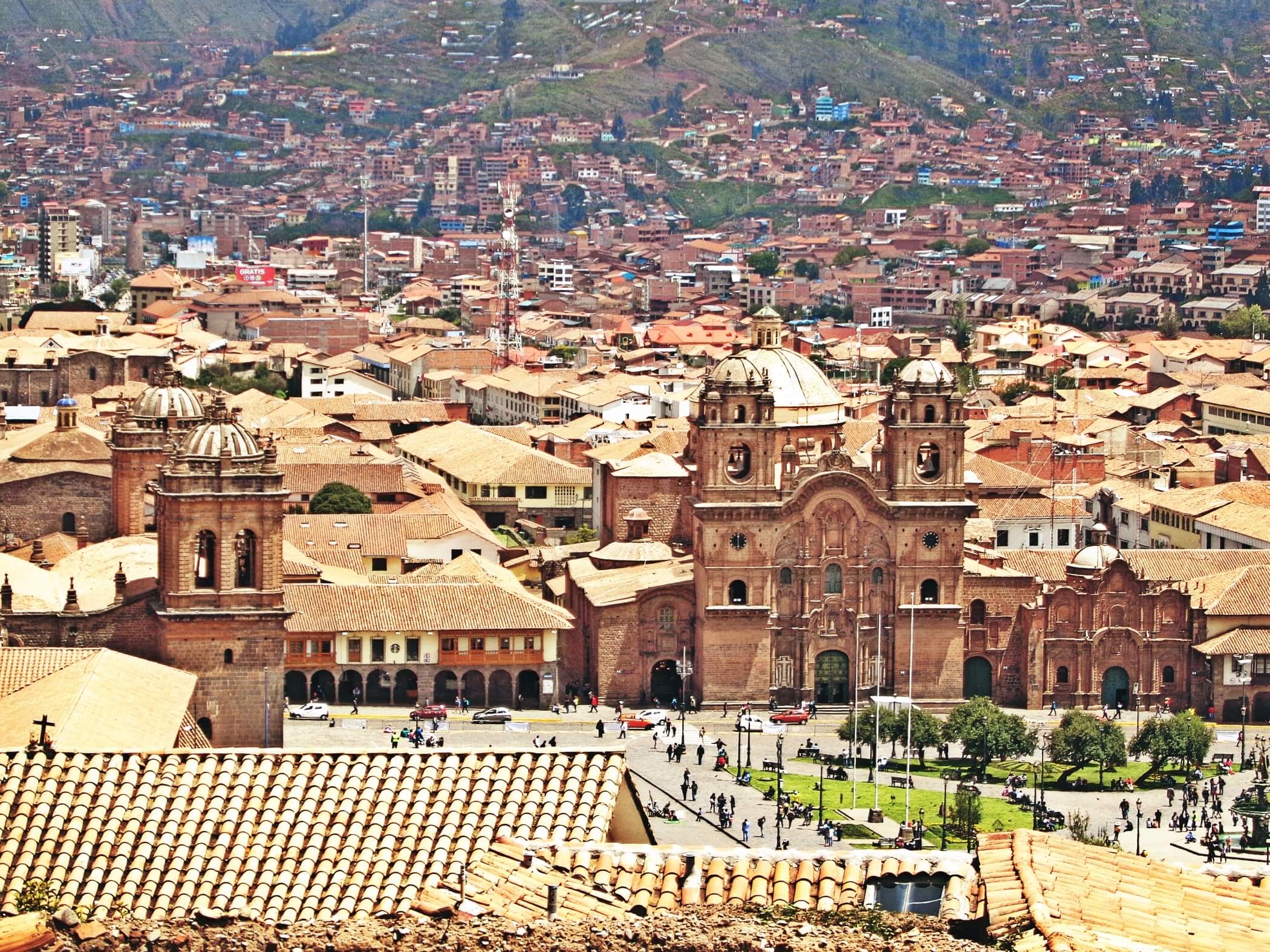
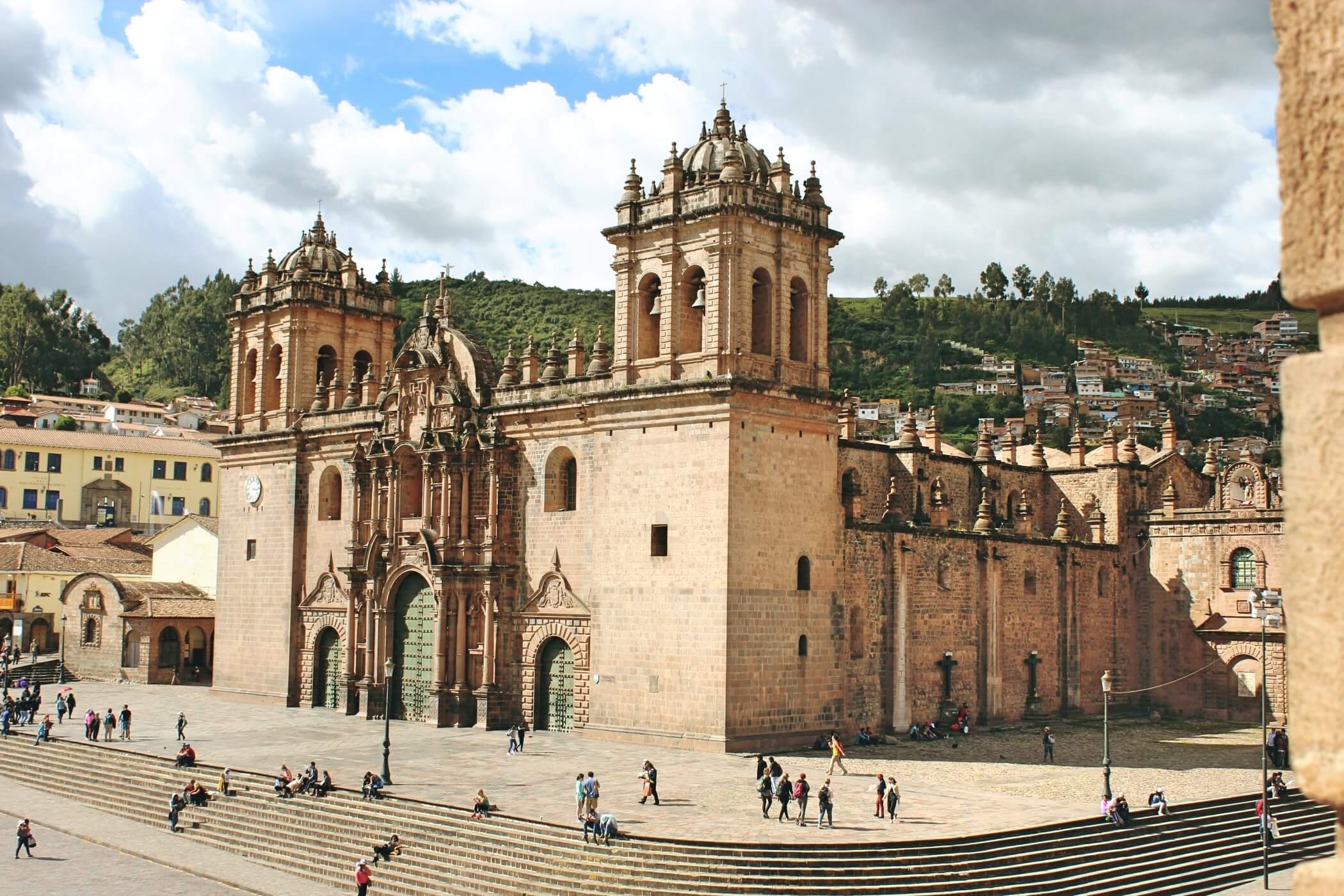
This former capital of the Inca Empire sits at 3,400 metres, where oxygen is thinner and time is denser. The moment you arrive, the altitude slows you down – and that is exactly how Cusco should be experienced.
Slowly. Layer by layer.
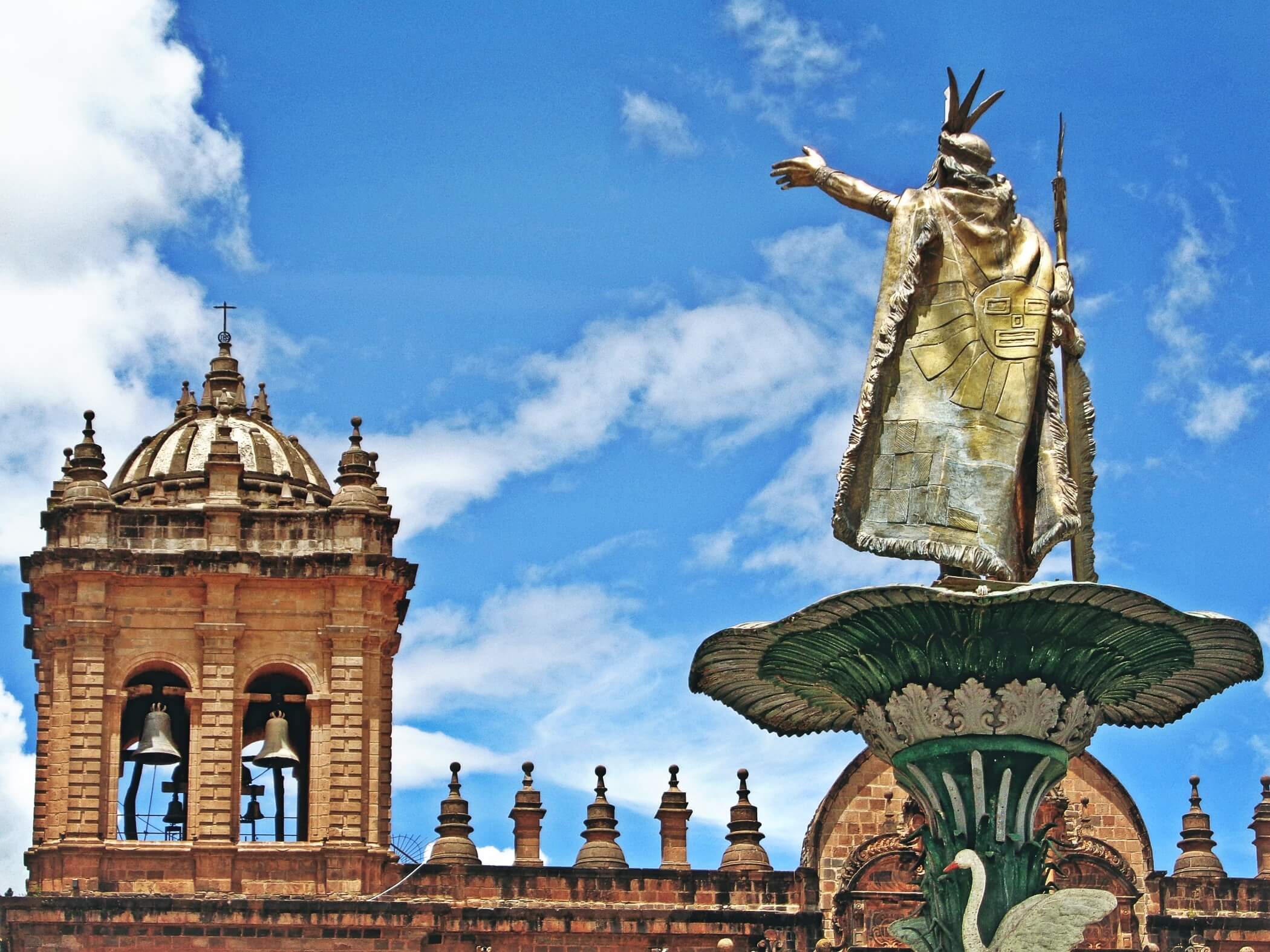
The city’s centre is a palimpsest of power and transformation.
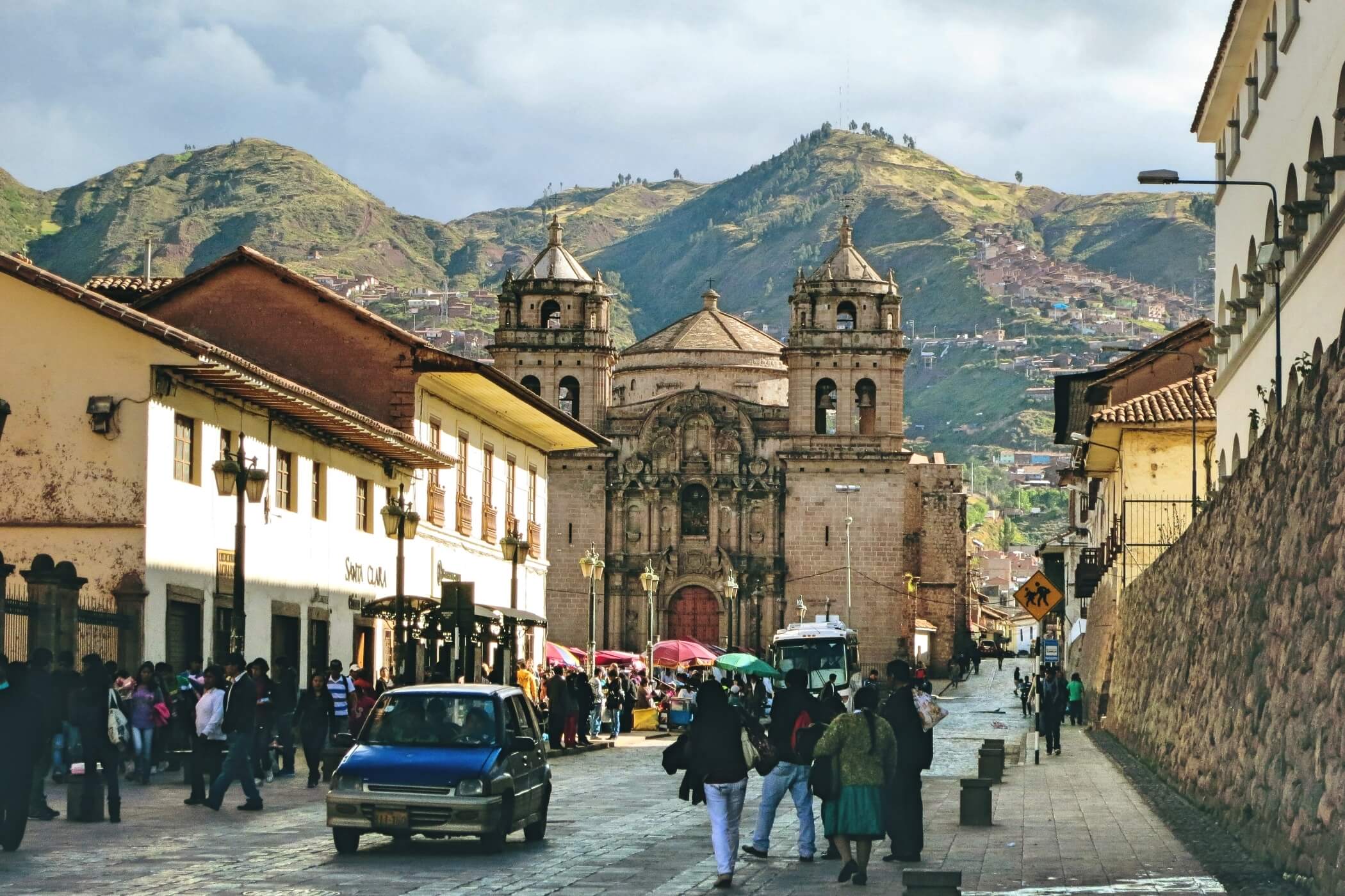
Beneath the foundations of Spanish cathedrals lie Inca stones, perfectly cut, earthquake-proof, and unmoved for centuries. You walk across cobbled alleys once used by priests and warriors.
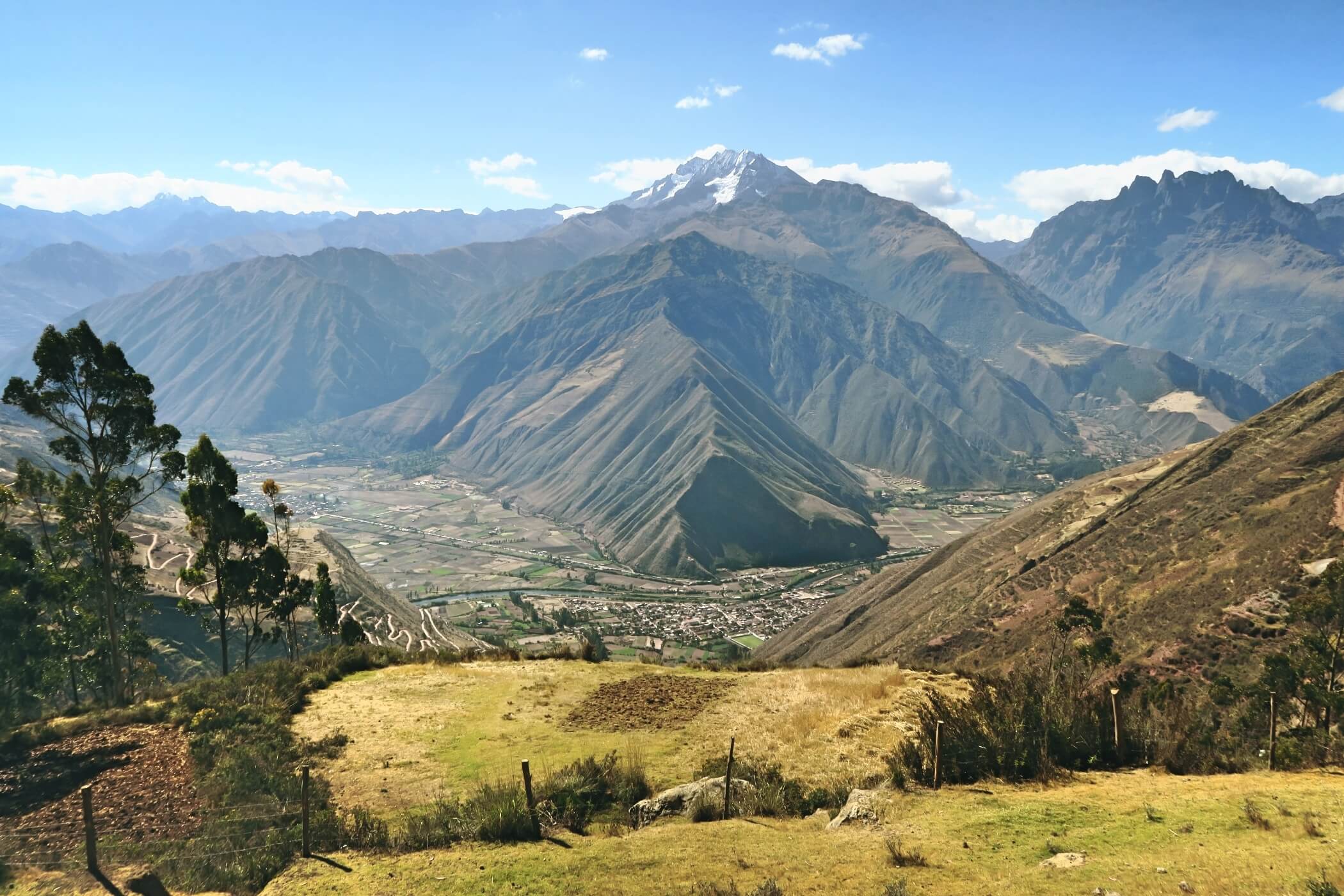
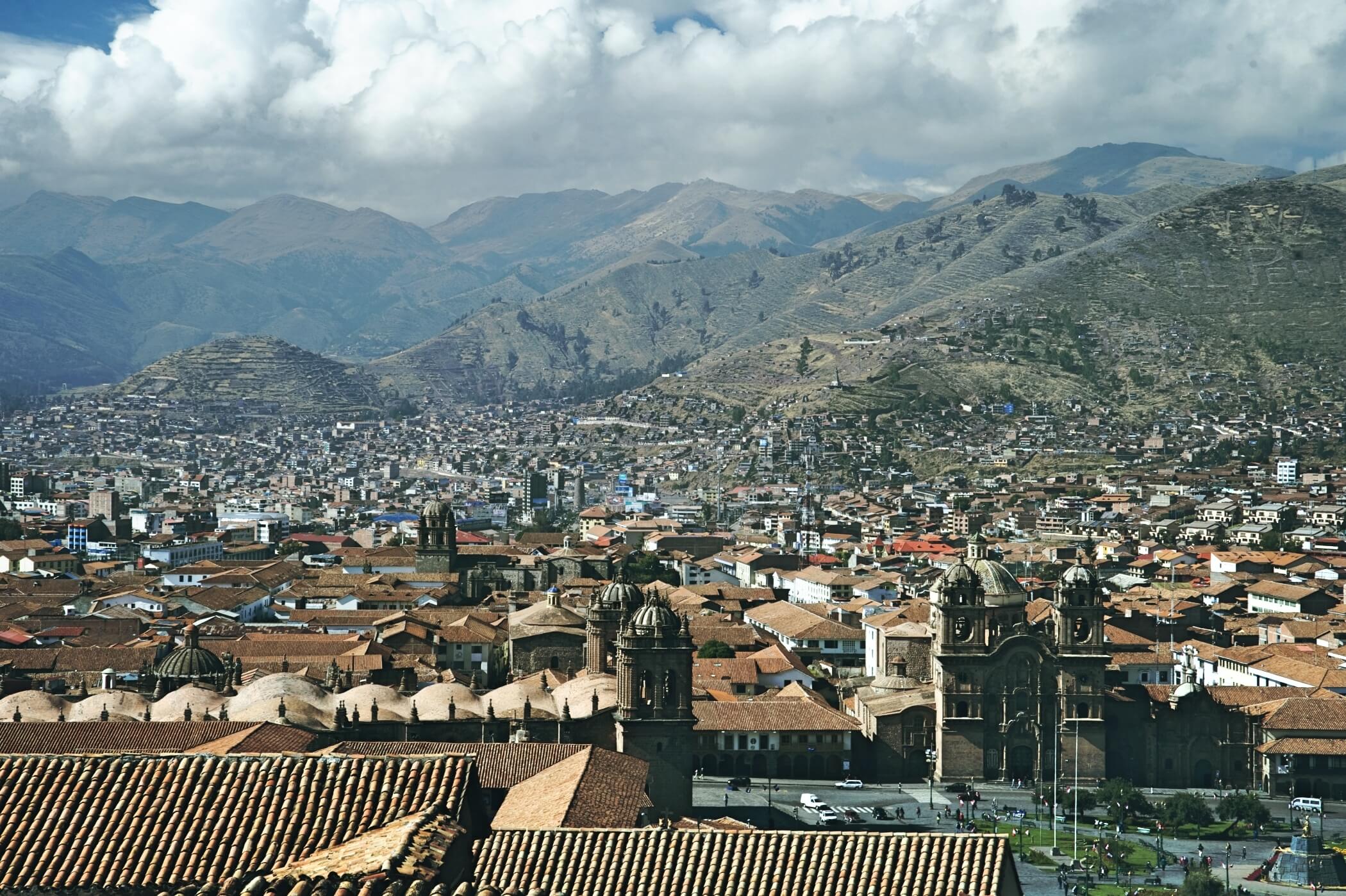
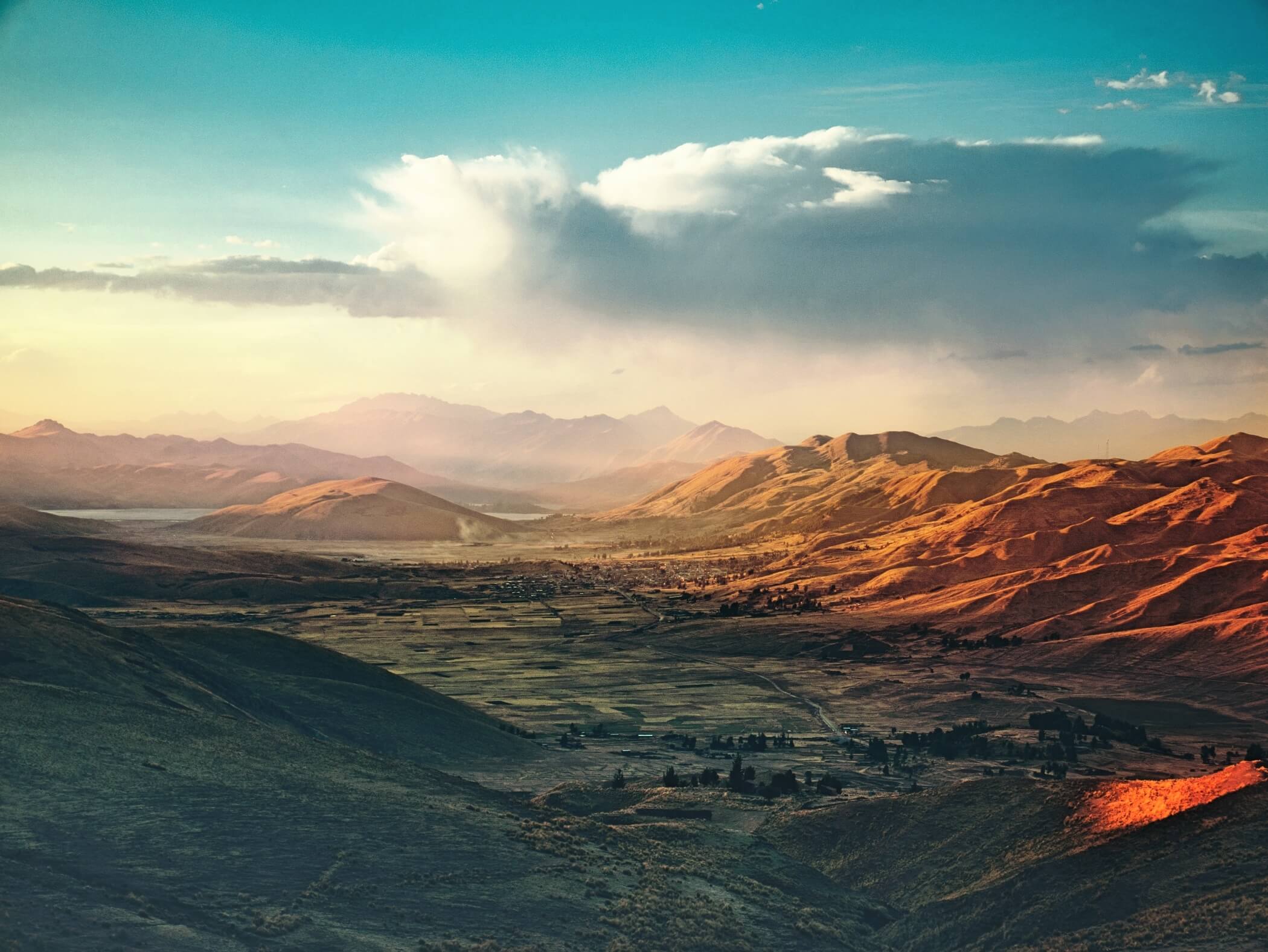
In San Blas, the artisan quarter, doorways are carved with symbols. Balconies lean into the sun. It feels lived in, not reconstructed.
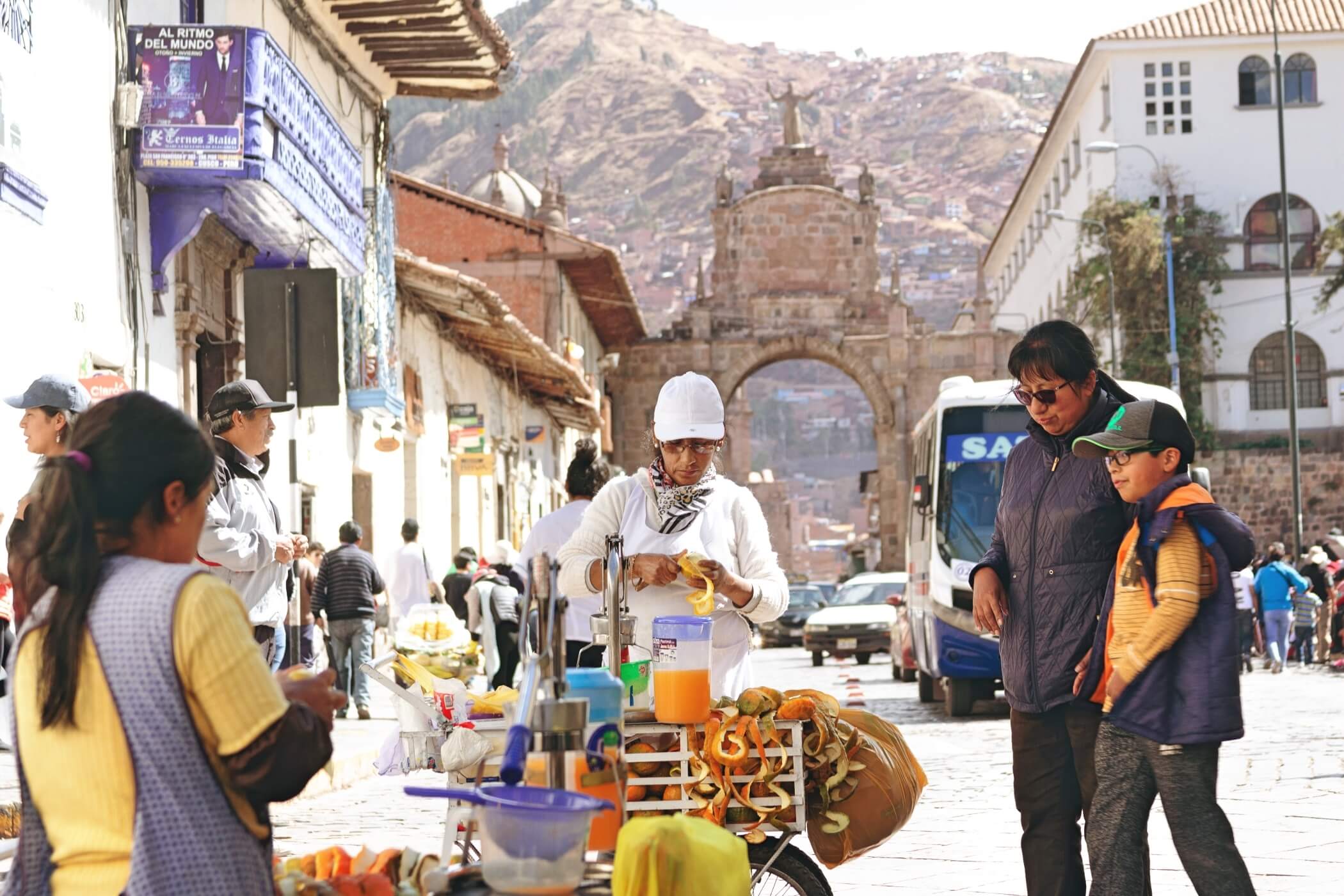
Markets hum with Quechua, roasted corn, and handwoven textiles dyed with herbs. You can spend hours wandering through stalls without an agenda.
Boutique hotels and converted monasteries offer spaces of quiet beauty, often set around courtyards with stone fountains and flickering candlelight. And always in the distance – whether visible or not – is the memory of what came before: a city aligned with the stars, designed for ceremony and defence.
Cusco is not interested in speed. Its rhythm comes from elevation, from age, from atmosphere. And in that stillness, there is grounding.
Luxury here is not an escape.
It is anchoring to place, to pulse, to something remembered by the land long before you arrived.
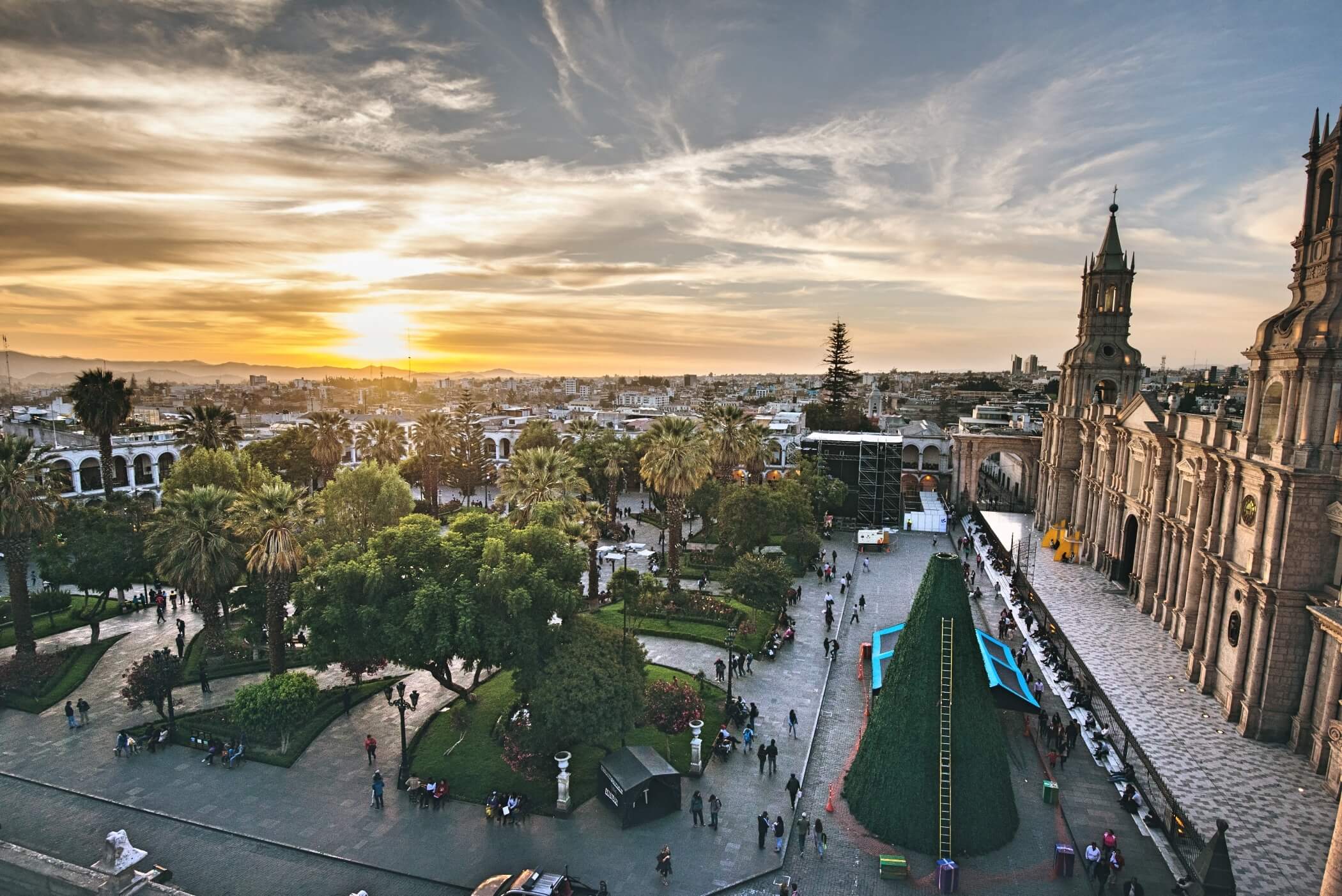
Arequipa – The White City
Arequipa does not call for attention. It waits for it.
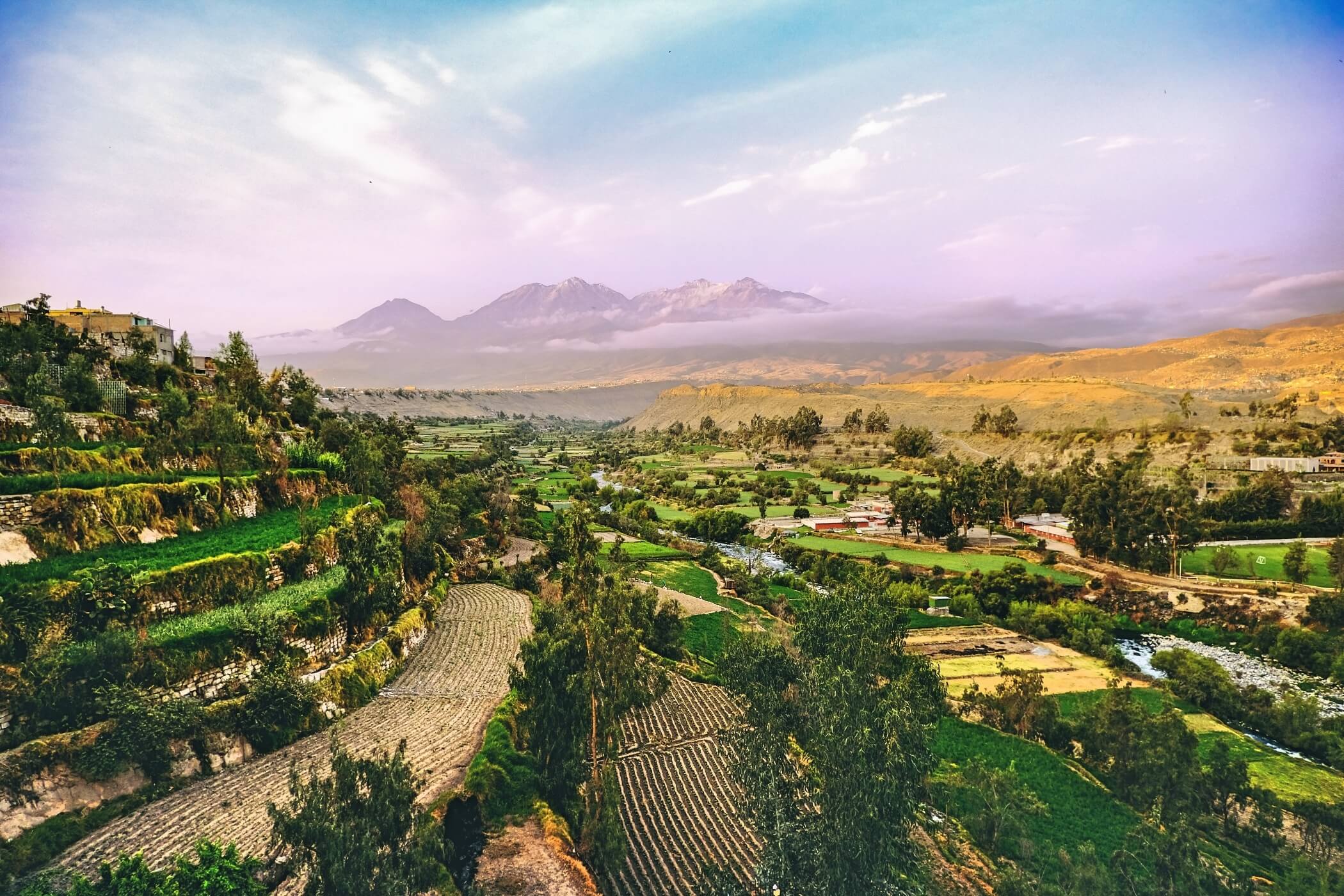
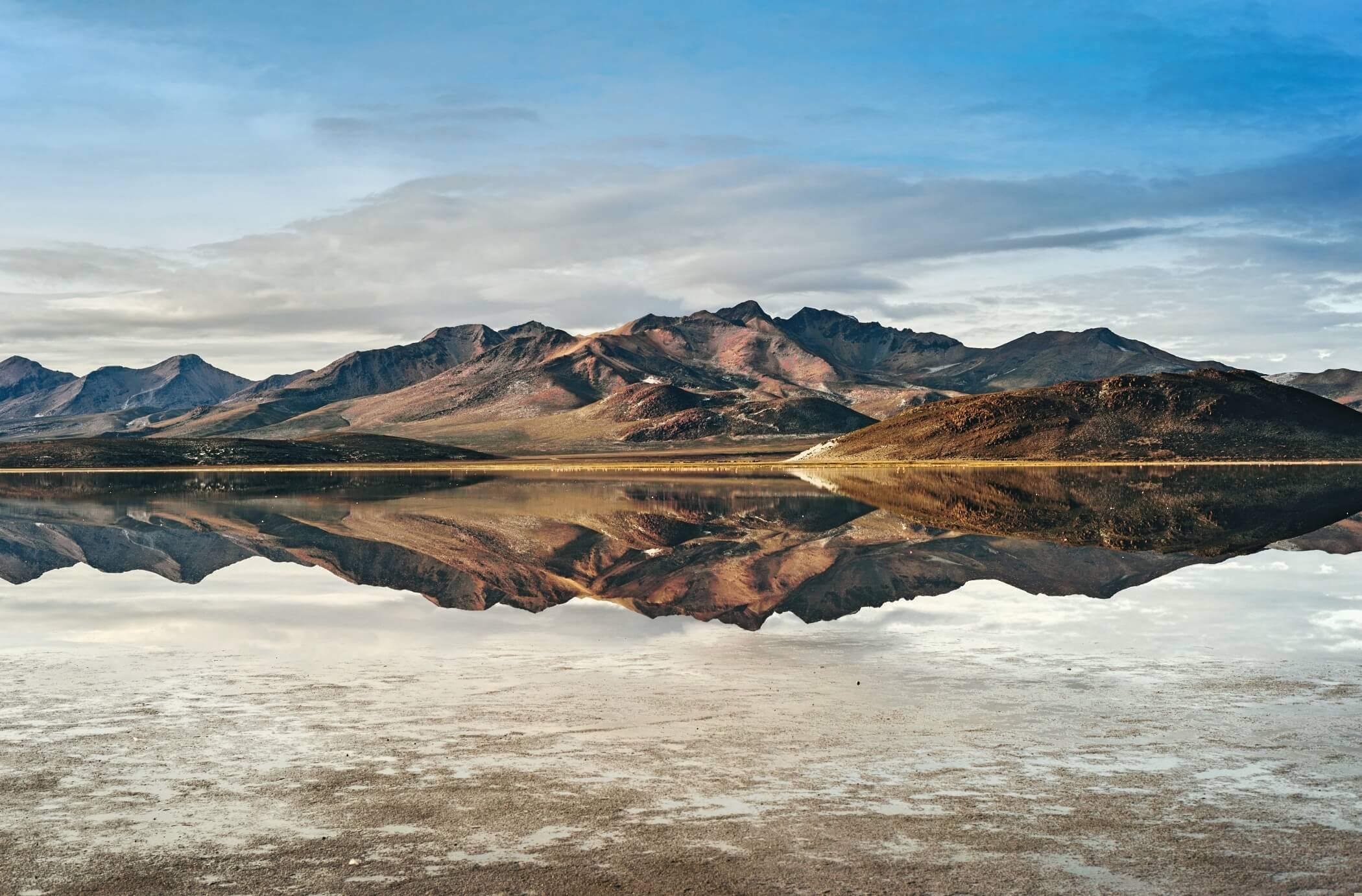
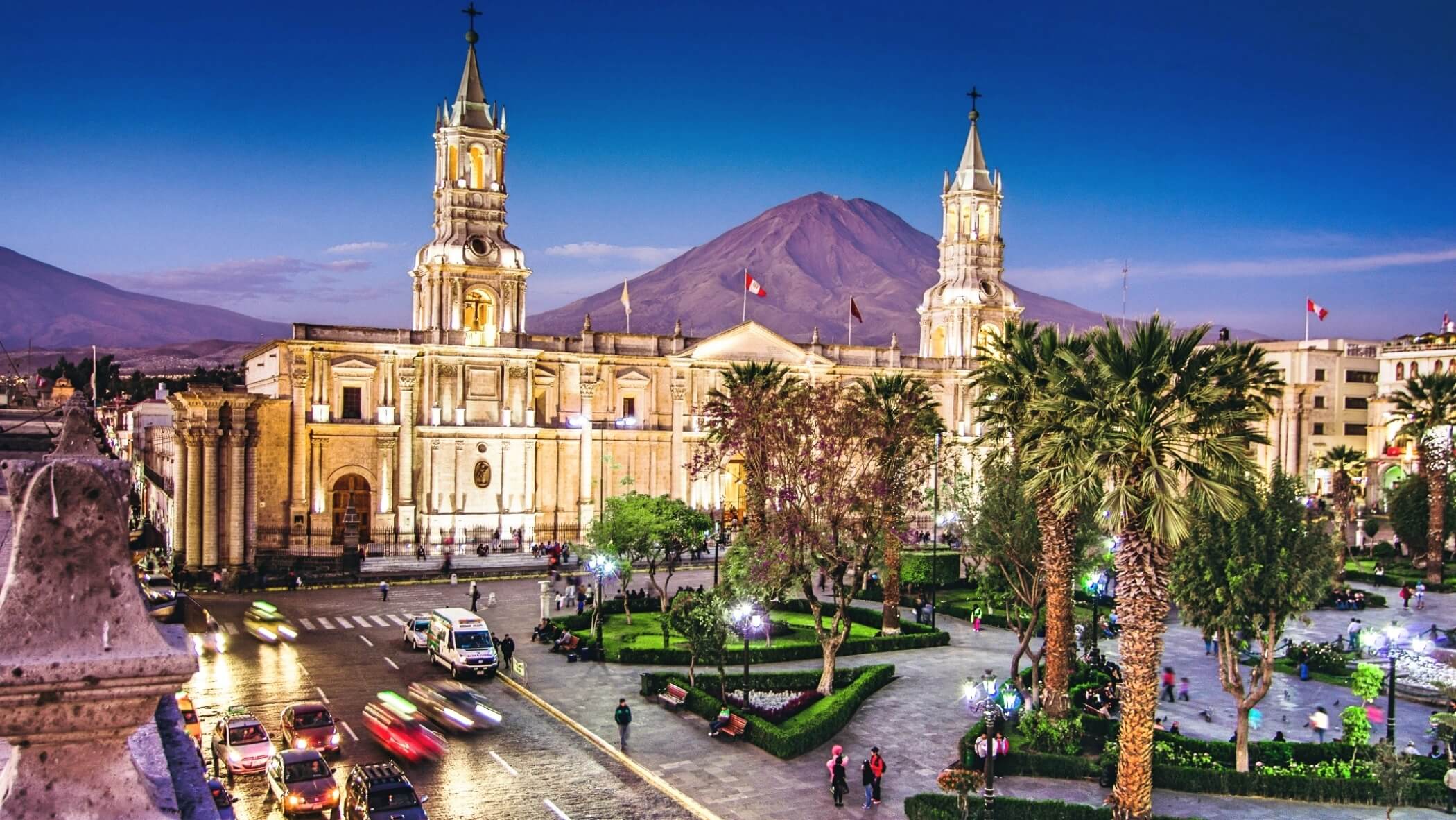
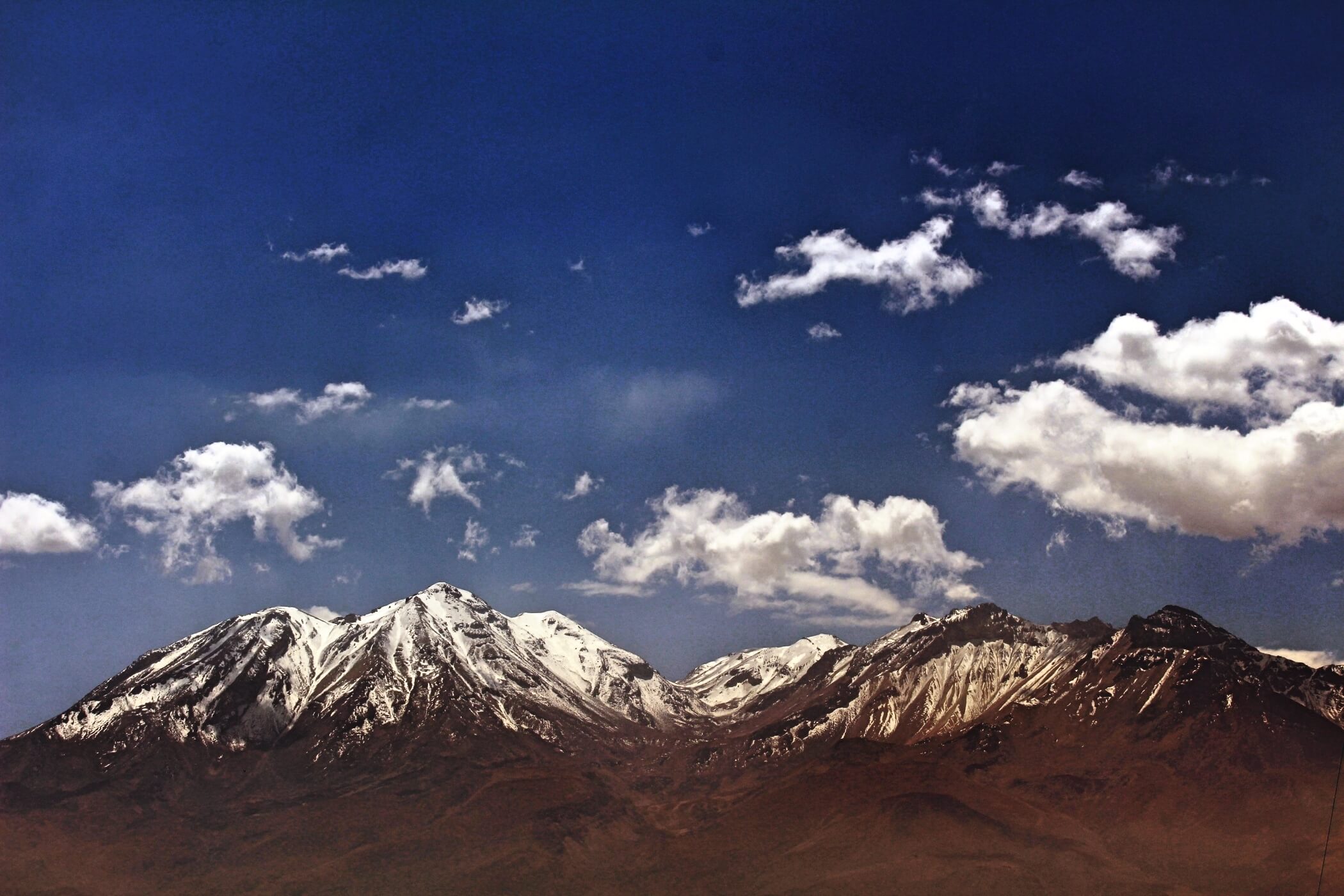
Set beneath three volcanoes and built from pale sillar stone, this southern city reflects light differently.
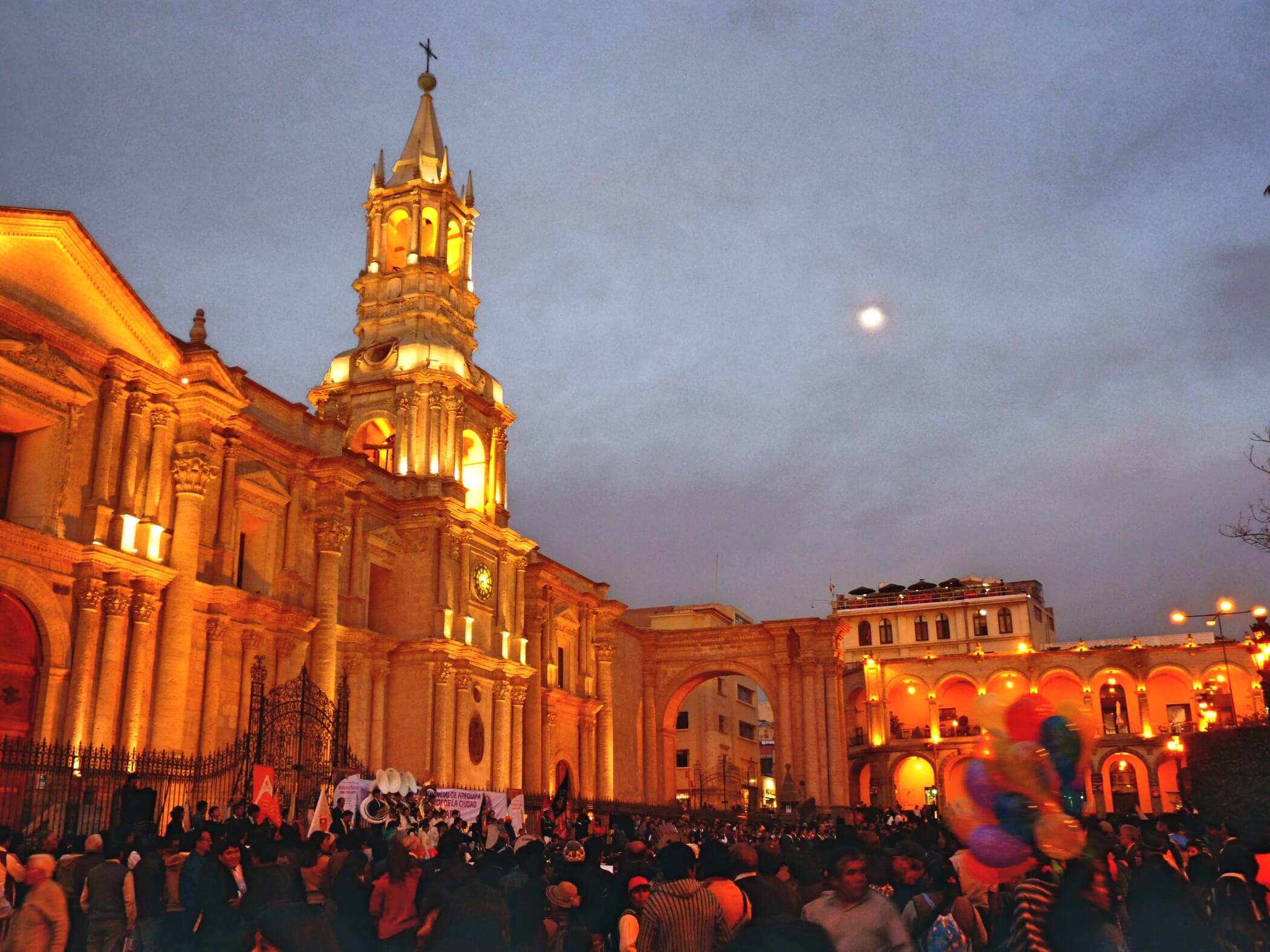
Walls shimmer softly in the late afternoon. Streets glow with quiet dignity. It is known as La Ciudad Blanca – the White City – but its true identity lies not in its colour, but in its calm.
At 2,300 metres, Arequipa sits at a gentler altitude than Cusco or Puno, making it an ideal place to pause. The historic centre, a UNESCO World Heritage Site, is a blend of Spanish baroque, Andean architecture, and earthquake engineering.
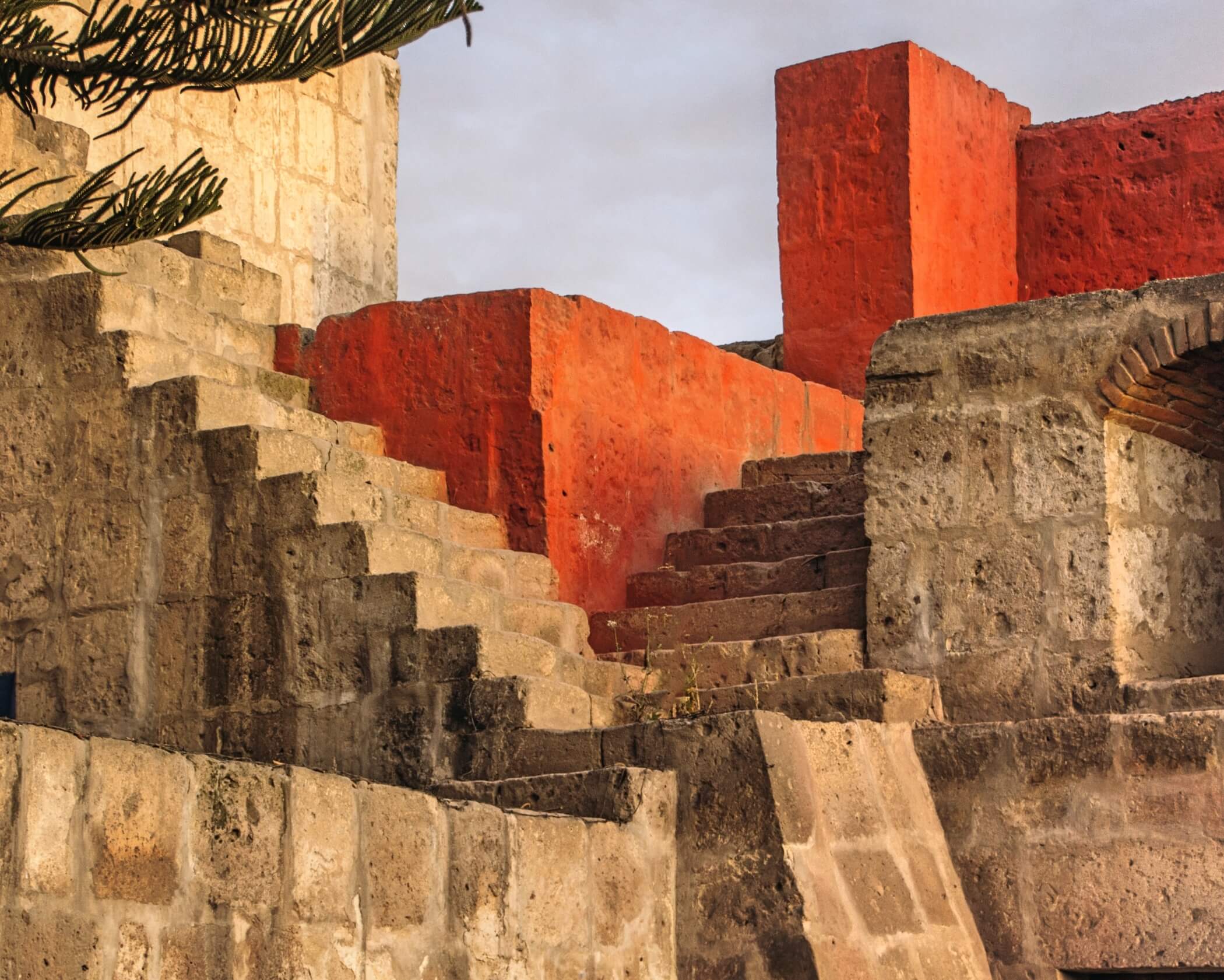
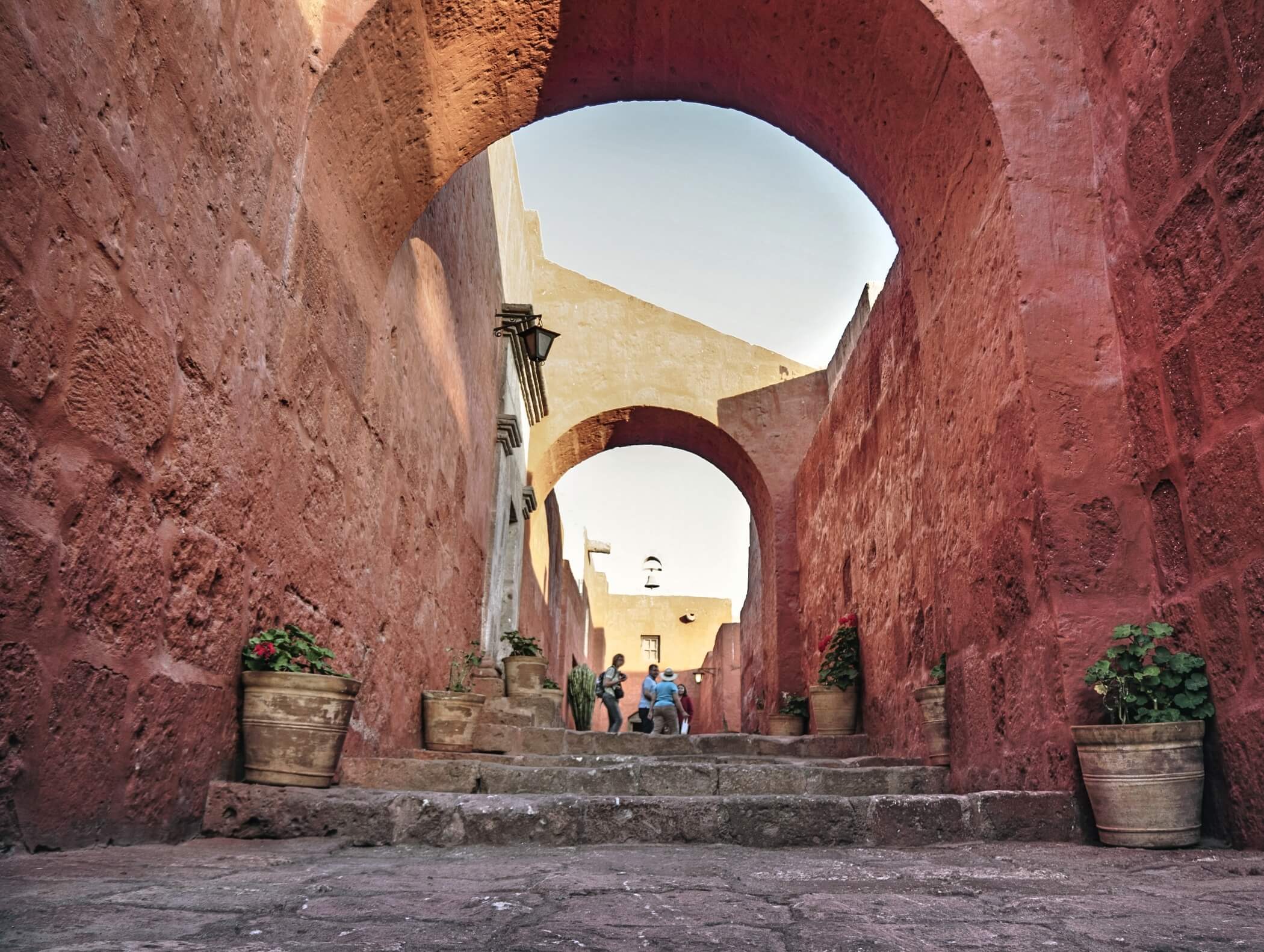
Arched colonnades surround leafy plazas. Cloisters hide slow-moving shadows. The Santa Catalina Monastery, a walled city within the city, invites you into a world of silence and red ochre walls – a space that seems to exist outside of time.
Arequipa is also a city of gastronomy and conviction.
Its cuisine is distinct – richer, spicier, and deeply regional. Dishes like rocoto relleno and adobo arequipeño are born of volcanic soil and colonial kitchens.
In elegant picanterías or garden courtyards, you taste a culture that has defended its flavours just as it has defended its stone.
The city is often used as a springboard for visiting Colca Canyon, but those who linger discover something rarer: an urban space that asks nothing of you except presence.
Luxury in Arequipa is silence with a view. History with space to breathe. Sunlight that arrives without urgency.
Experiences That Stay in the Body
You do not take souvenirs from Peru.
You carry something else – in your breath, in your legs, in the way you begin to understand time through terrain. Movement here is never just a transfer. It is the experience itself.
You trek through silence, cross landscapes that resist definition, and spend days on foot without seeing a road.
Whether hiking in the Cordillera Blanca, circling Ausangate, or following the Inca Trail through cloud forest and stone, your body becomes the vessel for memory.
Every slope climbed, every breath adjusted to altitude, builds an internal archive that no photograph can hold.
You cycle down ancient terraces once used for agricultural experimentation. You paddle through lake reeds under a sky too close for comfort. You sleep in eco-lodges where the walls are thin enough to let in the wind, but thick enough to keep you human. In the Amazon, you sweat. In the dunes, you are still. On the mountain, you rise.
These are not activities. They are recalibrations.
They change the way you pace yourself, the way you sleep, and the way you notice light and shadow. Even rest becomes purposeful. A fire is no longer an ambience – it is a necessity. A meal is no longer indulgence – it is gratitude.
Luxury in Peru does not come at the end of effort. It is woven into it.
In the moments when you stop, look back, and realise how far you have come, not just in distance, but in depth.
Explore our Peruvian Adventures or click here to contact us to design a journey that’s uniquely yours.
No tours match your criteria
